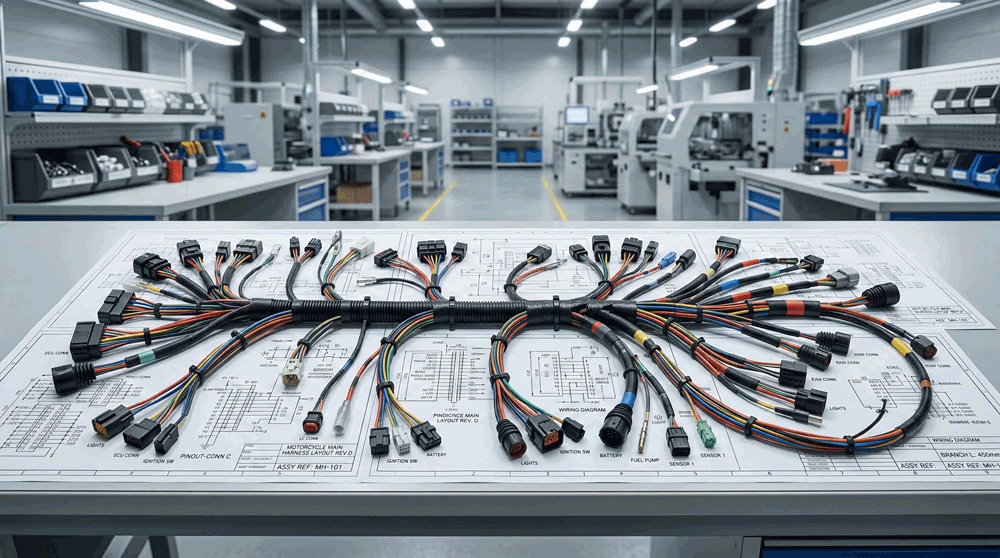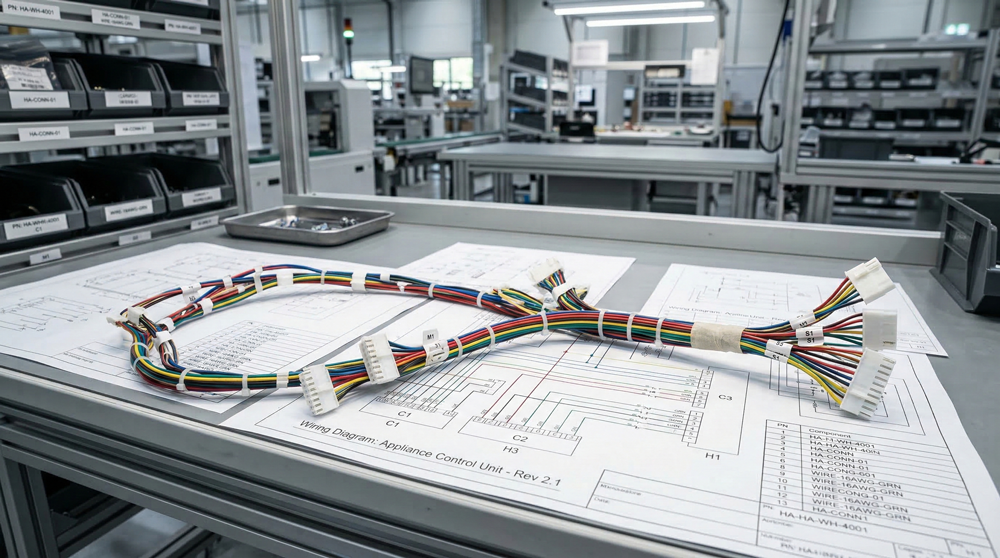
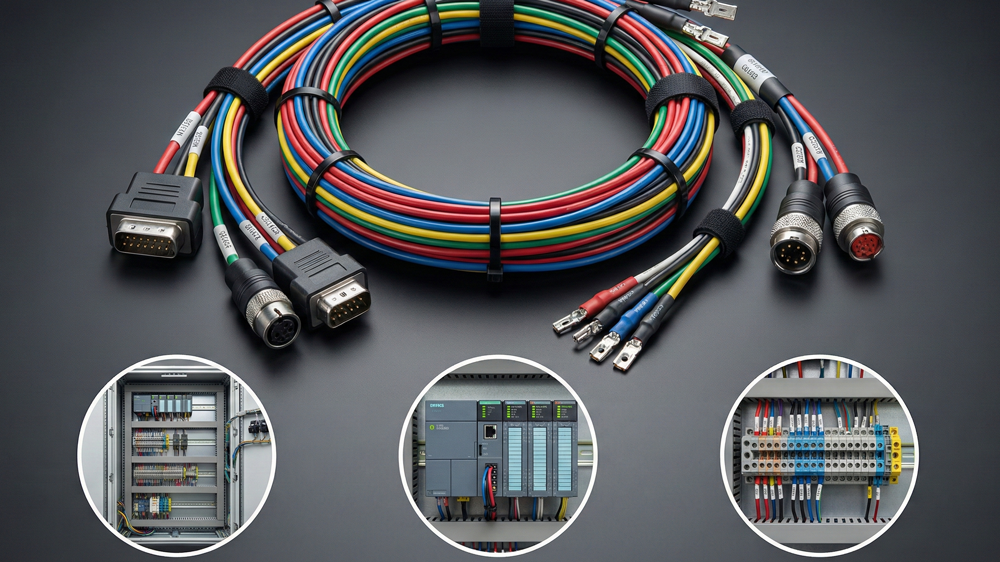
Wire harness cutover and inventory segregation is the stage where a supplier transition becomes real. Up to this point, a sourcing change may still feel manageable. The new supplier has quoted the project, technical reviews have progressed, samples may have been accepted, and pilot discussions may already be underway. But once the business reaches cutover, the transition is no longer only about technical approval. It is about whether the organization can move from one source to another without losing control of shipments, stock identity, revision clarity, traceability, or customer confidence.
That is why cutover should never be treated as a simple scheduling step. It is not just the moment when new orders start going to the new supplier. It is the moment when the old and new supply realities overlap, and that overlap is where many avoidable transition failures happen. Finished goods may still exist at the incumbent supplier. Open purchase orders may still be in transit. Packaging materials may carry old labels or old lot logic. Warehouse teams may receive visually identical product from two different sources. The planning team may believe the switch is complete while operations is still consuming legacy stock. In that environment, a weak cutover plan can create confusion long after the commercial decision to switch suppliers has already been made.
For OEM buyers, this topic matters because a supplier transition is never judged only by whether the new source can build the harness. It is judged by whether the business can continue shipping product smoothly through the transition. If old-source and new-source material become mixed, if revision boundaries are unclear, if suspect stock cannot be isolated quickly, or if the customer receives inconsistent labeling or documentation, the transition will be remembered as unstable even if the new supplier is technically capable.
Inventory segregation is therefore not a warehouse detail. It is a core transition-control discipline. It protects traceability, simplifies containment, supports quality comparison, and allows the organization to understand which lots belong to which supplier, which revision state, and which approval phase. In a custom wire harness or cable assembly program, that visibility is often the difference between a manageable deviation and a broad operational disruption.
This article explains how OEM buyers should handle wire harness cutover and inventory segregation during supplier transition or second-source activation. The purpose is to help procurement, project, operations, and quality teams move supply in a way that protects stock clarity, receipt control, and downstream accountability rather than creating hidden confusion that surfaces later in production or the field.
Table of Contents
ToggleWhy cutover is usually harder than qualification
Supplier qualification is mostly about proving capability. Cutover is about proving control under real operating conditions. That is why many transition projects feel smooth during sample and pilot stages, but become much more difficult once the business starts changing actual order flow.
During qualification, the environment is relatively controlled. The supplier is building limited quantities. Engineering is paying close attention. Quality teams are reviewing details carefully. The project team is alert. Once cutover begins, however, the transition enters a more complex operating space. Purchase orders are open. Existing stock still exists somewhere in the system. Schedules are moving. Customer demand continues. Warehouse teams are processing real receipts rather than carefully managed pilot lots. That shift changes the risk profile.
The challenge is not only that more material is moving. The challenge is that multiple product states may now coexist. The incumbent supplier may still hold acceptable finished goods. The new supplier may be shipping first production lots. Work in progress may exist at both sources. Open corrective actions may still relate to old-source inventory while incoming inspection is already reviewing new-source lots. Without a clear cutover plan, these realities overlap in a way that makes later investigation and containment far more difficult.
This is especially true for wire harness assemblies because many versions can look similar at a glance. The difference between old-source and new-source stock may not be obvious visually. It may sit in label content, lot code logic, packaging identity, component source, or small workmanship characteristics. If the organization does not control those differences deliberately, it can create the illusion of one continuous product flow when the transition is actually still mixed.
That is why cutover requires a different kind of discipline than qualification. Qualification answers whether the new source can supply. Cutover answers whether the business can absorb that new source without losing stock clarity.
Define the cutover objective before you define the date
One of the most common mistakes in supplier transition is treating cutover as a date instead of a control objective. Teams often ask, “When do we switch?” before asking, “What exactly does switched mean?” That sequence creates avoidable confusion.
A stronger approach is to define the cutover objective first. Is the business trying to stop all future receipts from the incumbent supplier after a certain date? Is the goal to consume all approved old-source stock before any new-source production enters normal use? Is the plan to allow overlap for a period while both sources remain valid under controlled segregation? Is the cutover being driven by revision change, commercial allocation, or customer shipment timing?
These questions matter because different cutover objectives require different controls. A clean replacement cutover is not managed the same way as a phased allocation cutover. If the transition is part of a second-source strategy, the business may intentionally keep both suppliers active. In that case, segregation rules remain important for ongoing dual-source management, not only for the transition window. If the transition is a full supplier replacement, the organization may want a hard boundary that makes it clear when old-source receipts are no longer acceptable.
The important point is that cutover should be defined as an operating rule, not just a calendar milestone. Once the rule is clear, dates become easier to manage. Without that rule, the project team may think the transition is aligned while procurement, operations, and quality are actually working from different assumptions.
Review all inventory positions before cutover planning begins
A cutover plan is only as good as the inventory visibility behind it. Before the transition moves into operational execution, the team should review where relevant stock actually exists.
This review should cover more than finished goods on the buyer’s premises. It should also include finished goods at the incumbent supplier, work in progress at both suppliers, raw materials dedicated to the project, customer-owned tooling or packaging, in-transit shipments, consignment stock if applicable, and any pending receipts already linked to open purchase orders. If repair stock, service stock, or customer-return replacement stock exists under the same part number family, that should also be visible.
The reason this matters is simple. A supplier transition rarely starts from zero inventory. Most programs already have material somewhere in motion. If the organization does not understand those positions, cutover decisions become theoretical rather than practical. The business may announce a switch while the incumbent supplier still holds several weeks of acceptable stock. Or the planning team may expect a clean move, only to discover that old-source inventory is still embedded in service channels or downstream kitting locations.
For wire harness programs, this inventory mapping is especially important when the harness supports a larger assembly schedule. A small quantity of overlooked legacy stock can create weeks of confusion if it gets mixed into new-source receipts without clear identity. Likewise, material liabilities can become difficult to resolve commercially if the project exits the incumbent supplier too quickly without first understanding what stock, raw material, or labeling assets remain.
That is why a real inventory review should happen before the cutover date is finalized. The date should respond to inventory reality, not ignore it.
Segregation starts with identity, not location
Many teams think inventory segregation means putting stock in different physical areas. Physical separation helps, but it is not enough on its own. True segregation starts with identity.
The business must be able to answer several questions for any lot in the system. Which supplier built it? Which revision state did it follow? Was it produced before or after the cutover boundary? Was it part of sample, pilot, or production approval status? Which shipment, receipt, or lot references tie it to outgoing records? If those answers are unclear, moving boxes to separate shelves will not solve the problem.
Identity should therefore be designed into labels, ERP references, receiving logic, and internal stock-handling rules. In some cases, that may mean supplier-coded lot numbers. In others, it may mean transition-specific identifiers, date-code boundaries, packaging labels, or stock-status flags in the system. The exact structure depends on the organization, but the principle remains the same: segregation is successful only when stock can be distinguished reliably later, not only when it is separated physically on the day of receipt.
This is especially important because physical separation degrades over time. Stock gets repacked, partially issued, returned from the line, or moved for counting and rework. If identity is weak, the original physical discipline disappears quickly. Strong identity survives those movements.
That is why cutover and inventory segregation should connect directly to Wire Harness Traceability and Containment and to the record logic described in Wiring Harness Quality Evidence Pack Guide. A good transition does not only separate stock now. It preserves the ability to investigate that stock later.
Choose the right cutover boundary
Not every cutover should be managed in the same way. The right boundary depends on product criticality, stock position, customer expectation, and system discipline.
Some organizations prefer a date-based cutover. After a certain date, all accepted receipts must come from the new source. This model can work when old-source stock is already low, purchase orders are tightly controlled, and the receiving process is disciplined enough to enforce the boundary.
Other organizations prefer a purchase-order-based or lot-based cutover. This can be stronger when the business wants a clearer administrative link between approved stock and receiving decisions. In that case, the cutover is not just “after this date,” but “after this purchase order,” or “starting with lots identified under this new supplier code.” This often reduces ambiguity when transit time, partial shipments, or overlapping production windows are involved.
A revision-based cutover is another option, especially if the transition coincides with an Engineering Change Order (ECO). In this model, the supplier switch may be linked to a specific released revision or controlled implementation point. This can work well, but only if revision status is already stable and the organization can prevent mixed-revision receipts. Otherwise, the transition becomes both a supplier cutover and a change-control problem at the same time.
The key is not which model sounds cleaner in theory. The key is which model the organization can actually enforce operationally. A complicated cutover boundary that no one can execute reliably is worse than a simpler boundary with strong compliance.
Keep old-source and new-source material visible during overlap
In many transitions, some period of overlap is unavoidable. The incumbent supplier may still hold usable stock. The new supplier may begin first production shipments before old-source inventory is fully consumed. Customer demand may not allow a perfect stop-and-start boundary. When this happens, the right response is not to pretend overlap does not exist. The right response is to manage it openly.
During overlap, old-source and new-source stock should remain visible as distinct populations. That means receiving should not collapse them into one undifferentiated inventory record if later separation matters. It means quality should be able to review performance by source. It means operations should know whether line-side consumption is using legacy stock, new stock, or both under controlled conditions. It also means corrective actions should be able to tie issues back to the correct supply population.
This visibility becomes especially valuable when the new source is in early production. If an issue appears, the organization can isolate which supplier population is affected without freezing all material under the part number. Likewise, if the old supplier had a known issue in the final months before exit, the business can avoid letting those concerns contaminate evaluation of the new source.
Overlap is not inherently bad. Hidden overlap is bad. A mature cutover plan accepts that some coexistence may be commercially necessary and then designs controls that keep that coexistence understandable.
Plan for receiving, warehouse, and line-side behavior
A cutover plan is not complete unless it can survive normal shop-floor behavior. Too many transition plans are written at the project level but fail in execution because receiving, warehouse, and line-side teams were not included clearly enough.
Receiving must know how to identify post-cutover shipments, what documents to check, how to route stock by status, and what to do if an unexpected old-source shipment arrives after the boundary. Warehouse teams need rules for physical segregation, status labeling, repacking, partial-issue handling, and return flow. Production and kitting teams need to understand whether old-source and new-source stock may ever be used together, and under what conditions. If the answer is no, that rule must be explicit.
Line-side return flow is particularly important. Material that leaves stock control and returns later can become one of the easiest ways to destroy segregation. Unless the business has a clear method for identifying returned stock by supplier and lot status, mixed material can re-enter the system quietly.
This is why cutover planning should include practical operating scenarios, not only high-level policy. What happens if a carton arrives with correct part number but old-source label logic? What happens if a partial reel or bundle returns from the line? What happens if pilot stock is still in quarantine while production stock from the new source begins arriving? These situations are not exceptions. They are normal transition realities. A good cutover plan accounts for them before they happen.
Treat packaging and labels as transition controls
Packaging and labels are often underestimated during supplier transition. Because they are sometimes seen as secondary details, they receive less attention than connectors, wires, or test results. In reality, packaging and labels often determine whether inventory segregation succeeds operationally.
The reason is simple. When visually similar harnesses flow through receiving and warehouse operations, labels become the first practical layer of identity. Supplier name, lot code, revision reference, shipment date, packaging status, internal project code, and any transition-specific mark can all help keep material traceable and segregated. If these identifiers are weak or inconsistent, the burden shifts onto memory and manual interpretation, which is exactly what a cutover plan is supposed to avoid.
Packaging format also matters. If the old and new source use different pack quantities, inner-label formats, bag labeling positions, or carton structures, receiving errors can increase during overlap. If customer packaging is involved, the risk becomes even greater because the external appearance may look similar while the internal source identity is not obvious.
This is why packaging and label review should be part of cutover planning, not left as an administrative detail. The transition should define which labels are mandatory, how source identity is shown, how revision or cutover status is displayed, and whether additional transitional markings are needed temporarily. These controls may feel simple, but they often deliver very high practical value.
Connect cutover to change control
Supplier transition and change control often interact more than teams expect. A cutover may appear to be purely a sourcing event, but if revision changes, packaging changes, approved alternates, or process changes are also active, the transition can quickly become more complicated.
That is why cutover planning should ask whether the new source is being introduced under the same released revision as the old source, whether any temporary deviations remain active, and whether both suppliers are aligned to the same baseline. If not, the cutover is not only separating suppliers. It is also separating product states.
This is where Wire Harness ECO and Revision Control becomes critical. If change-control logic is weak, cutover boundaries become blurry. The organization may think it is managing old-source versus new-source stock when it is actually managing mixed supplier and mixed revision risk simultaneously.
A stronger approach is to simplify when possible. If a major revision is already in motion, the business should decide clearly whether to freeze cutover until the revision stabilizes, or whether to link cutover deliberately to the new revision under strong controls. Either choice can work. What creates problems is allowing change-control drift to remain implicit while stock is already moving.
Use post-cutover monitoring to validate segregation discipline
A transition is not proven complete when the first new-source production shipment arrives. It is proven when the business can operate normally without losing inventory clarity. That is why post-cutover monitoring is so important.
In the first several weeks after cutover, the organization should review whether receipts are being identified correctly, whether warehouse segregation is holding, whether line-side returns remain traceable, whether old-source stock is still present anywhere unexpectedly, and whether any documentation gaps are appearing between supplier records and internal stock records. This review can be light or formal depending on program risk, but it should be intentional.
The goal is not simply to catch mistakes. The goal is to see whether the cutover design is working under daily pressure. If unexpected old-source material is still surfacing, if labels are insufficient for receiving decisions, if ERP status is not distinguishing stock clearly enough, or if production is unknowingly consuming mixed lots, the business should correct those weaknesses while the transition is still fresh.
This monitoring phase also supports quality evaluation. If the new source performs strongly but stock segregation is weak, the transition may still look unstable to internal stakeholders. By contrast, when supplier performance and stock clarity both remain strong, confidence rises quickly.
Common mistakes in cutover and inventory segregation
One common mistake is defining cutover only by a meeting decision rather than by an enforceable operating rule. The project team announces a switch, but receiving and warehouse teams do not have a workable method for identifying what changed.
Another mistake is assuming that physically separating stock is enough. Physical separation helps initially, but without durable identity in labels, lot codes, and system references, the stock can still become mixed later.
A third mistake is ignoring old-source stock at suppliers, in transit, or in downstream channels. This leads to “surprise inventory” that appears after the cutover was supposedly complete.
A fourth mistake is allowing overlap without visibility. If both source populations are valid for a time, the business should track them deliberately rather than merging them into one indistinct inventory position.
A fifth mistake is underestimating line-side return flow. Returned partial stock is one of the fastest ways to break segregation when no clear identification rule exists.
A sixth mistake is combining supplier cutover with major revision change without enough control. This may be unavoidable sometimes, but it should never happen by accident.
These mistakes are common because cutover often looks simpler on paper than it behaves in operations. That is exactly why it deserves structured planning.
A practical framework for cutover control
A useful way to manage cutover is to review it through a small number of linked control points. The table below keeps that logic practical.
| Cutover control area | Main question | What strong control looks like |
|---|---|---|
| Inventory visibility | Do we know where all relevant stock exists | Finished goods, WIP, in-transit, and supplier-held stock are mapped clearly |
| Source identity | Can we distinguish old-source and new-source material reliably | Labels, lot codes, and ERP references support later separation |
| Cutover boundary | Is there a clear rule for when new-source stock becomes valid | Boundary is tied to date, PO, lot, or revision in an enforceable way |
| Overlap control | If both sources remain active temporarily, can we track them separately | Receiving, warehouse, and quality maintain source-level visibility |
| Packaging and labels | Do physical labels support operational segregation | Supplier, lot, revision, and transition identifiers are visible and consistent |
| Return flow | Can returned stock be re-identified correctly | Line-side return process preserves source and lot identity |
| Change control | Are supplier and revision boundaries aligned | ECO scope and stock status are visible during cutover |
| Monitoring | Are we checking whether the plan works after launch | Early post-cutover reviews confirm segregation is holding |
This kind of framework is useful because it keeps cutover from being treated as a single event. It makes clear that successful transition depends on several operating controls working together.
What strong suppliers do during cutover
A strong supplier understands that cutover is not only the buyer’s internal problem. They support the transition by aligning packaging, labels, lot logic, shipment records, and communication timing in a way that helps the buyer maintain control.
They ask when old-source stock is expected to run out. They clarify how the first production lots should be identified. They align shipment records to the buyer’s receipt and traceability expectations. They make it easy to distinguish pilot from production, and transition stock from steady-state stock. If changes or delays appear, they communicate them early enough that the buyer can protect the cutover boundary instead of reacting after mixed material has already entered the system.
This kind of behavior is commercially valuable because it lowers the hidden cost of transition. It also reinforces the broader supplier-control expectations described in Why Choose Us, Strong Technical Support, and Quality Guarantee. In real B2B supply, a good supplier is not only one that can produce the harness. It is one that can help the buyer move from one supply condition to another without creating operational ambiguity.
Conclusion
Wire harness cutover and inventory segregation is where supplier transition proves whether it is genuinely controlled. Qualification may show that the new source can build the product, but cutover shows whether the business can move stock, receiving, traceability, and daily operations from one source condition to another without confusion.
The strongest cutover plans begin with clear inventory visibility, define the transition objective before choosing the date, establish durable stock identity, select an enforceable boundary, keep overlap visible when necessary, include receiving and line-side behavior, use packaging and labels as control tools, and connect stock movement to revision control and post-cutover monitoring.
In custom wire harness and cable assembly programs, that discipline protects much more than warehouse order. It protects traceability, containment speed, customer confidence, and the credibility of the supplier transition itself. A cutover is successful when the business no longer needs to guess what stock it is using.
FAQ
What is the difference between cutover and supplier qualification?
Supplier qualification proves the new source can meet technical and operational requirements. Cutover is the controlled process of moving actual order flow and inventory status from one source condition to another.
Why is inventory segregation so important during wire harness transition?
Because old-source and new-source harnesses can look similar while still differing in supplier origin, lot history, approval phase, or revision state. Segregation protects traceability, quality comparison, and containment.
Should we stop all old-source receipts immediately at cutover?
Not always. Some transitions require overlap for practical reasons. The important point is that overlap must remain visible and controlled rather than hidden inside mixed stock.
Is physical stock separation enough?
No. Physical separation helps, but reliable segregation also requires clear source identity in labels, lot codes, ERP records, and return-flow handling.
What is the biggest hidden risk after cutover?
One of the biggest hidden risks is mixed inventory caused by weak labels, poor return-flow control, or unexpected old-source receipts that enter the system after the business believes the transition is complete.
CTA
If you are planning a supplier switch or activating a second source, it is worth reviewing your cutover boundary, stock positions, labeling logic, and traceability rules before production shipments start moving.
You can send your part numbers, current stock situation, supplier transition timing, and packaging or traceability requirements through Contact. Our team can help review cutover readiness and support stronger transition control with references such as Wire Harness Transition Risk Review, Wire Harness Drawing and BOM Transfer Guide, Wire Harness ECO and Revision Control, and Wire Harness Traceability and Containment.