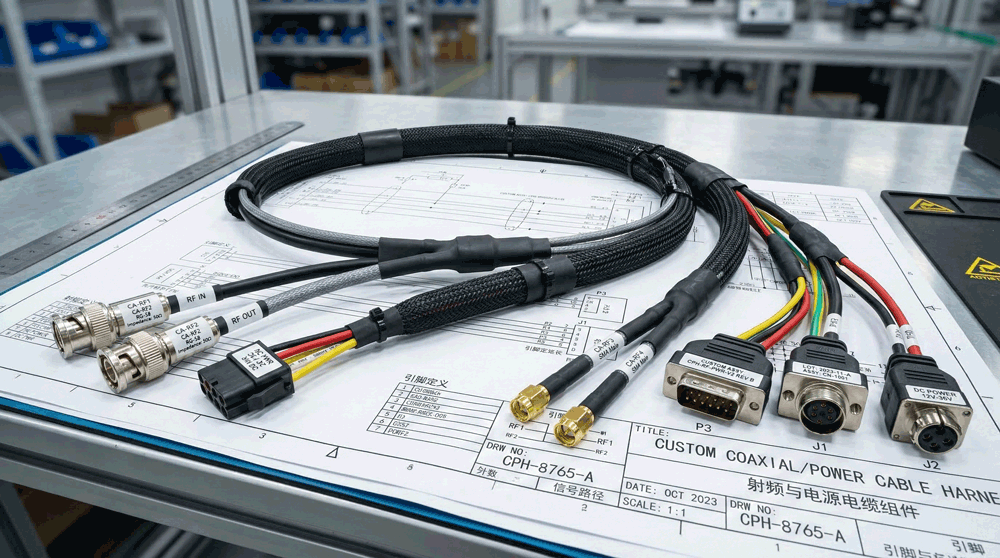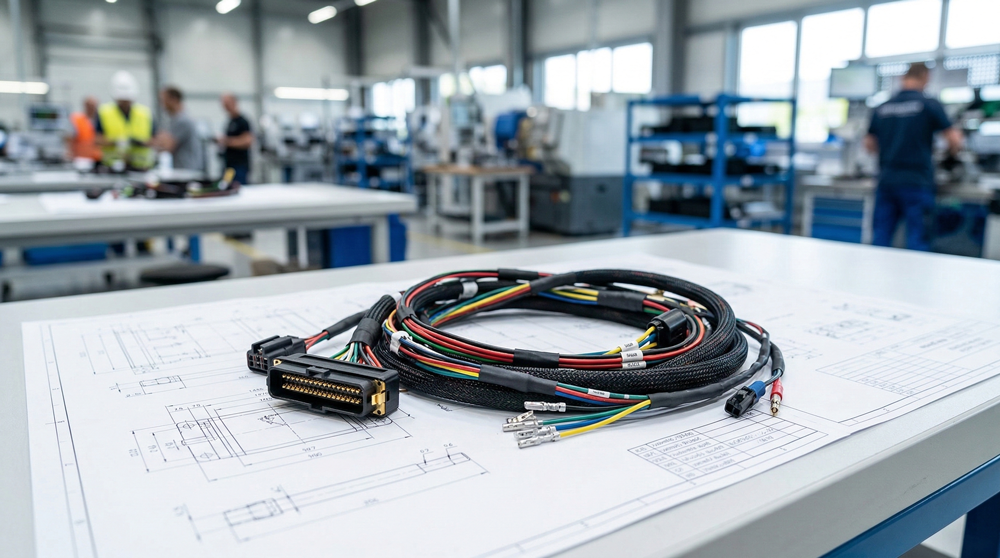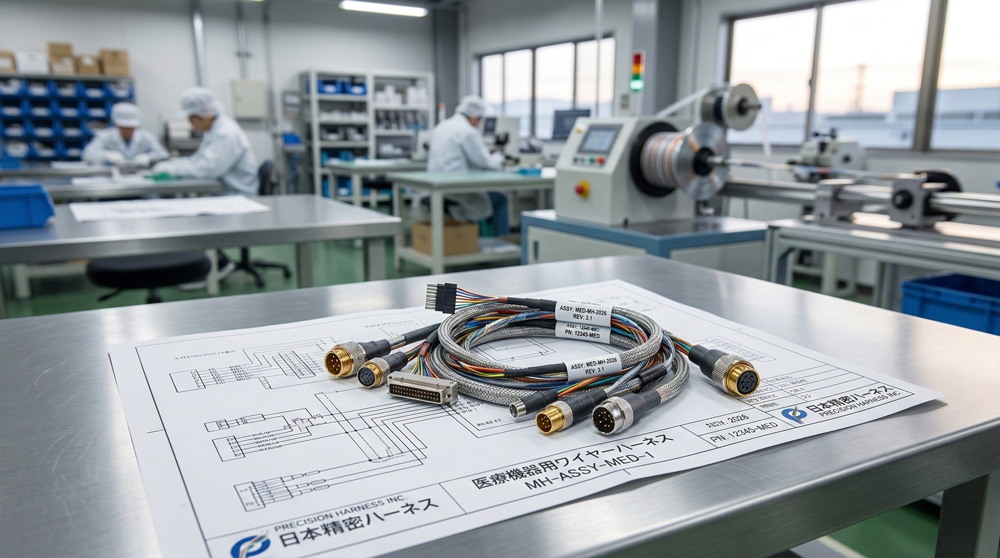
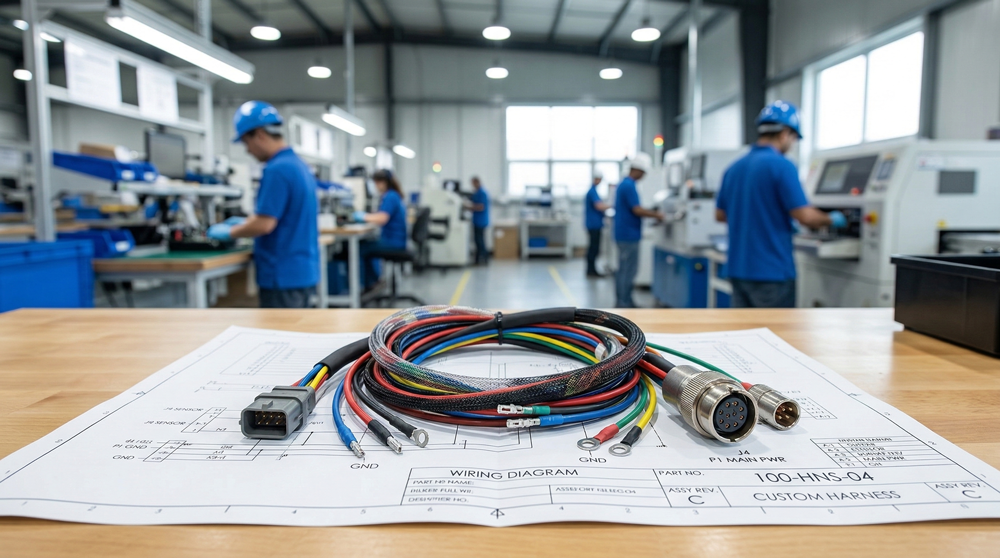
A wire harness supplier transition strategy is not just a purchasing event. It is a controlled business process that affects drawings, bills of materials, validation logic, inventory, field risk, lead time stability, and long-term customer confidence. Many OEM buyers only realize this after the switch has already started. The first sample from the new source may look acceptable, the quoted price may appear competitive, and the commercial decision may seem straightforward. But once production transfer begins, hidden problems often surface. Revision mismatches appear between drawings and the actual build. Approved materials are substituted without enough visibility. Legacy stock gets mixed with new-source stock. Test methods are interpreted differently. Traceability weakens. Small documentation gaps turn into large operational risks.
That is why a wire harness supplier transition strategy should be treated as a project-control framework, not just a sourcing action. The real objective is not merely to move demand from Supplier A to Supplier B. The real objective is to move supply without losing control of product definition, quality performance, delivery continuity, or customer-facing approval logic.
For OEM teams, this topic is especially important when an incumbent supplier becomes unstable, when the business wants a second source for resilience, when engineering support is too slow, or when procurement needs more leverage without increasing launch risk. In each of these cases, the buyer is not only evaluating whether a new factory can build the harness. The buyer is evaluating whether the new factory can absorb the full operating context of the project: controlled drawings, part-number logic, test expectations, approval records, lot traceability, deviation handling, and ramp discipline.
A good transition therefore starts earlier than most people expect. It starts before the first quotation goes out. It starts when the buyer defines what exactly is being transferred, how much of the existing product baseline is fixed, what can be challenged through Design for Manufacturability (DFM), what documents must travel with the build, and how success will be judged across sample, pilot, cutover, and post-transfer production.
This is where a supplier with stronger document discipline, engineering feedback, and execution control becomes materially different from a supplier that simply offers another price. If the harness is part of a larger OEM system, the cost of a weak transfer can be much larger than the part-cost delta. A missed connector keying issue, an unmanaged alternate, or a mixed-lot shipment can create line stoppage, containment cost, customer escalation, and months of credibility loss.
This article explains how to build a practical wire harness supplier transition strategy from a B2B buyer’s perspective. It focuses on the points that matter most in real procurement and project execution: second-source logic, transfer-package completeness, risk review, qualification stages, cutover planning, inventory segregation, and post-transition control. The goal is not simply to “change factories.” The goal is to change supply without creating avoidable instability.
Table of Contents
ToggleWhy wire harness supplier transitions happen
Most supplier transitions do not start with one dramatic event. More often, they begin with a pattern that becomes impossible to ignore. The incumbent supplier may still ship product, but response speed becomes inconsistent. Quality escapes happen more often. Engineering questions take too long to close. Quotation cycles stretch. Material traceability becomes harder to verify. Small change requests create disproportionate confusion. In other words, the supplier is no longer failing in a spectacular way. They are becoming operationally expensive.
For procurement, this often appears first as a resilience issue. A single-source harness may support the program today, but the buyer can see that any serious disruption would leave the project exposed. For engineering, the trigger may be different. The supplier may build to print, but offer little design review, poor DFM feedback, or weak problem-solving during prototype iterations. For quality teams, the issue may be inconsistency in documentation, unclear root cause analysis, or insufficient reaction speed after defects.
Cost can also trigger a transition, but mature buyers know that price alone is rarely a safe basis for supplier change. A lower unit price can be erased quickly by transition-related scrap, duplicated approvals, emergency freight, line stoppage, or field containment. In wire harness programs, the cheapest quote is not necessarily the lowest landed risk.
There is also a strategic reason. Some OEM buyers do not want to replace the incumbent immediately. They want to qualify a second source first. This is often the more intelligent path because it creates leverage, protects continuity, and allows the buyer to compare execution quality over time. In that sense, a supplier transition strategy and a second-source strategy are closely related. The difference is mainly in intent. One is designed to diversify supply. The other is designed to move supply. But both require disciplined control of the technical and operational baseline.
What buyers often get wrong in a supplier transition
The most common mistake is treating the transition as a quotation exercise instead of a baseline-control exercise. Buyers sometimes assume that if a new supplier has the drawing, the bill of materials, and a physical sample, the transfer is essentially defined. In practice, that is rarely enough.
A wire harness is not only a geometry and connectivity object. It is also a controlled combination of conductor type, connector family, plating logic, seal fit, stripping conditions, crimp standards, dress rules, labels, packaging, traceability format, and outgoing verification methods. If these assumptions are not made explicit, the new supplier will fill the gaps using its own habits. Sometimes those habits are good. Sometimes they are commercially dangerous. The risk is highest when the product still “works” electrically, because that creates a false sense of security while the project quietly drifts away from the approved state.
Another common mistake is overvaluing the first successful sample. A sample proves very little if the process behind it is not repeatable. A capable sample technician can rescue a weak transfer package. Production cannot. What matters more is whether the new supplier understood the drawing intent, challenged ambiguities early, aligned the bill of materials to the actual build, documented approved substitutions clearly, and translated all of that into a controlled manufacturing route.
Buyers also underestimate inventory and change-boundary risk. If the old supplier still holds finished goods, work in progress, raw material, or customer-labeled packaging while the new supplier is ramping up, the cutover can become chaotic. Mixed revisions, mixed date codes, mixed labels, or mixed pack-outs can create receiving confusion and field traceability problems long after the switch is supposedly complete.
That is why transition discipline matters more than transition speed. Moving too quickly without control often creates a slower recovery later.
Define the transfer scope before you source
Before requesting any quotation, the buyer should define what is actually being transferred. This sounds obvious, but many organizations skip it because the part number seems simple. In reality, transfer scope has several layers.
The first layer is product scope. Is the transfer for one part number, an entire harness family, or a platform with multiple branch variants and option codes? Are service parts included? Are accessory kits, labels, packaging inserts, and regional variants included? Does the transfer include mating subassemblies, or only the final harness?
The second layer is revision scope. What is the exact released drawing revision? Is there an open Engineering Change Order (ECO) in parallel? Are there temporary deviations already accepted at the current supplier? Have there been historical “tribal knowledge” adjustments that never made it into the formal drawing set? Unless this is clarified, the new supplier may inherit a product that exists in three versions at once: what is documented, what is shipped, and what the customer actually expects.
The third layer is process scope. Is the buyer asking the new supplier to duplicate the existing build method exactly, or is there room for process optimization after qualification? This matters because some transitions are intended to be pure transfer projects, while others are hybrid projects that combine transfer with cost, manufacturability, or lead-time improvement. If the buyer mixes those objectives without control, the project becomes hard to validate.
The fourth layer is commercial scope. Is the intent to create an Approved Vendor List (AVL) with dual-source capability, or to move 100 percent of the demand after qualification? Is the buyer asking for prototype-only support, pilot support, or full production readiness? Is the new supplier expected to hold safety stock, support consignment, or carry customer-owned tooling?
A well-defined transfer scope reduces confusion and makes every later decision cleaner. It also allows better use of internal technical reviews such as Wire Harness Drawing Review and Wire Harness BOM and Part Control, because those reviews only add value when the baseline itself is clear.
Second source qualification versus full supplier replacement
Many teams use these two ideas interchangeably, but they are not the same. A second source qualification is primarily a resilience strategy. The buyer wants another capable source without immediately eliminating the incumbent. A full supplier replacement is a cutover strategy. The buyer intends to shift demand fully after the new source is approved.
The distinction matters because it changes the risk appetite, the qualification depth, and the cutover timeline.
| Strategy | Primary goal | Typical trigger | Risk posture | Operational implication |
|---|---|---|---|---|
| Wire harness second source qualification | Build supply resilience and negotiation leverage | Single-source exposure, capacity concerns, program growth | Lower urgency, higher comparison discipline | Dual approval, allocation rules, parallel monitoring |
| Full wire harness supplier replacement | Move supply away from incumbent source | Chronic quality, delivery instability, cost pressure, weak support | Higher urgency, higher transfer risk | Inventory cutover, tooling transfer, stronger containment controls |
In many B2B programs, second source qualification is the better first move. It gives procurement optionality without forcing immediate dependence on an unproven transfer. It also gives engineering and Supplier Quality Engineering (SQE) teams time to compare documentation quality, responsiveness, first-pass yield, and change discipline between suppliers under real project conditions.
A full replacement becomes more appropriate when the incumbent supplier has already lost confidence materially, when relationship recovery is no longer practical, or when strategic restructuring requires a clean move. Even then, the best transitions are usually phased. Sample approval leads to pilot. Pilot leads to limited allocation. Limited allocation leads to controlled ramp. Very few harness programs benefit from an uncontrolled “all at once” switch.
Build a transfer package that is actually usable
A transition fails early when the transfer package is incomplete, outdated, or too dependent on informal knowledge. The package should be usable by engineering, procurement, quality, and production at the new source without needing constant interpretation from the buyer.
At minimum, the transfer package should include the released drawing, revision history, bill of materials, approved alternates policy, connector and terminal callouts, wire specifications, lengths and tolerances, label content and location, packaging method, test expectations, and any customer-specific workmanship rules. But mature buyers know that the real value is in the details around those documents.
For example, does the drawing define measurement rules clearly enough that branch lengths will be interpreted consistently? Does the bill of materials identify which parts are strictly frozen and which can be cross-referenced? Are there customer-nominated components? Are there seal and wire outer diameter dependencies that the new source needs to respect? Are there image references for routing, dress, breakout orientation, or tape wrap start-stop positions? Are there known pain points from the incumbent build that should be called out explicitly?
This is where structured internal content such as Wire Harness Drawing Review, Wire Harness BOM and Part Control, and the broader Wire Harness Compliance and Certification Guide become highly relevant. A transition package should not only define what to build. It should define what must remain controlled after the transfer.
If the project has higher documentation requirements, the package should also include first-article expectations, validation logic, evidence-pack expectations, and any customer approval structure resembling a light Production Part Approval Process (PPAP). If traceability is important, the lot-code format, label rules, and shipment-document logic should be part of the transfer package rather than left for later discussion.
In practical terms, a good transfer package reduces the number of buyer explanations needed after quotation. That is often the clearest sign that the package is strong.
Run a transition risk review before sample release
A proper wire harness transition risk review should happen before the new supplier builds samples, not after the first issues appear. The purpose is to expose assumptions while they are still cheap to fix.
Technical risk is usually the first area. The team should ask whether the drawing is complete enough, whether all critical characteristics are defined, whether there are hidden fit constraints, whether any terminals or connectors have ambiguous sourcing paths, and whether special process dependencies exist. A harness that looks simple on paper may contain several hidden technical traps, especially when sealing, shielding, crimp-window sensitivity, or tight routing geometry is involved.
Quality risk is different. Here the team should ask how defects would escape if the new supplier misunderstood the baseline. Would the error be caught by continuity testing alone, or does it require dimensional, visual, or mechanical verification? Are there appearance expectations that matter to the customer? Are there field-failure modes linked to handling, bend radius, retention force, or label durability? If the answer is yes, the qualification plan must reflect those risks.
Supply risk also deserves more attention than buyers often give it. Are the critical materials available from the new supplier’s channel? Are lead times acceptable? Are there customer-designated parts with constrained distribution? Will the new supplier use the same component manufacturers, or equivalent approved sources? If an alternate is proposed, does the buyer understand whether that alternate creates a revalidation need?
Change-control risk is often the most underestimated category. Once the new supplier starts asking reasonable questions, the buyer may discover that the incumbent product baseline was never truly clean. The team should decide how ECOs, deviations, temporary approvals, and substitution requests will be handled during transition. Without that rule set, the project can unintentionally become both a transfer and a redesign at the same time.
Qualification should follow stages, not optimism
A disciplined qualification path usually outperforms a rushed one. The exact depth depends on product criticality, but the logic should be progressive.
The first stage is desk validation. The new supplier reviews the package, closes open technical questions, identifies missing information, and confirms which materials and processes are understood. This stage is where a supplier’s engineering maturity becomes visible. A good supplier does not simply quote. A good supplier surfaces ambiguity before it becomes cost.
The second stage is sample build. The goal here is not to declare victory. The goal is to prove interpretation. Does the supplier build the harness according to the defined baseline? Are dimensions, labels, materials, and dress aligned? Does the supplier provide meaningful build feedback? This stage often pairs naturally with Wire Harness Prototype Review and Pilot Build.
The third stage is qualification evidence. Depending on the project, this may include First Article Inspection (FAI), process records, crimp verification, material declarations, and defined test outputs. The key is that the evidence should match the risk level. Overbuilding paperwork for a low-risk harness slows the project unnecessarily. Underbuilding evidence for a customer-facing or safety-sensitive harness is worse.
The fourth stage is pilot. Pilot is where repeatability begins to matter. The supplier now proves that the build is not dependent on one careful operator or one controlled sample event. The buyer should look for consistency in material flow, labeling, inspection, packaging, and reporting. It is also the right time to check whether the supplier’s actual outgoing controls align with expectations documented under Tests & Inspections and whether the project can support a practical shipment record structure similar to the Wiring Harness Quality Evidence Pack Guide.
The fifth stage is controlled ramp. Only after the supplier has demonstrated stable pilot performance should the buyer increase allocation materially. Even then, heightened monitoring for the first production lots is usually wise.
Qualification is not just about approval. It is about learning where the process still depends on supervision.
Plan cutover and inventory segregation early
One of the most expensive transition failures is poor cutover discipline. The technical transfer may be acceptable, but the operational switch becomes messy because old and new supply are not segregated cleanly.
The buyer should define a clear cutover boundary: by date, by purchase order, by lot code, by revision, or by customer shipment window. That boundary should be visible to procurement, planning, receiving, quality, warehouse, and the supplier. If the old supplier still ships after the new supplier starts, the organization must decide exactly which lots are acceptable and under what labeling logic.
Inventory segregation is not just a warehouse topic. It is a traceability topic and a customer-confidence topic. If old-source stock, new-source stock, reworked stock, and customer-return stock can all be confused physically or systemically, the transition is not controlled. The risk is especially high for visually similar harnesses where the functional difference lies in material source, terminal plating, labeling, or a small process characteristic that is invisible at receiving.
That is why buyers should define segregation rules for finished goods, work in progress, nonconforming stock, and customer returns. Packaging labels should reflect source identity and lot logic clearly enough that later investigations can isolate affected product fast. Enterprise Resource Planning (ERP) notes, lot identifiers, or supplier codes should support the same logic. If customer packaging is branded or serialized, those details should also be part of the cutover plan.
A clean cutover also requires commercial discipline. Open purchase orders at the incumbent supplier should be reviewed. Liability for raw materials, customer-owned tools, and finished stock should be agreed before the transition becomes emotional or urgent. The more abrupt the relationship deterioration, the more important this becomes.
Post-transition quality control is where credibility is won
Many teams relax too early once the new supplier has been approved. In reality, the first three to five production lots after cutover often tell the most important story. This is where supplier discipline is tested under normal pressure instead of managed qualification conditions.
Post-transition quality control should therefore be intentionally tighter for an initial period. The buyer may increase incoming inspection temporarily, require shipment-linked records more consistently, review defect trends more frequently, and hold a faster escalation path for documentation gaps or packaging deviations. This does not mean the supplier is presumed weak. It means the business recognizes that early production behavior is the most relevant evidence of a stable transfer.
The monitoring focus should not be limited to defect quantity. Buyers should also look at responsiveness, root cause quality, corrective action closure speed, and document consistency. A supplier that reacts quickly, explains clearly, and updates controls responsibly often becomes a stronger long-term partner even if minor issues appear early. By contrast, a supplier that resists transparency during the first escapes is signaling future risk.
This phase is also where evidence discipline becomes a competitive advantage. Shipment-linked records, lot clarity, test evidence, and traceable documentation reduce friction dramatically when questions arise. The logic described in the Wiring Harness Quality Evidence Pack Guide and your broader Quality Guarantee expectations becomes especially useful here. When the buyer can identify what shipped, what was checked, and what changed, the cost of uncertainty drops sharply.
A good transition is not proven when the supplier wins the business. It is proven when the business becomes boring again.
What strong wire harness suppliers do differently during transition
The strongest suppliers do not try to look easy. They try to make risk visible early. They ask better questions at the quotation stage. They challenge incomplete drawings. They clarify approved alternates instead of assuming them. They define what evidence they can provide and what would require additional agreement. They separate transfer from redesign, and they do not hide ambiguity behind a low price.
They also support the buyer operationally. They can explain how they will control lot traceability, how they will manage sample-to-production continuity, how they will prevent mixed inventory, and how they will react if an issue emerges after cutover. This is where pages such as Strong Technical Support and Why Choose Us should not be marketing decorations. They should reflect how the supplier actually behaves when a transition becomes complex.
For B2B buyers, that behavior matters more than slogans. Most wire harness projects do not fail because no one knew how to crimp a terminal. They fail because control logic was weak between engineering, sourcing, inventory, and change management. The best suppliers understand that the harness is only part of the deliverable. The rest of the deliverable is clarity.
Conclusion
A wire harness supplier transition strategy should be built as a controlled program, not handled as a simple commercial switch. Buyers that define transfer scope clearly, build a usable transfer package, review transition risk before samples, qualify in stages, plan cutover boundaries carefully, and maintain tighter post-transition control are far more likely to protect delivery and quality while changing sources.
The core question is never just whether a new supplier can build the harness. The core question is whether the new supplier can inherit the product baseline, support the operational rules around it, and keep the business stable through the transition. When that is the standard, second-source qualification becomes more strategic, supplier replacement becomes less chaotic, and procurement decisions become more resilient.
In competitive OEM supply chains, that is often the real difference between a supplier that is merely available and a supplier that is genuinely transferable.
FAQ
How do we know whether we need a second source or a full supplier replacement?
If the incumbent supplier is still operational but creates concentration risk, weak responsiveness, or limited leverage, second-source qualification is usually the better first step. If chronic quality, delivery, or support failure has already damaged confidence materially, full replacement may be more appropriate.
What is the biggest risk in a wire harness supplier transition?
The biggest risk is usually loss of baseline control rather than total build failure. The new supplier may produce a harness that appears functional while revision, material, labeling, or traceability assumptions quietly drift away from the approved state.
Should we transfer the existing design exactly before asking for cost-down ideas?
In most cases, yes. A clean transfer is easier to validate than a transfer combined with redesign. Once the new supplier proves stable control of the current baseline, cost-down or DFM changes can be introduced through a separate controlled change path.
What documents matter most in a harness transfer package?
The released drawing, bill of materials, approved alternates policy, revision history, test expectations, packaging requirements, labeling logic, and traceability rules are usually the most critical. The exact package depends on project risk and customer approval requirements.
How long should post-transition heightened monitoring last?
There is no universal number, but the first three to five production lots are often the most informative. The buyer should keep enhanced attention until documentation, quality performance, and response behavior become consistently predictable.
CTA
If you are planning a wire harness supplier transition, the safest starting point is a controlled review of your drawing package, BOM logic, validation scope, and cutover risk before RFQ release.
You can send your drawing set, BOM, current pain points, and target timeline through Contact. Our team can help review transfer readiness, identify documentation gaps, and support a smoother qualification path with references from Wire Harness Drawing Review, Wire Harness BOM and Part Control, and Strong Technical Support.