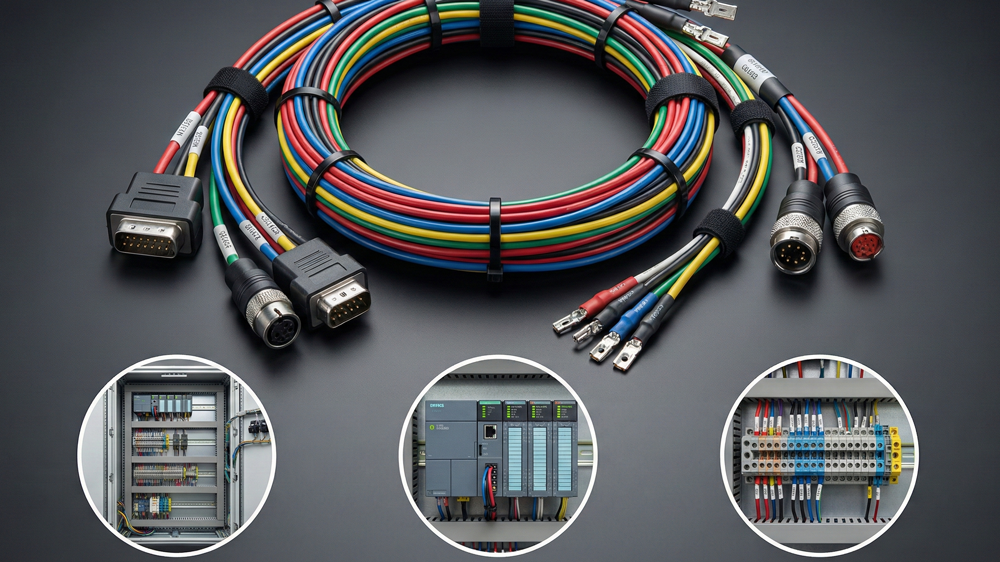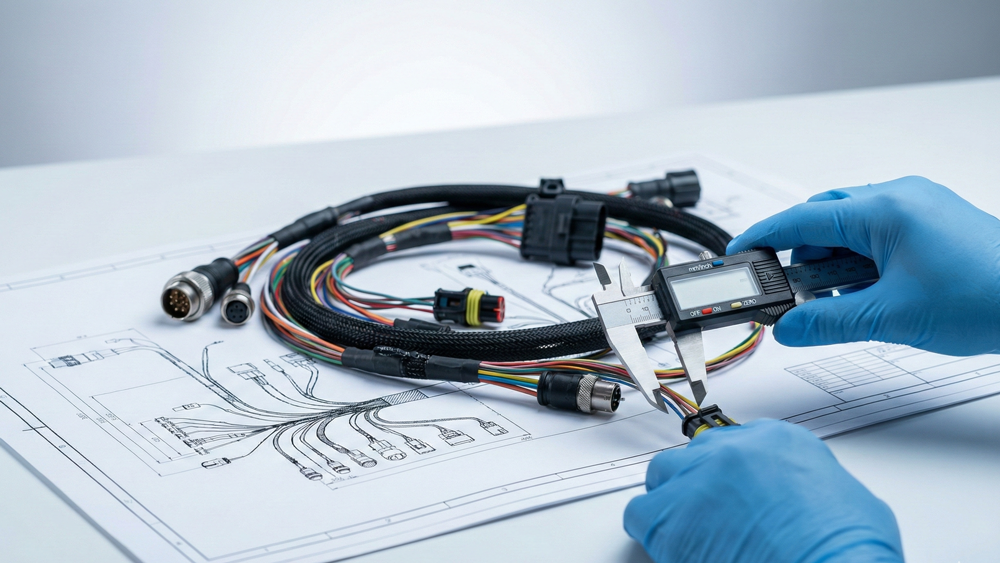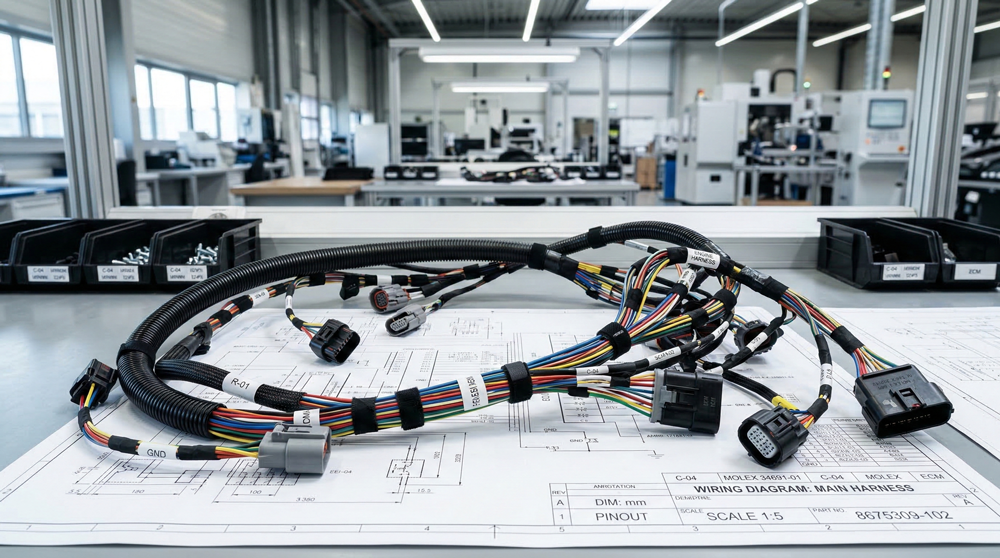
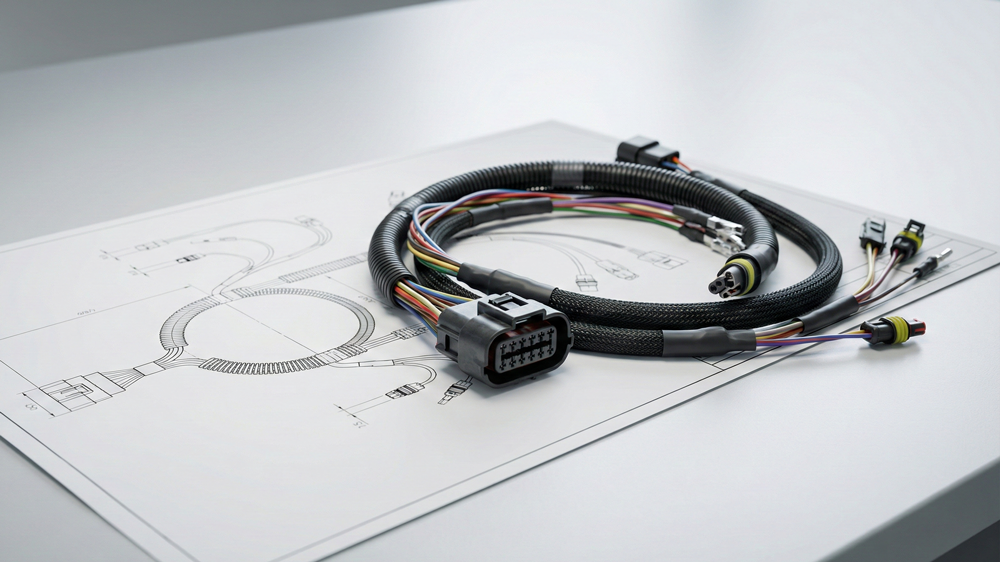
A strong wire harness prototype review is one of the best ways to reduce launch risk before the project becomes expensive. In many OEM and custom harness programs, teams move too quickly from “the sample works” to “the design is ready.” That shortcut creates avoidable cost. The first sample may prove electrical function, but it does not automatically prove build consistency, material stability, revision clarity, inspection practicality, packaging readiness, or pilot-to-production repeatability.
That is why prototype review and pilot build should be treated as two different but connected stages. Prototype review helps the buyer and supplier understand whether the design is directionally right and what must still be clarified. Pilot build proves whether the harness can be built repeatedly under controlled conditions using approved materials, stable work instructions, and evidence that supports production release. If those two stages are blurred together, the project often pays later through repeated sample loops, engineering churn, slow ECO decisions, low first-pass yield, or unstable launches.
For buyers, this topic is not only technical. It is commercial. A weak prototype phase wastes engineering time and delays sourcing decisions. A weak pilot phase creates launch surprises, broad containment, and expensive rework. A strong supplier uses prototype review and pilot build support to reduce those costs before they appear. That is the real value of engineering support in B2B harness projects.
This article explains how to use wire harness prototype review and pilot build as controlled project gates. The goal is to create a smoother path from sample to repeatable production, with fewer assumptions and less hidden risk. For the broader framework behind this series, connect this article to Wire Harness DFM and Engineering Support, where manufacturability is positioned as a supplier value proposition rather than just a technical service.
Table of Contents
ToggleWire harness prototype purpose
The purpose of a harness prototype is not simply to produce a physical sample. It is to learn quickly and cheaply. A prototype should reveal whether the connector selections, wire choices, routing assumptions, branch structure, labels, protection methods, and test logic are moving in the right direction. It should also reveal what is still unclear before those unclear points become expensive during pilot or launch.
This matters because many teams unconsciously give prototypes more authority than they deserve. If a sample plugs in, powers on, and passes a basic bench check, it is tempting to treat it as proof that the design is nearly finished. In reality, prototypes often contain temporary assumptions. A label may be manually created. A terminal may be chosen provisionally. A test fixture may not yet represent production. A packaging method may be ignored because the sample is hand-carried. These shortcuts are acceptable if they are visible and controlled. They become dangerous when they are forgotten and mistaken for a production-ready baseline.
A good supplier therefore treats the prototype as a learning tool and communicates clearly what the sample does and does not prove. That honesty has high commercial value because it prevents the buyer from building schedules around false confidence.
Wire harness prototype review
A wire harness prototype review should begin with one question: what did this sample actually validate? The answer should be specific. Did it validate fit? Pinout? Length logic? Connector orientation? Routing space? Basic electrical continuity? Label visibility? Sealing concept? If the review does not define what has been validated, then teams tend to assume more confidence than the sample deserves.
A strong review should also capture what remains open. That may include connector variant decisions, terminal approvals, wire construction, branch breakout locations, sleeving choices, test requirements, packaging, or revision control gaps. These are not signs of project failure. They are exactly what the prototype stage exists to expose. The problem begins only when those open points are not captured and therefore drift quietly into the pilot stage.
For buyers, this is where supplier quality becomes visible. A passive supplier ships the sample and waits for comments. A stronger supplier reviews the sample proactively and identifies what is still unstable. That makes the prototype review commercially useful rather than merely procedural.
Cable assembly sample review
A cable assembly sample review should be broader than electrical function. Function matters, but manufacturability matters too. If the sample required unusual handling, manual workarounds, or ad hoc process decisions, those facts belong in the review. They are often the earliest signs of future launch cost.
The sample review should therefore ask practical questions. Was insertion easy and repeatable, or was it sensitive to operator technique? Were any labels applied manually in a way that would be hard to scale? Did branch dressing depend on one experienced assembler? Was the sample inspected using a method that is realistic in production, or only because the build quantity was one or two pieces? Did any part need to be sourced in an unusual or unstable way? These are the kinds of questions that convert sample review from a simple technical checkpoint into a business-control mechanism.
The answer does not need to be perfect. What matters is visibility. If the supplier can say, “the sample worked, but these three elements will create instability if we do not change them,” then the project is already in a better position than one where everyone simply celebrates that the sample powered up.
Wire harness drawing freeze
At some point between prototype and pilot, the project needs a drawing freeze or at least a controlled baseline. That does not mean change stops. It means change becomes visible. Without a drawing freeze, prototype learning cannot be converted into a stable reference, which makes pilot outcomes difficult to interpret.
A useful freeze should lock the items that matter most for build consistency: connector definitions, cavity mapping, wire gauge and type, branch logic, length references, labels, protection methods, and any critical notes tied to testing or packaging. If some items are still open, that is acceptable, but they should be explicitly listed as open items rather than left ambiguous.
Commercially, a controlled drawing freeze reduces sampling cost because the supplier can align materials, test logic, and internal build instructions to something stable enough to be meaningful. It also reduces quote instability because the supplier is no longer pricing against a moving target.
Wire harness BOM freeze
The BOM should be reviewed and frozen together with the drawing baseline. In practice, many prototype delays and pilot failures come from BOM uncertainty rather than from geometry alone. A connector may be defined on the drawing while the terminal is still assumed. A wire family may be stated while insulation construction remains open. A label may be shown without final content control. These gaps do not always block a first sample, but they do create instability as soon as the project moves toward repeatability.
A wire harness BOM freeze should therefore confirm which materials are fixed, which are approved with controlled alternates, and which remain open but explicitly tracked. If the supplier is expected to propose final terminal or accessory selections, the approval path should be visible before pilot begins. Otherwise the pilot build may end up validating a material state that no one explicitly intended to lock.
This is where the previous article Wire Harness BOM and Part Control directly supports prototype review. A prototype is far more useful when the BOM logic behind it is visible.
Wire harness DFM feedback
Prototype stage is where DFM feedback is cheapest and most valuable. A design-for-manufacturability comment during prototype may take one meeting to resolve. The same issue discovered in pilot may trigger new materials, new samples, and delayed launch approval.
Useful DFM feedback at this stage should focus on the areas most likely to generate repeated cost later: connector accessibility, terminal sensitivity, wire and seal compatibility, branch breakout stability, strain relief transitions, label practicality, protection coverage, inspection feasibility, and packaging implications. The supplier should not only say that something is difficult. They should explain what commercial effect that difficulty will have. Will it increase touch labor? Lower yield? Create more inspection time? Make rework difficult? Complicate revision changes? Risk vibration fatigue? Once the buyer understands that impact, decisions become easier.
This is also how engineering support becomes visible to non-engineering stakeholders. Procurement may not care deeply about insertion geometry, but procurement cares if unstable insertion means slower builds and higher variation. Project managers may not care deeply about branch dressing, but they care if it creates schedule risk in pilot. Strong DFM feedback translates technical detail into operational consequence.
Wire harness first article
A first article at prototype-to-pilot transition should not be treated as a ceremonial document. It is the bridge between “we built a sample” and “we have a controlled baseline.” A useful first article confirms that the drawing and BOM state are actually reflected in the physical build and that critical characteristics can be measured and documented repeatably.
For harnesses, a first article often needs to confirm more than dimensions. It should support connector identity, cavity map accuracy, critical lengths, labels, branch locations, key protective materials, and any important assembly or test conditions. Where relevant, it should also capture photos and build notes that help later teams compare future revisions or field returns against the original approved state.
That is why first article evidence has commercial value. It reduces later argument. When a supplier says “this is how the approved pilot baseline looked,” and can prove it with records, the buyer can investigate later changes much more efficiently.
Wire harness validation
Validation during the prototype phase should be proportional to the project risk, but it should always be clear what is being validated and why. For some harnesses, that may be basic electrical and fit checks. For others, especially sealed, high-flex, or harsh-environment designs, the validation may need to go further into pull integrity, resistance stability, vibration behavior, sealing, or environmental exposure.
The important point is not to run every possible test on day one. The important point is to connect the prototype stage to the real failure risks of the application. If a harness will live in vibration and flex, prototype validation should already be asking whether the routing and strain-relief concept are stable. If the harness depends on sealing, then sample review should already consider wire OD, seal fit, and assembly handling. A prototype that ignores the dominant field risk is not really reducing project uncertainty.
When useful, the review can reference established methods from earlier content such as Wire Harness Vibration Reliability and Flex Life or Wire Harness Sealing and IP Protection, depending on application risk.
Wire harness pilot build
A wire harness pilot build serves a very different purpose from a prototype. The prototype helps answer whether the design concept is moving in the right direction. The pilot build answers whether the supplier can execute the design repeatedly under controlled production-like conditions. That distinction matters because many projects fail by treating pilot as “more prototypes” rather than as a production-readiness checkpoint.
A good pilot build should be large enough to reveal process behavior. That includes setup repeatability, material flow, operator variation, inspection practicality, label consistency, packaging repeatability, and traceability discipline. It does not need to be full mass production, but it does need to reflect real execution rather than hand-built special handling.
Commercially, pilot build is where the buyer starts investing real confidence. If the pilot is weak, that confidence will later be paid back as launch instability. If the pilot is strong, the buyer gains a cleaner basis for release decisions and supplier evaluation.
Wire harness pilot build plan
The pilot build should run against a defined plan, not just a quantity target. A useful pilot plan states the build quantity, the baseline revision, the material state, the evidence required, the tests to be run, the acceptance logic, and the treatment of nonconforming findings. If these elements are not defined, teams often reach the end of pilot with product on the table but no shared agreement about what the outcome means.
A strong pilot build plan also defines which open issues are allowed to remain open and which must be closed before the build begins. This prevents pilot from being used as a catch-all stage for every unresolved design question. Pilot should verify repeatability, not absorb uncontrolled project ambiguity.
This is commercially valuable because a defined pilot plan reduces meeting churn and aligns engineering, quality, procurement, and supplier teams around one decision gate rather than many moving partial judgments.
Wire harness pilot lot
Lot logic during pilot matters more than many teams expect. If the pilot quantity is built across different material states, different setup conditions, or different unrecorded revisions, then the lessons from the pilot become muddy. Buyers may think they are learning about process stability when they are actually comparing mixed baselines.
A strong supplier should therefore define the pilot lot structure clearly. What material lots were used? What revision state was active? Were there any deviations? Were all units built under the same setup window, or was the build split? Which evidence records belong to the full lot and which belong to subgroups? Without that clarity, it becomes difficult to say whether a later issue is a true process problem or simply a hidden variation inside the pilot itself.
This links directly to traceability. The more valuable the pilot is to the eventual launch decision, the more important it becomes to preserve the material and process logic behind it.
Wire harness production readiness
Production readiness is not the same as “the pilot mostly went well.” Production readiness means the supplier can build to a stable revision with controlled materials, defined work instructions, realistic test methods, traceable records, and a known reaction plan if something drifts. In other words, production readiness is a system condition, not a sample outcome.
A good prototype-to-pilot process should therefore generate evidence about readiness, not just product pieces. Are setup methods stable? Are material approvals frozen enough to prevent hidden substitutions? Are operators dependent on one engineer’s verbal guidance, or are the instructions strong enough to scale? Can inspection and test methods actually be run at realistic output levels? Are labels, packaging, and logistics already part of the process, or still treated as later details?
This is one of the most important transitions in a project, because once the buyer accepts “production-ready” status, every later drift becomes much more expensive to manage.
Wire harness yield and rework
Pilot builds should also be judged by yield behavior, not only by pass/fail status at the end. A pilot lot that ships successfully but requires unusual rework, excessive hand adjustments, repeated label replacement, or manual sorting may be telling the buyer that the design and process are still too fragile for stable launch.
A strong supplier will not hide this. They will use pilot results to show where the process is strong and where it still carries instability. That transparency has commercial value because it allows the buyer to correct issues while the project is still controllable. If the supplier hides pilot rework by simply absorbing extra labor, the project may look healthy while actually carrying hidden launch risk.
This is why pilot review should ask not only what passed, but how much effort it took to make it pass.
Wire harness sample approval
Sample approval should be structured enough that everyone knows what approval actually means. Too often a project says “sample approved” when what really happened is that one person on the buyer side accepted fit and basic function while several open issues remained undocumented. That kind of approval creates a false baseline and later weakens supplier accountability.
A stronger sample approval process states what was approved, what was conditionally approved, what evidence was reviewed, and what still remains open. It also states whether the approval applies only to prototype learning, to first article, or to pilot baseline. Those distinctions matter because each stage carries a different expectation.
Buyers who make approval clearer usually reduce later conflict with suppliers. A supplier cannot be held to a hidden expectation that was never documented, and a buyer should not need to rediscover months later that the “approved sample” was really only approved for one limited purpose.
Wire harness evidence pack
Prototype and pilot stages should both generate evidence packs, but the purpose differs slightly. At prototype stage, the evidence should make learning visible. At pilot stage, the evidence should make repeatability visible. In both cases, the records should be good enough that later decisions are based on facts rather than memory.
A useful pilot evidence pack should include the approved revision state, material traceability, first article or setup records where relevant, key measurements, test results, label examples, and any allowed deviations or concessions. If the pilot revealed issues, the evidence pack should also make clear whether those issues were corrected during the lot or remain open for later action.
This has strong commercial value because it reduces the cost of every later discussion. Engineering can compare future revisions against the pilot baseline. Procurement can compare suppliers more fairly. Quality can investigate later drift against a known state rather than relying on recollection.
Wire harness launch gate
A launch gate is where the project decides whether the harness is ready to move from pilot into broader production. This gate should be built on evidence, not optimism. The buyer should ask whether the design is stable enough, the BOM is controlled enough, the work instructions are repeatable enough, the tests are practical enough, and the open issues are few and explicit enough that the supplier can scale without silent workarounds.
Not every issue must be resolved before launch. What matters is that unresolved issues are visible, bounded, and commercially acceptable. Hidden issues are the real danger. A project with known open points can still be launched carefully. A project with unknown open points may look faster at first and become expensive later.
This is why engineering support, pilot evidence, and revision discipline all matter together. The launch gate is not a single quality decision. It is the moment where the buyer chooses how much uncertainty to carry into volume.
Wire harness supplier support
The supplier’s role across prototype and pilot stages should be evaluated by the quality of their support, not just by the physical samples delivered. A strong supplier helps clarify what the sample proves, what the pilot proves, what still needs to change, and what evidence the buyer should use to make the next decision. A weak supplier treats each stage as a shipment event and leaves the buyer to create project meaning afterward.
For B2B buyers, this is where supplier differentiation becomes visible. The supplier who can support drawing clarification, BOM freeze, manufacturability feedback, first article logic, pilot structure, and launch readiness is not just building harnesses. They are helping the customer reduce project risk. That is why engineering support is commercially valuable and why it often matters more than a small difference in quoted unit price.
Conclusion
Wire harness prototype review and pilot build are two of the most important transition stages in any custom harness project. Prototype review turns early samples into structured learning. Pilot build turns that learning into evidence about repeatability, material stability, and launch readiness. When these stages are run clearly, they reduce engineering churn, make supplier performance easier to judge, and lower the risk of unstable production release.
For buyers, the real value is not simply better samples. It is a smoother path from concept to reliable supply. That path depends on drawing and BOM clarity, DFM feedback, first article discipline, realistic validation, traceable pilot logic, and a launch gate that is based on evidence rather than assumption. Suppliers who can support that system are usually the suppliers who create the most long-term value.
FAQ
What is the difference between a wire harness prototype and a pilot build?
A prototype is mainly for learning and confirming direction. A pilot build is for proving repeatability and production readiness under controlled conditions.
Why do projects fail between sample and production?
Because many sample-stage assumptions are not converted into controlled documentation, materials, and process rules before the project moves to pilot and launch.
What should a pilot build prove?
It should prove that the harness can be built repeatedly to a stable revision using controlled materials, realistic methods, traceable records, and practical tests.
Why is sample approval often misleading?
Because teams sometimes approve only fit or basic function but fail to document which open issues remain unresolved. That creates false confidence later.
What makes a supplier strong in prototype and pilot support?
They provide clear DFM feedback, visible issue tracking, stable evidence, good revision discipline, and a realistic view of what is and is not ready for launch.
CTA
If your harness project is moving from samples toward pilot or launch, a structured review of open issues, materials, evidence, and process readiness can reduce a lot of avoidable instability. The earlier that structure is added, the cheaper it is to fix what matters.
Contact, review Tests & Inspections, explore Custom Cable Assemblies, or see Why Choose Us.