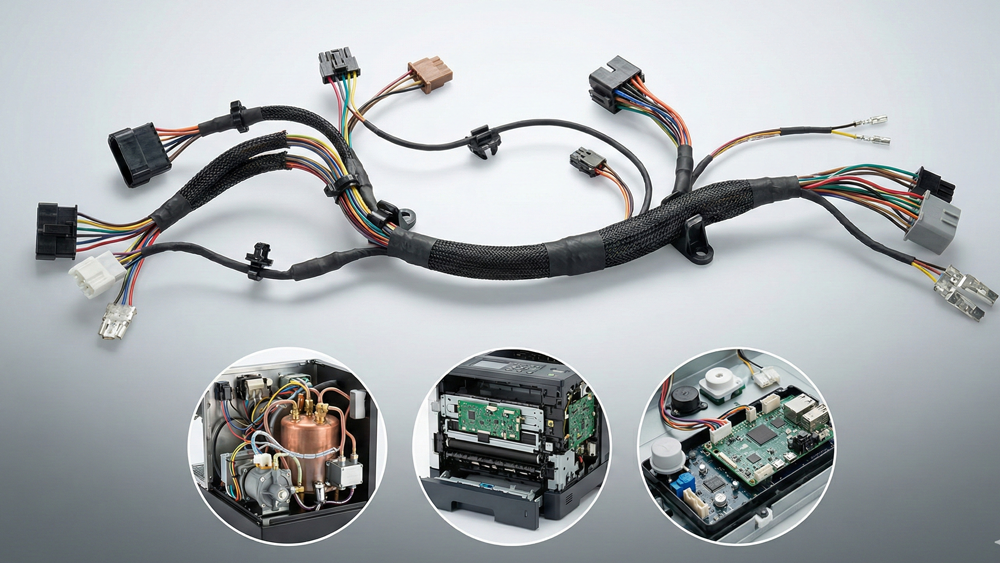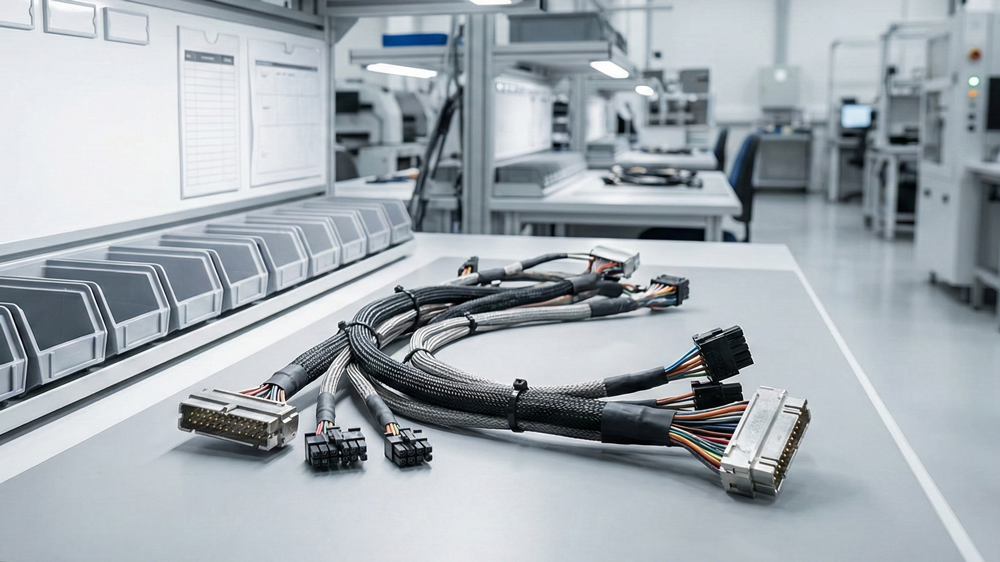

This cable assembly cost drivers guide is built for B2B buyers who want predictable pricing, stable lead times, and fewer surprises after award. Most “unexpected costs” in wiring harness sourcing are not unexpected at all—they are the downstream result of a few cost drivers that were never made explicit in the RFQ or never managed through supplier controls.
The objective of this guide is practical: help procurement and engineering identify what truly drives cost, separate value-adding costs from waste costs, and negotiate the levers that reduce total cost of ownership (TCO) without increasing quality risk.
If you want the full series context, start with the hub article Total Cost Guide for Custom Cable Assemblies. This supporting article focuses on the cost drivers themselves and how buyers can control them.
Table of Contents
ToggleWhy “cost drivers” should be part of the RFQ conversation
Suppliers will always price risk. When an RFQ is ambiguous, suppliers protect themselves either by padding unit price, by adding hidden assumptions, or by quoting aggressively and relying on change orders later. None of these outcomes helps the buyer.
A cost-driver conversation changes sourcing behavior. Instead of negotiating only the number, you negotiate the structure behind the number: materials, touch labor, test time, scrap/rework, packaging, and change management. That is where TCO is won.
To reduce quote ambiguity and prevent assumption-based pricing, start your RFQ discipline with Cable Assembly RFQ Checklist.
Cable assembly cost breakdown for B2B buyers
Most custom cable assembly programs can be modeled using five buckets:
- Materials and purchased parts
- Labor and process time
- Testing and verification
- Yield loss, rework, and quality management
- Logistics, packaging, and change overhead
The key buyer insight is that only the first bucket is “obviously visible” in a quote. The other buckets drive the difference between a supplier that looks cheap and a supplier that stays cheap after launch.
Connector and terminal cost impact
Connectors and terminals are usually the largest purchased-part cost driver. They also drive downstream labor and quality cost because they determine insertion force, crimp setup sensitivity, sealing complexity, and inspection needs.
From a buyer perspective, three choices move cost materially:
Connector family selection, especially sealed vs unsealed and high-density vs low-density. Terminal type selection, especially open-barrel vs closed-barrel and whether special tooling is required. Supplier sourcing model, especially whether the supplier can buy authorized components at stable lead times and whether alternates are allowed under controlled approval.
A common buyer mistake is to specify housings but not terminals, then assume the supplier will “choose correctly.” If terminal selection is not controlled, you may get cost-optimized terminals that increase field risk or create future sourcing constraints.
If you need to control substitutions, lock an approval matrix and re-validation triggers using Cable Assembly Change Control and ECO Guide.
Wire and cable cost drivers in wiring harness sourcing
Wire cost is not just gauge and length. Wire construction changes labor and quality cost because it affects stripping behavior, crimp behavior, seal compatibility, and flexibility.
Key cost levers include:
Conductor type and plating, which affects both raw cost and long-term corrosion risk. Insulation type, which affects temperature rating, strip quality, and abrasion resistance. Outer diameter tolerance, which affects seal compression and insertion force for sealed connectors. Shielding, which adds material cost and adds process steps for drain wire handling, shield termination, and inspection.
For programs requiring shielding, cost is best managed by specifying shielding intent clearly rather than allowing suppliers to invent it. Align scope to Shielded Cable Assemblies when relevant so supplier responses are consistent.
Labor and touch time as the hidden multiplier
In most harness programs, labor dominates cost once volumes are moderate and materials are standardized. The major driver is touch time: how many manual steps are required and how difficult those steps are.
The buyer controls touch time indirectly through design decisions: number of wires, wire length variability, termination complexity, number of connectors, sealing requirements, labeling complexity, bundling requirements, and packaging requirements.
The supplier controls touch time through standardized work instructions, setup discipline, operator training, tooling condition, and line balancing. This is why a supplier with similar equipment can produce very different costs and very different yields.
When buyers evaluate suppliers, they should ask: how do you standardize setup and reduce variation across shifts? Evidence of structured execution should be visible through capability framing like Assembly Capabilities.
Automation versus manual assembly cost tradeoffs
Automation is not always cheaper. It becomes cheaper when volume is high, the design is stable, and the process is repeatable. For high-mix or frequently changing programs, “partial automation” can be a better economic choice: automated cut-and-strip with controlled crimping and disciplined inspection.
Buyers should avoid pushing for automation as a marketing label. The real objective is stable output with acceptable unit cost and predictable lead time. If a supplier uses automation, ask how the automation is validated, maintained, and monitored for drift.
Testing and verification as a cost lever, not just a cost add
Testing adds cost. It can also remove cost by preventing expensive failures. The right question is not “can we reduce testing,” but “what testing reduces the most downstream risk per unit time.”
Continuity and shorts testing is often baseline. Additional verification—pull testing, contact resistance checks, or enhanced inspection—should be applied based on risk. For high-liability programs, the testing cost is often small relative to the cost of field failures.
If you want verification to reduce TCO rather than inflate it, require audit-ready records using Quality Evidence Pack Guide and confirm test discipline and method control using Tests & Inspections.
Yield, scrap, and rework: the TCO killer
A small change in yield can dominate total cost. Many buyers focus on unit price but ignore yield stability, because suppliers rarely volunteer their rework rates unless asked.
Yield is influenced by design complexity, tooling condition, operator training, and inspection discipline. It is also influenced by supply chain variability: wire lots and terminal lots that behave differently can change yield.
To control yield, buyers should require process controls and evidence. A disciplined supplier will have stable first-article approval, periodic checks, defined reaction rules, and documented rework rules. A supplier without those controls will appear cheap until the first drift event.
Supplier audits should always probe for rework culture and rework documentation. This is where Cable Assembly Audit Checklist becomes a direct cost-control tool.
Packaging and logistics cost drivers
Packaging choices change both cost and risk. A minimal package can reduce freight cost and increase transit damage risk. A robust package can increase unit cost slightly and reduce return loops significantly.
Cost drivers include: protective caps, individual bagging, coil diameter rules, carton partitioning, ESD handling requirements, moisture control, labeling requirements, and palletization.
Logistics cost drivers include: freight mode selection, shipment frequency, split shipments, expedite probability, customs handling complexity, and consolidation strategy.
This is why packaging should be negotiated early. The series companion article Packaging and Logistics Cost Guide for Cable Assemblies provides a buyer-friendly framework for defining packaging that reduces TCO.
Change overhead and revision drift
Every change has a cost. Even a “small” change creates engineering effort, documentation updates, validation effort, and potential mixing risk. If change control is weak, the cost becomes much larger because changes create defects and disputes.
To reduce change overhead, define who owns revisions, define what requires approval, and define re-validation triggers. The cost of discipline is small compared to the cost of silent drift.
Use Cable Assembly Change Control and ECO Guide to standardize change control so cost does not escalate quietly during ramp.
Buyer negotiation levers that reduce cost without raising risk
Many buyers try to reduce cost by pushing unit price down. More effective buyers reduce cost by reducing supplier uncertainty and by enabling suppliers to run a stable process.
The highest-leverage levers include:
Clarify requirements and remove ambiguity so suppliers don’t price risk defensively. Share forecast ranges and rational MOQ strategies so suppliers can plan materials efficiently. Standardize evidence pack requirements so acceptance and containment cost drops. Lock change-control rules to prevent substitution disputes and rework cycles. Negotiate packaging rules that reduce transit damage rather than minimizing packaging cost.
These levers reduce real costs. They also improve supplier performance and reduce friction, which increases long-term sourcing leverage.
Practical RFQ questions that surface real cost drivers
To translate cost-driver awareness into action, ask suppliers questions that force them to reveal assumptions and risk.
Ask what elements of the quote are most sensitive to changes in volume, lead time, or component availability. Ask what rework rate they typically see on similar builds and what controls keep it stable. Ask what tooling and fixture costs are required and how they reduce risk. Ask what evidence will ship with each lot. Ask what changes require approval and what triggers re-validation. Ask what packaging method they recommend to prevent damage and what failures they have seen before.
Suppliers who answer these questions with specifics are usually the suppliers who deliver stable cost after award.
Conclusion
Cable assembly total cost is driven by materials, touch labor, verification time, yield stability, packaging/logistics, and change overhead. Buyers who manage these drivers proactively reduce TCO and reduce program risk, even when the unit price is not the lowest.
If your sourcing goal is predictable cost and predictable delivery, negotiate the structure behind the quote—not only the quote number. That is how you buy stability and reduce hidden cost.
FAQ
What is the biggest cost driver in most cable assemblies?
Often connectors/terminals and touch labor. However, yield and rework can become the largest driver when process control is weak.
How do buyers reduce cost without increasing failure risk?
Reduce ambiguity, standardize verification evidence, and enforce change control. These levers reduce waste cost rather than cutting value-adding controls.
Why do two suppliers quote very different prices for the same harness?
Different assumptions, different sourcing access to components, different labor models, different yield performance, and different levels of verification included.
Should we minimize testing to reduce unit cost?
Only if failure cost is low. In most B2B programs, disciplined verification reduces total cost by preventing field failures and rework.
How can packaging increase total cost?
Poor packaging increases transit damage and returns. A slightly higher packaging cost can reduce total cost significantly by preventing failure loops.
CTA
If you want to reduce total cost on your harness program, share your connector families, volumes, and delivery constraints. We can help you identify cost drivers, propose design-for-assembly levers, and structure sourcing requirements that reduce TCO without increasing risk.
- Discuss your program: Contact
- Why buyers select us: Why Choose Us
- Verification scope reference: Tests & Inspections
- Explore scope: Cable Assemblies and Custom Cable Assemblies