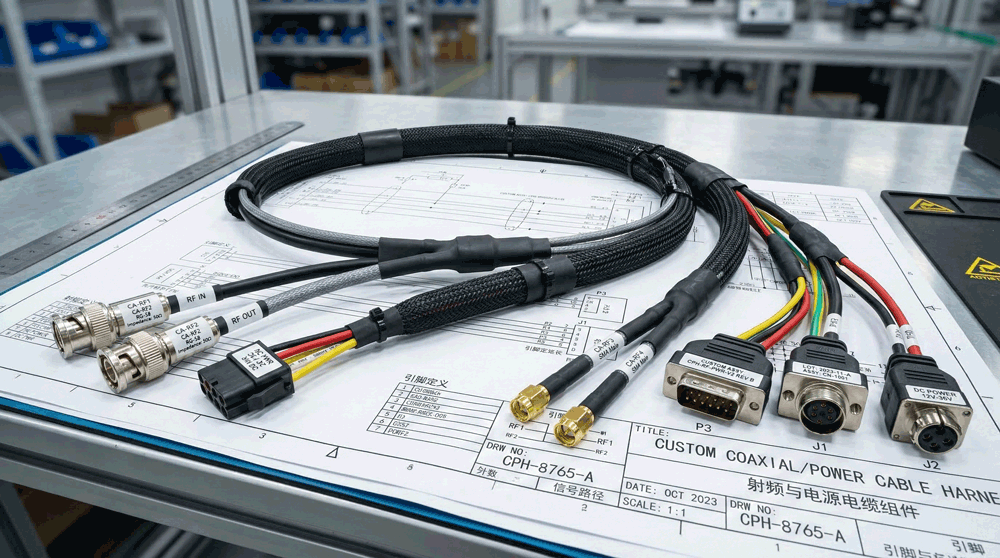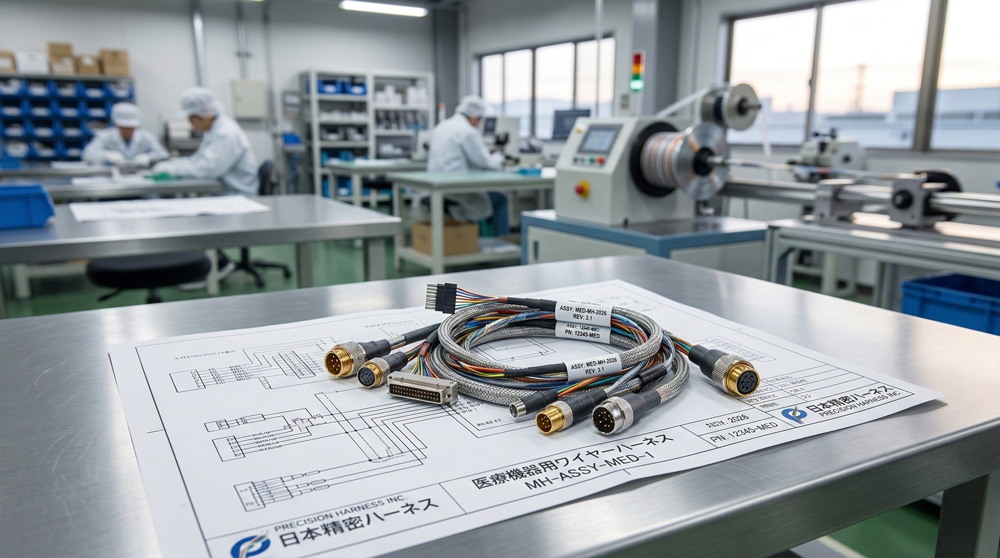

A disciplined cable assembly audit checklist helps procurement and SQE teams qualify suppliers faster, prevent quality drift, and reduce the true cost of sourcing: rework, delays, and field returns. A supplier audit should not be a factory tour or a generic ISO conversation. It should be a targeted verification of the controls that protect your program’s delivery and reliability.
This guide gives you an audit structure you can run on-site or virtually, with a focus on audit-ready evidence. If you’re building a full qualification workflow, start with the hub article Supplier Qualification Guide for Cable Assemblies and use Cable Assembly RFQ Checklist to reduce RFQ ambiguity before you audit.
Table of Contents
ToggleWhat a supplier audit should deliver
A useful audit produces three outputs you can act on immediately.
First, it confirms scope fit. The supplier can actually build what you are buying, at the volumes and lead times you need, using repeatable methods.
Second, it confirms control discipline. The supplier can show how they prevent defects and how they detect drift early, with records that make problems traceable to lots and changes.
Third, it confirms a working escalation path. When something goes wrong, containment and corrective actions happen quickly, with clear communication and verifiable prevention steps.
If an audit does not generate these outputs, it becomes theater and does not reduce risk.
Audit types and when to use each
A remote audit is usually sufficient for early screening and for lower-risk programs, as long as you require document proof and a live process walk-through. An on-site audit becomes more important when you have high-liability exposure, harsh environments, tight launch timing, or repeated supplier performance problems. A hybrid model works well for many B2B buyers: remote document review first, then a shorter on-site visit focused only on the highest-risk stations.
Regardless of audit type, the checklist should stay the same. You want comparability across suppliers and across time.
Pre-audit preparation that saves time
Most audits waste time because both sides arrive unprepared. Before the audit, align on the exact product scope and the evidence you expect to see.
Confirm which build category applies, such as Cable Assemblies or Custom Cable Assemblies, then send a short pre-audit packet: your drawing set and revision, critical characteristics, required tests, labeling rules, packaging constraints, and expected traceability level.
Also request a sample evidence pack from a recent job. This is the fastest way to see whether the supplier is truly audit-ready or just confident.
Capability and capacity verification
Start the audit by confirming the supplier can build your product category end to end. The goal is not to judge equipment brands; it is to confirm process coverage and stability.
Ask how they handle mixed production. Can they switch jobs without setup variability causing defects? Do they have standardized work instructions and sign-offs per setup? Do they control tooling wear and maintenance?
Capacity should be verified with realistic questions. Instead of asking “What is your capacity,” ask how they plan capacity for your peak months, how they manage bottlenecks, and what lead time performance looks like across the last several quarters. If you are sourcing fast-turn builds, confirm whether they genuinely support quick-turn programs without cutting verification steps.
A useful reference point for buyers is a supplier’s stated execution coverage under pages like Assembly Capabilities. During the audit, you are validating that the described capability exists on the floor with evidence.
Process control at the stations that matter
A cable assembly audit should spend time where defects are most expensive: wire preparation, termination, insertion and locking, test, and final inspection.
You are looking for repeatability signals. The supplier should be able to show setup verification records, in-process check frequency, and defined reaction rules when measurements drift. A process that depends on one skilled operator without documented checks is a procurement risk, even if today’s output looks good.
Where possible, ask the supplier to show you “yesterday’s traveler” and “yesterday’s records,” not a prepared demo. Real records reveal real discipline.
Verification and test discipline
Testing is where suppliers can look strong on paper and weak in execution. Your audit checklist should focus on methods, fixtures, and evidence.
Confirm what tests are performed and why. Confirm how fixtures are controlled and how measurements are made comparable across operators. Confirm calibration and measurement reliability expectations. Confirm sampling plans and escalation triggers for drift and nonconformance.
If you want a supplier to be audit-ready, their verification scope should be clear and operationally supported, similar to what is described under Tests & Inspections. During the audit, validate that the supplier can show test records with method details, not only pass stamps.
Traceability and record integrity
Traceability is valuable only if it reduces containment time. A strong supplier can trace materials and builds quickly and produce linked evidence without weeks of email back-and-forth.
Confirm the traceability model. At minimum, you should be able to link shipments to a work order and date window, and then link that to wire lots, terminal lots, inspection logs, and test results. If your program needs serial-level traceability, confirm how serials are generated, applied, and linked to records.
Also verify record retention and access. In B2B operations, the cost is often not the defect itself but the delay in isolating what is affected.
Change control and ECO readiness
Uncontrolled change is one of the highest-impact supplier risks. A supplier audit should always include change control.
Ask what changes require buyer approval, which changes require re-validation, and how revisions are prevented from mixing in production. Confirm how the supplier handles material substitutions, terminal changes, wire vendor changes, tooling changes, and process parameter changes.
You want to see a documented workflow and a real example. A supplier that cannot show past ECO records is not ready for controlled scaling.
If your program places high value on predictable execution, align the audit conversation with the supplier’s stated commitments, such as Quality Policy and Quality Guarantee, then validate the proof behind those commitments.
Packaging and handling controls
Packaging defects create hidden reliability issues: bent terminals, damaged housings, contamination, and abrasion. In an audit, verify how the supplier prevents damage between final test and customer receipt.
Confirm coil method, minimum bend radius during packaging, connector protection, ESD handling when required, moisture protection when required, carton configuration, and labeling. If your program has installation constraints, packaging must support it, not fight it.
Packaging is also part of lead time reliability. Poor packaging creates returns and re-shipments that look like supplier delivery failures even when production was on time.
People, training, and accountability
A strong audit confirms that quality does not depend on a few individuals. Ask how new operators are trained, how competence is verified, and how work instructions are controlled by revision.
Also confirm accountability. When a defect is found, who owns containment? Who owns root cause? Who approves release after corrective action? The audit should reveal whether quality is a system or an afterthought.
Corrective action speed and quality
Supplier performance is proven when something goes wrong. Audit how nonconformances are documented, how containment happens, and how corrective actions are validated.
Ask to see a recent corrective action case. The case should show: detection, containment, root cause evidence, corrective action implementation, and validation that the fix held over time. A supplier that can show this end-to-end is far less risky than one that only describes it verbally.
Audit evidence pack you should request
To keep the audit decision defensible and comparable across suppliers, ask for a consistent evidence pack. The goal is not volume; it is relevance and traceability.
| Evidence item | What it proves | Why it matters commercially |
|---|---|---|
| First-article setup records with photos | Setup discipline and baseline acceptance | Prevents lot-wide defects from bad setup |
| In-process check logs for critical items | Drift detection and reaction discipline | Reduces rework and late discoveries |
| Test records with method details | Repeatable verification | Makes supplier results comparable |
| Traceability linkage | Ability to isolate affected lots | Shrinks containment cost and time |
| ECO and revision examples | Controlled change | Prevents silent substitutions |
| Packaging standard and sample photos | Handling discipline | Reduces transit damage and returns |
If you want to standardize this deliverable across suppliers after the audit, the next article in this series is Quality Evidence Pack Guide.
How to score and decide
A practical scoring method is to separate “must pass” from “improve.” Must-pass items include scope fit, verification discipline, traceability integrity, and change control. Improve items include efficiency opportunities and documentation polish.
When two suppliers are close on price, the winner is usually the one who can show faster containment, tighter change control, and more predictable verification evidence. Those are the factors that protect your schedule and brand.
For buyers who want a supplier that behaves like a transparent partner, this is where pages like Why Choose Us should match what you see in the audit: audit-ready records, clear test capability, and disciplined change control.
Conclusion
A cable assembly supplier audit should verify what protects total cost, not just what looks good in a presentation. When you focus on evidence packs, traceability, verification methods, and change control, you reduce the biggest hidden costs in cable assembly sourcing: rework, delays, and field failures.
Use this checklist to make audits repeatable across suppliers and to turn “supplier quality” into a measurable business advantage.
FAQ
What is the fastest way to get value from a supplier audit?
Request a recent evidence pack first, then run a live process walk-through focused on termination, test, and traceability. Real records reveal real discipline.
Do we need an on-site audit for every supplier?
Not always. A remote audit can be effective if document proof and live station walk-through are required. On-site is most valuable for high-risk or high-volume programs.
What should be a deal-breaker in a cable assembly audit?
Weak traceability, unclear change control, and test records without method details. These create long and expensive failure loops later.
How do we avoid audits becoming subjective?
Use the same checklist and evidence requirements for every supplier. Score based on proof, not claims.
What should procurement do after the audit?
Lock evidence-pack requirements and ECO triggers into the supplier agreement, then validate with a pilot build before full release.
CTA
If you want to qualify a supplier with fewer surprises, share your connector part numbers, volumes, and application environment. We can propose an audit plan, evidence-pack requirements, and a staged qualification path that fits your risk and timeline.
- Discuss your program: Contact
- Review verification scope: Tests & Inspections
- See how we support OEM/ODM buyers: Why Choose Us
Related articles
- Supplier Qualification Guide for Cable Assemblies
- Cable Assembly RFQ Checklist
- Quality Evidence Pack Guide
- Change Control and ECO Guide
- Warranty and Return Policy Guide