This supplier qualification guide for cable assemblies helps procurement, SQE, and engineering qualify suppliers with less guesswork and fewer “surprises after PO.” Supplier selection should not be a price contest; it should be a controlled risk decision, because a single field failure loop can erase the savings of months of unit-price negotiation.
If your program depends on reliable harness performance and on-time delivery, qualification must answer three questions clearly: Can the supplier build to spec repeatedly, can they prove it with evidence you can audit, and can they control change so quality does not drift quietly over time.
Table of Contents
ToggleSupplier qualification outcomes
A strong qualification process is designed to produce business outcomes, not paperwork. The outcomes you want are straightforward: fewer RFQ iterations, fewer ECO disputes, stable lead times, higher first-pass yield, and lower warranty exposure.
When qualification is weak, you get the opposite: missing requirements, inconsistent inspection, undocumented substitutions, late discoveries during ramp, and supplier arguments about what “meets spec” actually means.
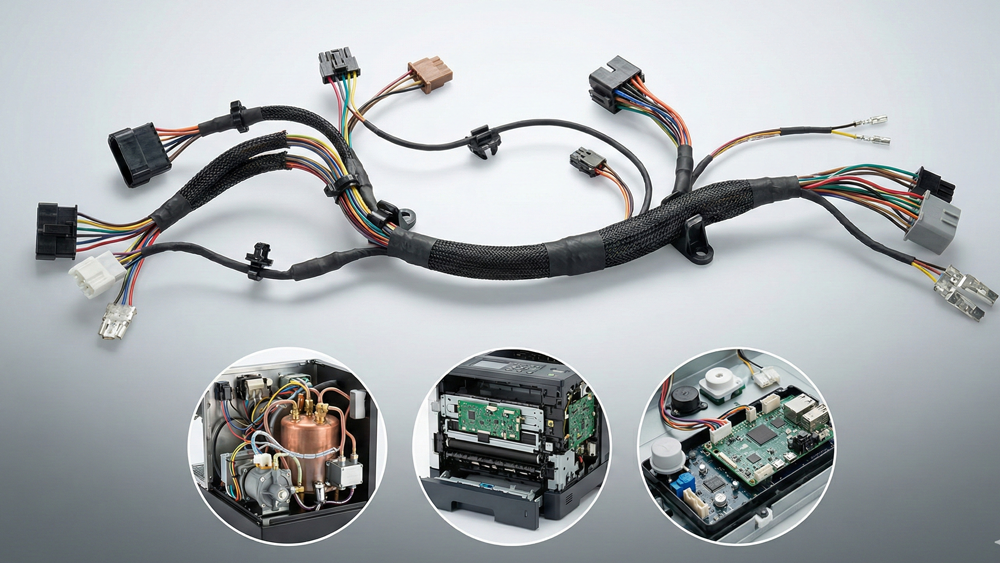
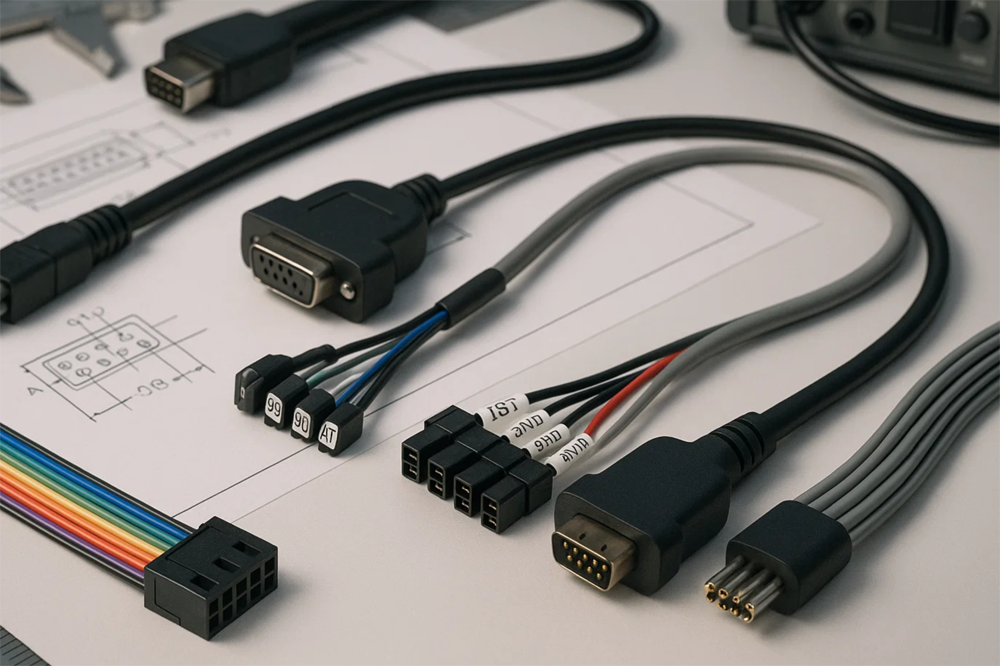
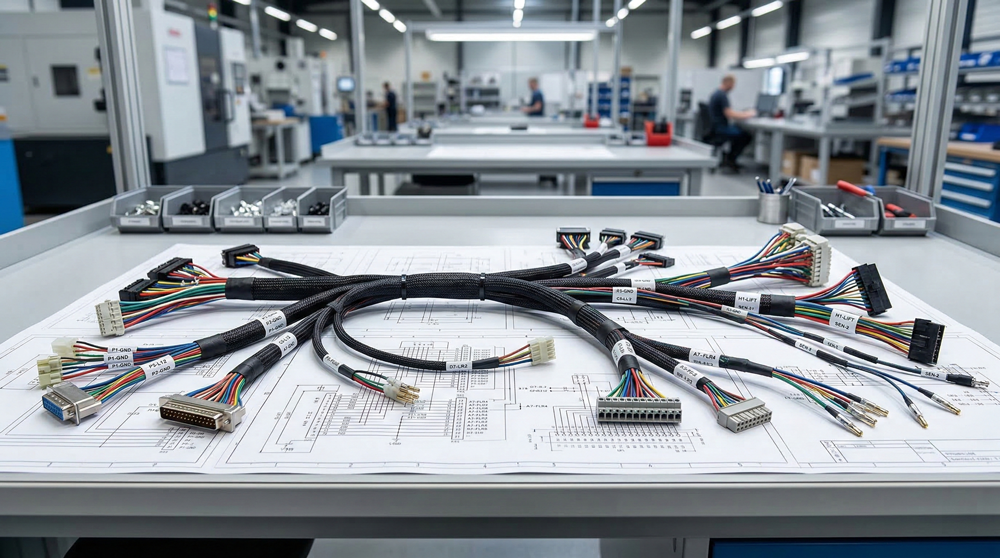
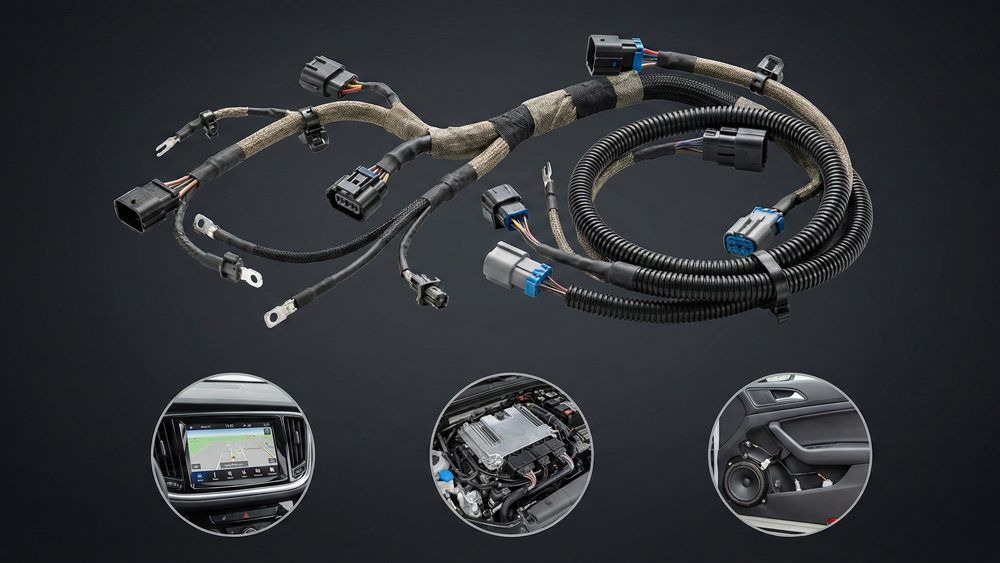
To keep qualification anchored to execution, align it to the supplier’s real production scope such as Cable Assemblies and Custom Cable Assemblies, then define what “evidence” must be shipped with the product, not just with the quote.
Qualification stages
Most procurement teams try to qualify in one step. In practice, you get better results using a staged approach that limits risk while building confidence.
A pre-qualification stage screens suppliers quickly on capability, responsiveness, and basic quality discipline. A technical qualification stage validates manufacturability and verification methods on your actual connectors, wire, and build constraints. A production qualification stage proves the supplier can deliver stable lots with traceability and controlled changes.
For faster programs, the difference between a good and a bad supplier is often visible early through the quality system signals they publish and live by, such as Quality Policy and Quality Guarantee. Those pages are not proof by themselves, but they tell you what the supplier claims; your job is to require the evidence that demonstrates those claims in production.
RFQ inputs that prevent downstream failures
Most late-stage quality issues start as missing RFQ information. If you want fewer revisions, fewer misunderstandings, and fewer “urgent clarifications,” treat RFQ inputs as part of qualification.
At minimum, your RFQ package should communicate the build intent clearly: connector and terminal part numbers, wire gauge and construction, shielding requirements, cable length and tolerance, labeling, test requirements, environmental exposure, and packaging constraints. If any of these are left ambiguous, suppliers will fill the gap with assumptions, and assumptions become defects.
For a structured template you can send to suppliers, use the companion article Cable Assembly RFQ Checklist. It is designed to reduce negotiation time by eliminating preventable questions.
Audit-ready evidence beats verbal promises
In B2B sourcing, the supplier’s strongest value proposition is not “we have experience.” It is “we can show evidence that you can audit.” Evidence is what reduces supplier risk and internal debate on the buyer side.
When you qualify a cable assembly supplier, you should require an evidence pack that includes setup verification, in-process controls, and lot-level traceability. This does not have to be heavy; it does have to be consistent. Without evidence, the buyer cannot separate a disciplined supplier from a supplier that is simply confident.
A good place to anchor verification expectations is the supplier’s published verification scope such as Tests & Inspections. Your qualification process should then force specifics: what tests, what fixtures, what sampling, what records, and what reaction rules.
Cable assembly supplier scorecard
A scorecard creates alignment inside your buying team. It turns “I like them” into decision criteria you can defend. The key is to score what actually moves risk: engineering support, evidence discipline, change control, and lead time stability.
Use one scorecard across suppliers so your evaluation is comparable.
| Qualification area | What “good” looks like | Why it matters to buyers | Typical proof |
|---|---|---|---|
| RFQ responsiveness | Clear questions, fast feedback, no vague answers | Reduces RFQ cycles and late surprises | RFQ Q&A log, clarified assumptions |
| Process capability | Documented work instructions and setup verification | Stabilizes quality lot to lot | First-article records, photos |
| Verification discipline | Defined tests, fixtures, sampling, reaction rules | Prevents drift and hidden defects | Logs, calibration, test reports |
| Traceability | Lot tracking for wire/terminals and build records | Faster containment, fewer recalls | Lot IDs, travelers, labels |
| Change control | ECO rules, re-validation triggers, approvals | Prevents silent substitutions | ECO workflow, revision history |
| Engineering support | DFM feedback, fast iteration, root-cause depth | Shortens prototype-to-production | Corrective actions, DFM notes |
| Lead time reliability | Repeatable lead times, capacity planning | Protects your schedule and launches | Historical OTIF, capacity plan |
| Commercial terms | Clear warranty/returns, packaging rules | Lowers total cost and disputes | Written terms, examples |
If you want the scorecard turned into an audit format you can run on-site or virtually, the companion Cable Assembly Audit Checklist is the next step in this cluster.
What to verify during a supplier audit
A supplier audit should not be a factory tour. It should be a targeted verification of how the supplier controls the failure modes that cost you money.
Start with the crimp and termination station because terminations are a high-cost failure driver. Ask how setup is verified, how crimp height is controlled, how seating is verified, and how rework is controlled. Then look at test and inspection flow, then look at documentation and traceability, and finally look at change control discipline.
If the supplier cannot show stable work instructions and repeatable checks, their “experience” is not a system. It is a dependency on specific people, which is procurement risk.
If you want a deeper reliability view of termination controls, link your internal evaluation to the P11 cluster you just completed:
- Crimping and Termination Guide for Cable Assemblies
- Crimp Quality Inspection Guide
- Pull Force Test Guide for Cable Assemblies
- Contact Resistance Testing Guide
- Termination Failure Modes Guide
Quality evidence pack requirements
Buyers often ask for a “QC report,” then receive a one-page PASS sheet with no useful context. A quality evidence pack should support three use cases: acceptance, investigation, and containment.
For acceptance, it shows the lot shipped within agreed controls. For investigation, it includes method details so data is comparable. For containment, it links results to lot IDs so you can isolate affected shipments quickly.
A practical evidence pack for cable assemblies typically includes: first-article photos and measurements, key in-process measurement logs, test results with method details, and traceability identifiers.
To standardize this across suppliers, use the companion article Quality Evidence Pack Guide. The intent is to make evidence predictable and comparable, even when you source from multiple partners.
Traceability that actually reduces cost
Traceability is often sold as a premium feature, but it is really a cost-control tool. The faster you can identify what is affected, the fewer units you have to quarantine, sort, or recall.
For qualification, define what must be traceable: wire lot, terminal lot, connector lot if applicable, work order, date/shift, and inspection record linkage. Then verify that the supplier’s labeling and record systems can execute that requirement at the scale you need.
If your products ship into regulated or high-liability environments, traceability moves from “nice to have” to “must have,” because it is how you demonstrate containment and corrective action.
Change control and ECO discipline
Uncontrolled change is the silent killer of supplier performance. Many buyer-supplier conflicts are not about quality; they are about undocumented substitutions, version drift, and unclear re-validation triggers.
Your qualification should explicitly test change control. Ask: What changes require buyer approval, what changes require re-validation, how are revisions communicated, and how is old stock controlled so it does not leak into new revisions.
For a procurement-ready framework, use the companion article Change Control and ECO Guide. It is built to reduce the “we thought it was equivalent” argument before it happens.
Warranty and return terms that protect both sides
Commercial terms are part of supplier qualification because they define how problems are handled when they occur. If warranty and return terms are vague, every defect becomes a negotiation.
Qualification should confirm that the supplier has clear warranty coverage, return authorization rules, defect documentation expectations, and a dispute-resolution process that does not stall production. The objective is not to punish suppliers; it is to shorten the time between discovery and containment.
Use the companion article Warranty and Return Policy Guide to standardize what you require from suppliers and what you offer customers.
Turning your value proposition into buyer criteria
Your unique value proposition becomes real when it is translated into buyer-grade criteria. Instead of saying “high quality,” define “audit-ready evidence packs.” Instead of saying “fast delivery,” define “quick-turn with controlled first-article approval.” Instead of saying “strong engineering,” define “DFM feedback, controlled ECO, and validated corrective actions.”
On your website, the business narrative should connect these criteria to trust pages and proof points, such as Why Choose Us, and to execution pages like Tests & Inspections. That connection is what helps buyers justify selecting you even when you are not the lowest-cost quote.
Conclusion
Supplier qualification is not a one-time event; it is a risk-control system. When you define RFQ inputs, audit discipline, evidence packs, traceability, change control, and warranty terms upfront, you reduce the largest hidden costs in cable assembly sourcing: rework, delays, and field failures.
If you want qualification to be a competitive advantage, position your process as “evidence-based and audit-ready.” Buyers do not need more promises. They need proof.
FAQ
What is the fastest way to screen cable assembly suppliers?
Use a structured RFQ checklist and require a sample evidence pack. Suppliers who cannot provide clear answers and comparable records are high risk.
What should procurement prioritize beyond unit price?
Lead time stability, evidence discipline, change control, and traceability. These determine total cost of ownership far more than small price differences.
How do we avoid ECO disputes with suppliers?
Lock change-control rules in writing, define re-validation triggers, and require revision traceability in production travelers and evidence packs.
Do we need on-site audits for every supplier?
Not always. For lower-risk programs, a virtual audit with document review and live process walk-through can be effective if evidence requirements are strict.
What proof should we request before approving a supplier for production?
First-article records, test methods and logs, lot traceability structure, and clear warranty/returns terms with a corrective-action process.
CTA
If you want to qualify a cable assembly supplier with fewer surprises, share your connector part numbers, wire specs, volumes, and application environment. We can propose a supplier scorecard, evidence-pack template, and audit plan tailored to your risk level.
- See how we support OEM/ODM buyers: Why Choose Us
- Review verification coverage: Tests & Inspections
- Start a qualification conversation: Contact