
This crimping and termination guide for cable assemblies is built for engineering and sourcing teams who need predictable field reliability, not “looks acceptable” workmanship. In real deployments, a termination behaves like a reliability system: it must retain mechanically under vibration and handling, while keeping electrical resistance stable through thermal cycling, humidity, and repeated mating.
If you outsource harness builds, the most important question is not whether a supplier “can crimp,” but whether they can run a controlled, evidence-based termination process that stays repeatable lot to lot.
Table of Contents
ToggleTermination scope
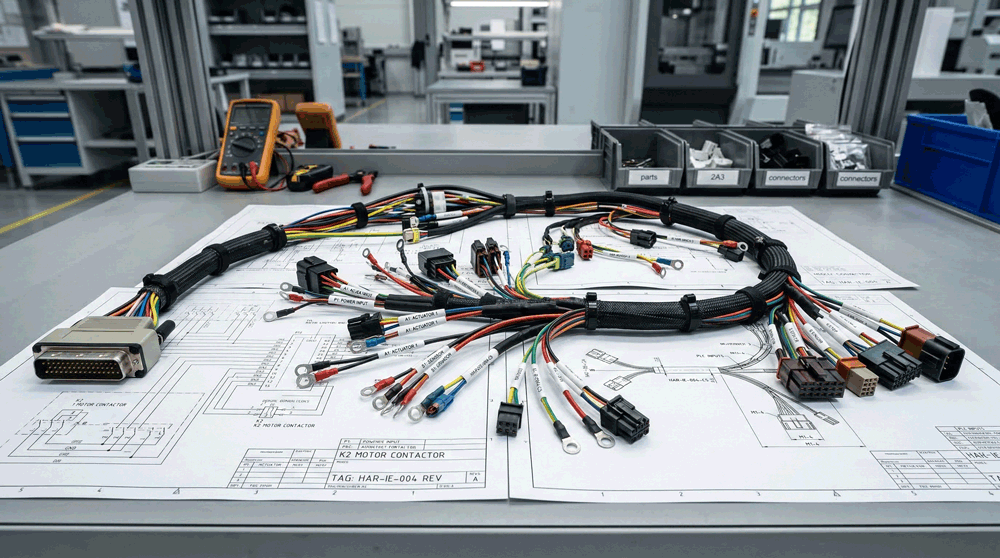
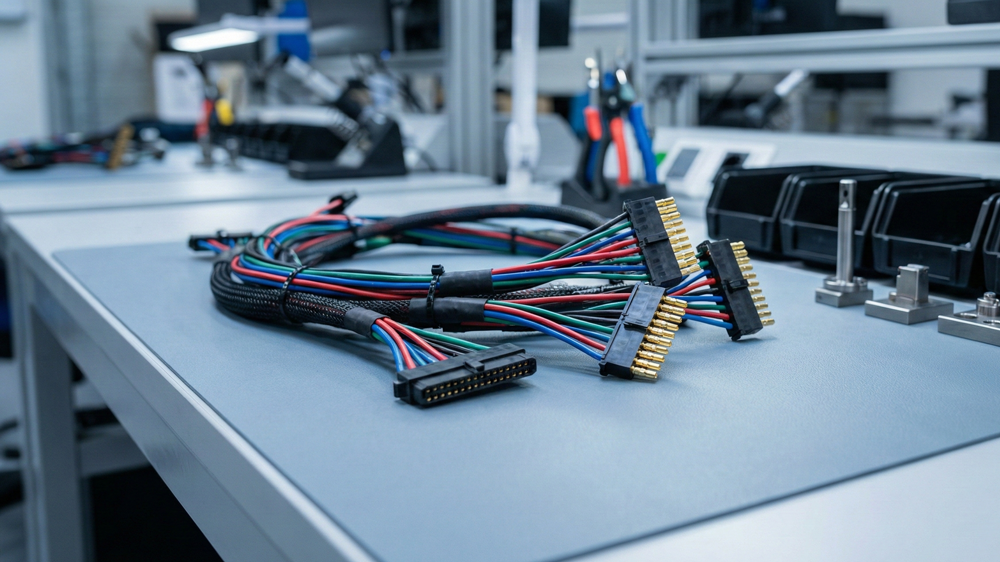
Termination is more than the crimp. It includes stripping, conductor crimp, insulation support crimp, sealing where required, terminal insertion and locking, strain relief, and final inspection. Any weak step can pass outgoing checks and still fail later as intermittent contact, resistance drift, or pull-out.
To align scope and expectations at the RFQ stage, it helps to anchor terminology to your supplier’s published pages for Cable Assemblies and Custom Cable Assemblies.
Terminal and wire selection
Crimp outcomes are heavily determined upstream by terminal geometry and wire construction. Open-barrel terminals scale well in production, but they are sensitive to setup, strip length, and wire positioning. Closed-barrel styles can be more forgiving in some manual operations. Sealed systems add constraints around wire outer diameter, seal compression, and insertion force.
Wire stranding, conductor plating, insulation hardness, and jacket structure all change how strands compact and how the insulation support crimp behaves. If a supplier changes wire brand, insulation compound, or terminal plating, treat it as a controlled change and require re-validation rather than assuming “equivalent material.”
If your design uses shielding or you manage EMI risk, align termination and shielding handling with the cable type, such as Shielded Cable Assemblies.
Open-barrel crimp setup
A stable open-barrel crimp starts with controlled wire prep and consistent positioning. Strip length must be controlled and verified for strand damage, because nicked strands reduce tensile strength and become fatigue initiators. Terminal support and wire alignment drive the geometry that correlates with long-term stability, including bellmouth formation, conductor brush, and insulation support capture.
From a buyer’s perspective, this is where supplier maturity becomes visible. You want standardized setup verification, documented work instructions, and fast detection of drift. Capability references like Assembly Capabilities are a useful signal that the supplier is structured for repeatability rather than being operator-dependent.
Crimp height control
Crimp height is often the most practical leading indicator of compaction quality—when it is tied to the terminal specification and measured consistently. The objective is not “hitting a number once,” but maintaining a centered process window that resists drift from tool wear, press shut-height variation, and operator differences.
For engineering teams, ask how measurement reliability is ensured and what triggers corrective action. For procurement, require lot-traceable measurement logs and clear out-of-control actions (containment, re-check, rework criteria, and root cause).
If you use IPC/WHMA-A-620, define it explicitly in your requirements as IPC/WHMA-A-620, the industry workmanship standard for cable and wire harness assemblies published by IPC and WHMA (Wire Harness Manufacturers Association), then tighten acceptance criteria as needed for your application risk.
Sealed termination control
Sealed terminations fail when crimping and sealing are treated as separate disciplines. Common drivers include wire OD mismatch to seal design, seal damage during insertion, and insufficient strain relief that allows micro-motion and fretting at the interface.
A robust supplier defines seal handling, insertion method, and seating verification as part of the termination process, then validates it with the same discipline used for crimp height. If your program operates in harsher environments such as Industrial & Robotics or Automotive & E-Mobility, tighten validation expectations and change control triggers accordingly.
Strain relief design
Many “bad crimp” returns are actually flex-at-termination fatigue. Strain relief is a mechanical design requirement. Define clamp locations, bend radius constraints near the connector, boot or heat-shrink requirements, and how the harness will be routed and handled during installation and service.
When additional protection is needed, overmolding can stabilize the termination region and reduce stress concentration. If you plan to use it, align requirements early with Overmolding Services.
Crimp control plan
You do not need dozens of metrics, but you do need a small set that correlates with reliability and can be audited. This subset works well for RFQs, supplier audits, and lot acceptance.
| Control item | Why it matters | How to verify | Evidence to request |
|---|---|---|---|
| Crimp height | Compaction consistency | Defined method + logs | First-article + periodic records |
| Strip length | Conductor fill and insulation capture | Gauge checks | Work instruction + checksheets |
| Strand damage | Tensile and fatigue risk | Magnified visual | Incoming + stripping audits |
| Insulation support crimp | Flex-at-crimp prevention | Visual to criteria | First-article photos |
| Terminal seating | Prevents intermittent contact | Seating verification method | 100% check definition |
| Seal integrity | Prevents corrosion and drift | Fit/visual criteria | Seal handling standard |
To make this repeatable at scale, confirm the supplier has defined verification methods and equipment under Tests & Inspections.
For a deeper inspection workflow (what to look for, how to document, and how to grade), link your internal SOP to the companion article Crimp Quality Inspection Guide.
Pull test validation
Pull testing works best as a validation and audit method rather than the only quality gate. Define fixtures, pull rate, sample plan, and acceptance criteria that reference the terminal and wire specifications. Use it for first-article approval, after key process changes, and on periodic audits.
If you want a standardized method that engineering and supplier quality can apply consistently, use the companion article Pull Force Test Guide for Cable Assemblies.
Contact resistance control
Continuity tests catch hard opens, but they do not predict resistance drift. For low-signal circuits and higher current paths, contact resistance stability is often the real reliability metric. Marginal compaction or contamination can pass today and drift after thermal cycling and humidity exposure.
Treat resistance results as trend data tied back to process parameters such as crimp height, seating method, and seal integrity. For a focused framework, use Contact Resistance Testing Guide.
Traceability and change control
B2B programs lose money when changes are uncontrolled. Require traceability for wire lots, terminal lots, applicator IDs, press settings, and first-article sign-offs. Define re-validation triggers when wire construction, insulation compound, plating, tooling, or work instructions change.
If you reference formal quality tools in your supplier quality agreement, define acronyms on first use: PFMEA (Process Failure Mode and Effects Analysis) for process risk mapping, and MSA (Measurement System Analysis) for measurement reliability. Your goal is to ensure evidence is credible and corrective actions are disciplined.
To communicate expectations clearly during sourcing, anchor them to the supplier’s stated commitments such as Quality Guarantee and Quality Policy.
RFQ requirements
Avoid generic language like “crimp per spec” without evidence. Ask suppliers to commit to measurable parameters, measurement methods, sampling plans, evidence packages (photos + logs), and change control rules. The unit price difference between suppliers is usually smaller than the total cost of one field-failure loop.
If you also source broader harness builds beyond cable assemblies, align scope and terminology with Wiring Harness and Custom Wiring Harness.
Conclusion
A cable assembly stays reliable when termination is treated as a controlled manufacturing process: stable tooling, measurable parameters, disciplined inspection, and strict change control. If you specify the few metrics that matter and require objective evidence, you reduce field failures, rework, and supplier friction—improving total cost of ownership (TCO).
FAQ
What is the most important crimp metric to control?
Crimp height is often the most useful leading indicator, but it must be paired with seating verification and strand-damage control.
Is visual inspection enough?
Visual checks are necessary but not sufficient. Add dimensional verification and periodic validation testing aligned to application risk.
When should we require pull testing?
Use it for first-article validation, after key changes, and periodic audits. Make the method controlled and traceable.
What causes intermittent field faults most often?
Incomplete seating, micro-motion from weak strain relief, seal damage leading to corrosion, and marginal compaction that drifts over time.
How should we manage supplier material changes?
Treat changes in wire construction, insulation compound, terminal plating, or tooling as controlled changes with re-validation and documented approval.
CTA
If you want to standardize termination requirements across suppliers, share your connector part numbers, wire specs, and application environment. We can propose a control plan, evidence pack, and validation flow for OEM/ODM production.
-
Explore scope via Cable Assemblies and Custom Cable Assemblies
Related articles
- Crimp Quality Inspection Guide
- Pull Force Test Guide for Cable Assemblies
- Contact Resistance Testing Guide
- Termination Failure Modes Guide