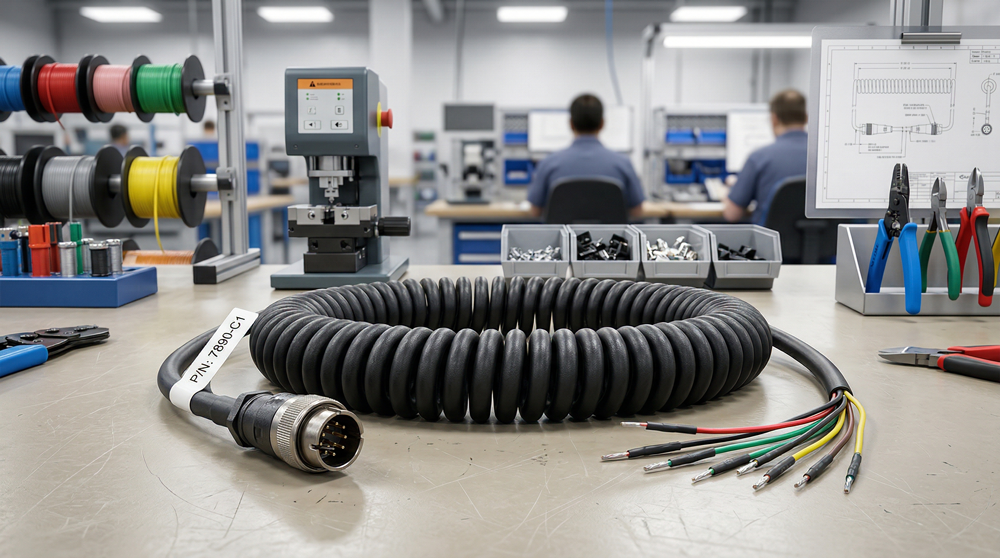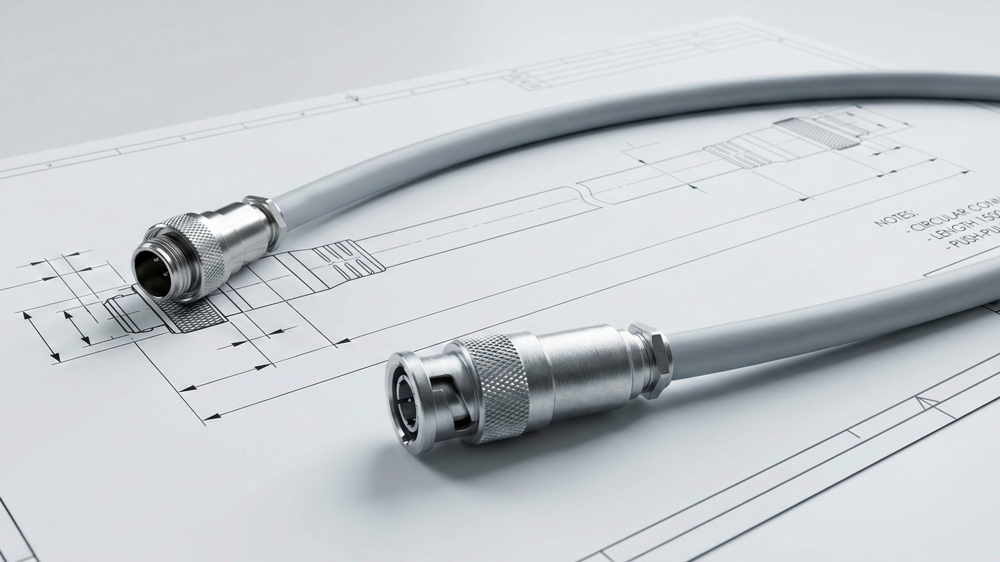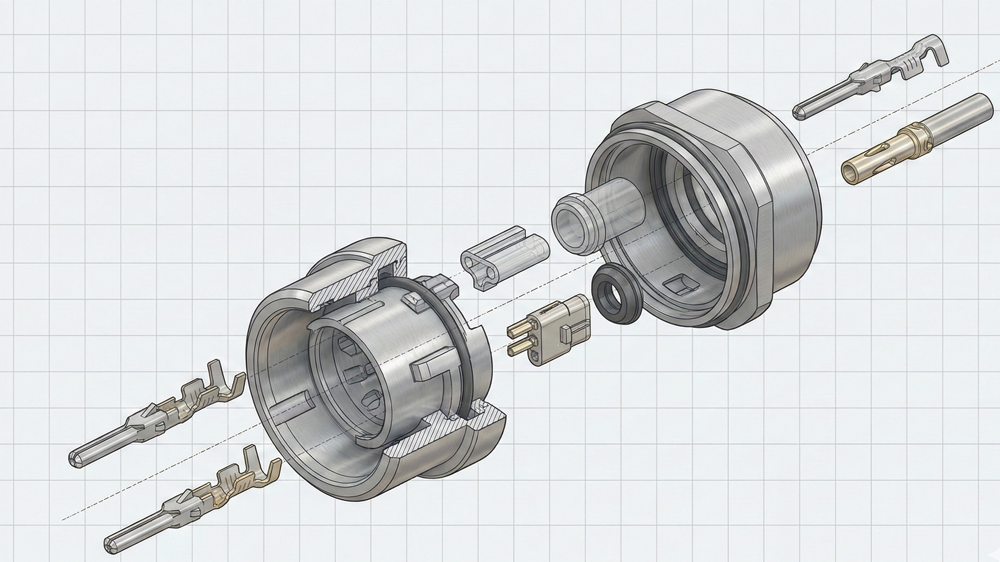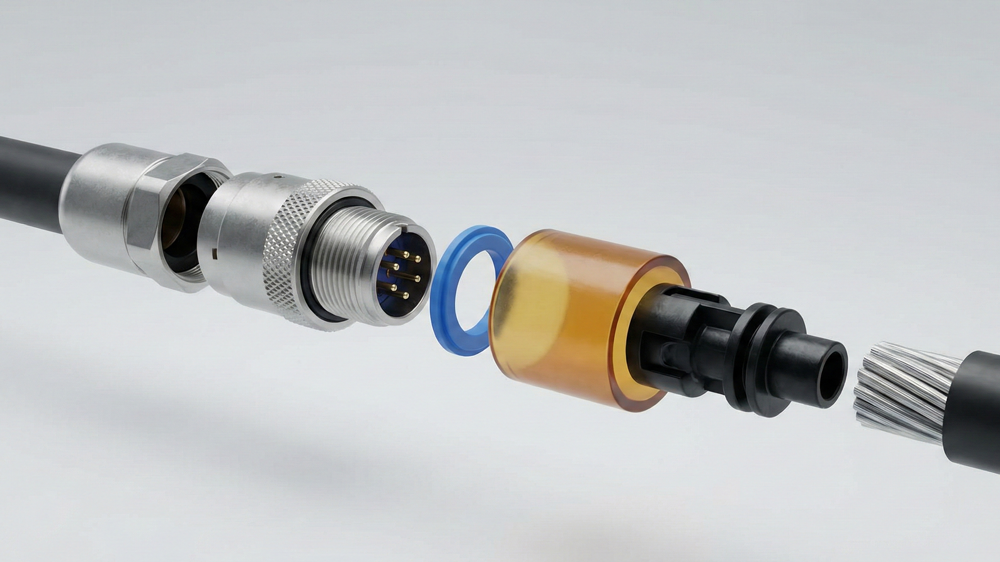
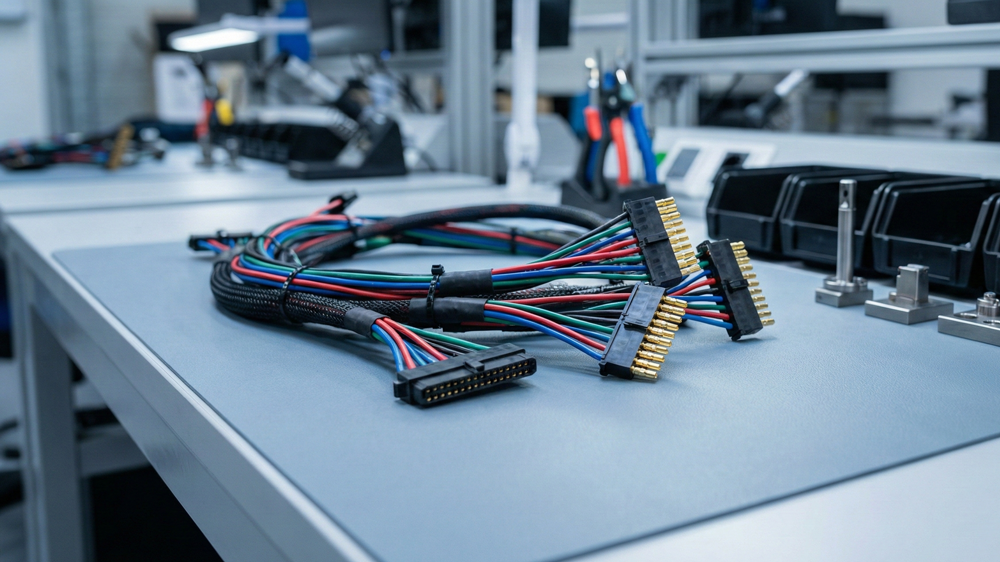
Cable assembly DFM is the fastest way to reduce cost without creating quality risk. Negotiation can reduce unit price at the margin, but DFM changes reduce cost structurally because they change how the harness is built. In most OEM programs, cost and reliability problems do not come from the raw BOM. They come from build steps, variation sensitivity, rework loops, and unclear manufacturing intent.
A practical cable assembly DFM guide should help OEM buyers and engineers design a harness that can be built quickly, consistently, and with stable yield. The goal is not only to make the harness “buildable.” The goal is to make it repeatable at production scale, with a process window that is realistic for real operators.
This article is part of the P10 cost optimization series and supports Cable Assembly Cost Optimization Guide for OEM Buyers and Cable Assembly Cost Drivers.
Table of Contents
ToggleCable Assembly DFM and Step Reduction
Step reduction is the highest-impact DFM lever in cable assemblies. Every repeated manual step adds time, adds variation, and adds defect opportunity. Many “cost down” efforts fail because they ask suppliers to do the same steps faster instead of removing steps from the build path.
For OEM programs, the most durable cost reduction is step elimination. When a step disappears, cost and defect risk both drop. When a step remains but must be done “more carefully,” cost usually rises over time.
Termination Step Reduction
Termination steps are the most repeated operations in most harness builds. Every strip, crimp, insert, solder, and dress step costs time. Termination step reduction can come from simplifying circuit architecture, reducing redundant branches, choosing connectors that reduce handling time, or adjusting design choices that create unnecessary manual operations.
Even a small reduction in termination count can create meaningful savings at scale because it multiplies across every unit.
Assembly Step Reduction
Assembly step reduction targets the operations after termination: bundling, branching, sleeving, shielding termination, overmold prep, potting, tie-downs, and final dressing. These steps often grow gradually as teams add “just one more protection detail” to solve field concerns. Without DFM discipline, those additions accumulate and become permanent labor cost.
A practical DFM review asks whether each assembly step is required for the real risk profile or whether a simpler architecture can achieve the same protection.
Cable Assembly DFM and Tolerance Strategy
Tolerance strategy is a major DFM driver because tolerance controls rework and scrap. In cable assemblies, tight tolerances are expensive not only because they require careful measurement, but because they compress the process window. When the process window is small, minor variation becomes scrap or rework.
A cable assembly DFM guide should encourage OEM teams to assign tight tolerances only to dimensions that matter to function. Non-critical dimensions should be relaxed so the build process is stable.
Length Tolerance Strategy
Length tolerance is one of the most common sources of unnecessary cost. Many drawings specify tight length tolerances by default even when the installation can accommodate reasonable variation. Tight tolerances increase measurement time and increase scrap risk when cut lengths drift.
A better approach is to define which lengths are installation-critical and which are flexible. If a length is not functionally critical, relaxing tolerance is often the simplest cost reduction available.
Branch Geometry Tolerance Strategy
Branch geometry tolerances can also create cost if they require precise placement without fixtures. If branch points must land at exact locations, build time increases and variation risk rises. If the OEM product can tolerate some variation, relaxing branch tolerances can stabilize production and reduce rework.
When precise branch geometry is required, DFM should include fixture strategy rather than relying on manual measurement.
Cable Assembly DFM and Standardization
Standardization reduces cost by reducing complexity. Complexity shows up as long lead times, procurement risk, frequent substitutions, and increased training burden. A standardized harness design uses fewer unique parts and fewer unique process steps, which makes production more repeatable.
For OEM buyers, standardization is one of the strongest levers for both cost and supply stability.
Connector Standardization
Connector standardization reduces cost by stabilizing sourcing and simplifying assembly training. When a program uses many connector families with similar function, the supplier must manage more terminals, more crimp tooling, more insertion rules, and more inspection variants. That complexity becomes cost.
Standardization does not mean forcing one connector into every use case. It means selecting a controlled set of connector families and using exceptions only when required by function or environment.
Wire and Color Standardization
Wire standardization reduces both procurement cost and build risk. Excessive variation in wire types, jackets, and color schemes increases kitting complexity and error risk. If wire colors are selected for legacy habits rather than functional need, standardization can reduce cost without affecting performance.
A strong DFM plan uses functional labeling and documentation rather than relying on a large number of unique wire colors.
Cable Assembly DFM and Tooling Strategy
Tooling strategy determines whether a design can scale economically. Some harnesses can be built efficiently with standard tools. Others require custom fixtures, custom overmold tooling, or specialized test tooling. Tooling can reduce per-unit labor, but it adds upfront cost and increases change-control complexity.
A practical cable assembly DFM guide treats tooling as a cost and risk decision, not as an automatic upgrade.
Tooling Strategy for Low Volume
In low volume programs, minimizing tooling dependence often improves total cost. Custom fixtures may never amortize, and design changes can make tooling obsolete. For low volumes, DFM should focus on simplifying the build so standard tools and flexible processes can achieve stable quality.
If a project expects scaling later, a staged tooling plan often works best: start with flexible tooling for samples and pilots, then invest in dedicated tooling once the design is stable.
Tooling Strategy for Production
In production, tooling can reduce labor time and improve repeatability. Dedicated fixtures can stabilize branch placement, improve length repeatability, and reduce operator variation. Test fixtures can reduce test time per unit and improve inspection consistency.
The key is that tooling should support a stable design. Tooling investment before design stability often increases cost rather than reducing it.
Cable Assembly DFM and Process Repeatability
Process repeatability is the real target of DFM. A harness that can be built once in a prototype shop is not necessarily production-ready. Production readiness requires a process that yields consistent results across operators, shifts, and batches.
Repeatability reduces cost because it reduces rework, reduces scrap, and reduces quality disputes. It also reduces schedule risk because stable processes produce stable deliveries.
Repeatability and Work Instructions
Work instructions are part of repeatability. When drawings do not communicate manufacturing intent, operators rely on interpretation. Interpretation creates variation. A DFM-ready design includes clear build notes, clear acceptance criteria, and clear packaging and labeling intent.
OEM teams that invest in instruction clarity often reduce both cost and defect rate.
Repeatability and Variation Control
Variation control includes cable OD variation, strip quality, terminal fit, crimp quality, and insertion consistency. DFM reduces sensitivity to variation by choosing parts and designs that tolerate real-world process variation.
A design that needs “perfect variation control” is expensive because it requires slow work, extra inspection, and rework loops.
Cable Assembly DFM and Quality Risk
DFM is also a quality-risk control method. A design that is hard to build is hard to build consistently, and inconsistency becomes field risk. Many field failures begin as small build variations: slight strain relief differences, partial insertions, weak crimps, or inconsistent sealing interfaces.
Cost reduction should therefore never be separated from DFM. When DFM improves, cost and quality improve together.
DFM and Test Planning
Test planning is part of DFM because test strategy affects build flow. If a design requires complex testing, DFM should consider how test is executed, what fixtures are needed, and whether testing can be staged efficiently. Good DFM reduces the chance that testing becomes a bottleneck cost.
This connects with Tests & Inspections and release stability under Quality Guarantee.
DFM and Change Control
Change control is also part of DFM because uncontrolled changes destroy repeatability. If a program allows silent substitutions, the manufacturing process changes without validation and cost becomes unstable. A DFM-driven program defines which parts are controlled and how alternates are approved.
Stable change control protects both cost and quality.
Common Cable Assembly DFM Mistakes
Common cable assembly DFM mistakes usually come from designing for function only and assuming manufacturing will “figure it out.” One mistake is leaving RFQ drawings ambiguous and then expecting low cost. Another is specifying tight tolerances everywhere, which increases measurement and scrap without increasing product value.
A third mistake is adding protective steps late without redesigning the architecture, which increases labor permanently. A fourth mistake is investing in tooling too early, before the design is stable. Projects that avoid these mistakes treat DFM as a design discipline from the beginning, not as a late-stage cost fix.
Conclusion for Cable Assembly DFM
A cable assembly DFM guide is valuable because it turns cost optimization into structural improvement instead of negotiation. Step reduction, tolerance strategy, standardization, tooling planning, and repeatability discipline are the core levers. When OEM teams apply DFM early, they reduce unit cost, reduce rework, and increase reliability at the same time.
DFM does not mean over-engineering. It means designing a harness that can be built correctly by real operators, at real scale, with stable results.
FAQ
What is the fastest DFM cost reduction in cable assemblies
Step reduction. Removing repeated manual steps reduces both labor time and defect opportunity.
Why do tight tolerances increase cable assembly cost
They reduce process window, increase measurement time, and increase scrap and rework risk.
How does standardization reduce cable assembly cost
It reduces part complexity, tooling variety, training burden, lead time risk, and substitution-driven variation.
Should low volume cable assemblies avoid tooling
Often yes. Tooling may not amortize in low volume and can become obsolete if the design changes. A staged tooling plan is usually best.
What is the biggest DFM mistake in cable assemblies
Assuming manufacturing will solve ambiguity. Unclear drawings and uncontrolled variation create rework, delays, and unstable cost.
CTA
Need Help Applying Cable Assembly DFM
If your OEM team is trying to reduce harness cost, improve repeatability, or prepare a design for production scale, we can help you apply cable assembly DFM before release.
We can support step mapping, tolerance review, standardization planning, tooling strategy, and RFQ clarity improvements so your cost reduction is structural and sustainable.
Start with our Contact page. You can also review Strong Technical Support, Custom Cable Assemblies, Tests & Inspections, and Assembly Capabilities.