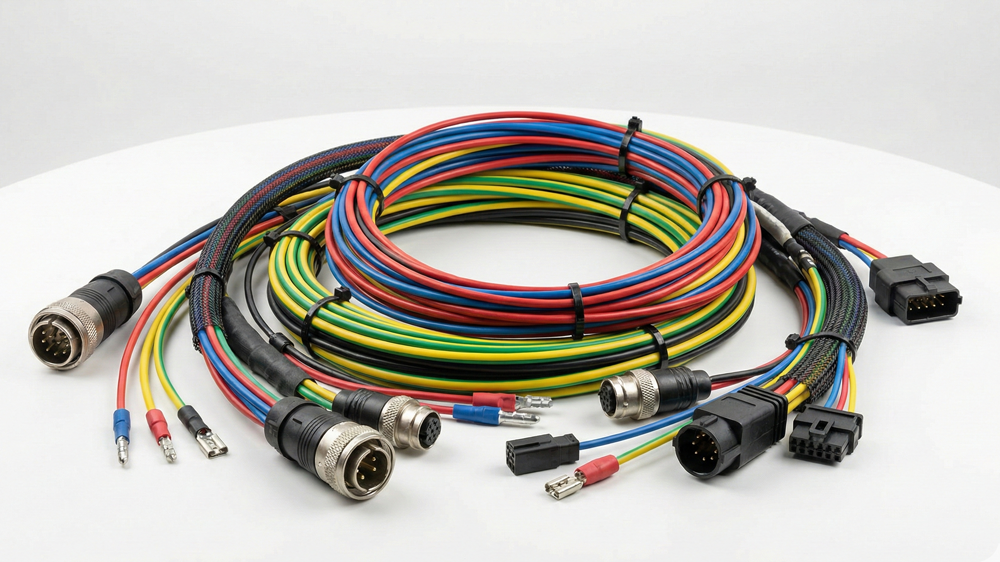
Connector plating is often treated as a minor line item in a connector specification, but in cable assembly projects it can have a major effect on contact stability, wear behavior, corrosion resistance, field reliability, and total cost. Many OEM teams focus first on pin count, current rating, and connector geometry, then accept plating as a default option. That approach can work in simple applications, but in demanding cable assemblies it often leads to avoidable reliability problems or unnecessary cost.
A practical connector plating guide for cable assemblies should help OEM buyers and engineers evaluate plating as a use-condition decision, not just a catalog option. The right plating choice depends on how the connector will be used, how often it will be mated, what environment it will see, what service life is expected, and how stable the contact interface must remain over time.
This article is part of the P9 connector selection series and works with Connector Selection Guide for Cable Assemblies, Connector Current Rating for Cable Assemblies, and the upcoming Mating Cycle Guide for Cable Assemblies.
Table of Contents
ToggleConnector Plating and Application Conditions
Connector plating selection should begin with application conditions, not with habit. In many OEM projects, teams reuse plating choices from earlier products without checking whether the new cable assembly has different mating frequency, environment, maintenance behavior, or reliability targets. A plating system that was acceptable in a low-use indoor product may not be a good fit for a serviceable industrial assembly or an outdoor installation.
For OEM buyers, the first plating question should not be “Which plating is best?” The better question is “What conditions will the contact interface experience across its service life?” Once that is clear, plating selection becomes much more rational.
Connector Plating and Service Profile
A useful service profile for connector plating includes mating frequency, expected service access, ambient conditions, contamination exposure, and target life. It should also consider whether the cable assembly will be frequently disconnected for maintenance or remain mated for long periods with only occasional handling.
These factors influence wear risk, corrosion risk, and contact stability, which are all central to plating selection.
Connector Plating and Cost Context
Plating decisions also affect cost, but cost should be reviewed in application context. A lower-cost plating option may be the correct choice in a low-cycle, low-risk product. In other applications, selecting plating only for short-term savings can create contact instability, service failures, or field replacements that cost far more than the initial material difference.
The best plating decision is not the cheapest option or the highest-grade option by default. It is the option that matches the cable assembly risk profile.
Connector Plating and Contact Performance
Connector plating directly influences contact interface behavior in cable assemblies. While connector geometry and contact design are fundamental, the plating at the contact surface affects friction, wear characteristics, interface stability, and long-term electrical consistency. This becomes especially important in applications where the cable assembly must maintain stable performance over many mating events or long service periods.
For OEM teams, connector plating should be reviewed as part of contact-system performance, not as an isolated material line on a drawing.
Connector Contact Plating and Interface Stability
Contact interface stability depends on how the plated surfaces behave under the expected mechanical and environmental conditions. Repeated mating, vibration, contamination, and long dwell periods can all change contact behavior over time. If plating selection is mismatched to use conditions, the connector may show rising resistance, intermittent behavior, or reduced reliability before the rest of the cable assembly reaches end of life.
This is why plating should be chosen with the contact-use pattern in mind, not only with nominal electrical requirements.
Connector Plating and Low-Level Signal Reliability
In low-level signal applications, connector plating can become even more critical because small changes at the contact interface may have a larger effect on performance stability. In these cable assemblies, a plating decision that seems minor in procurement review may become a major reliability variable in field use.
OEM teams working with signal-sensitive systems should include contact stability expectations in plating discussions early.
Connector Plating and Mating Cycles
Connector plating and mating cycles are tightly connected. Every mating event creates some level of surface interaction, and the cumulative effect of repeated mating can alter the contact interface over time. If the plating system is not matched to the actual mating-cycle demand, the connector may lose performance margin sooner than expected.
This is one of the most common reasons plating decisions should not be copied from older projects without review. Even if the connector series is the same, a cable assembly used in a maintenance-heavy product may need a different plating strategy than one used in a sealed, rarely serviced system.
Connector Plating and Repeated Mating Wear
Repeated mating wear is not only a function of cycle count. It is also influenced by handling conditions, mating alignment, contamination, and operator behavior. A connector that sees ideal lab mating cycles may behave differently in field service conditions where access is limited or mating is less controlled.
For OEM buyers, this means mating-cycle expectations should be described realistically in the RFQ, so plating decisions are based on real service use rather than optimistic assumptions.
Connector Plating and Maintenance Frequency
Maintenance frequency is often underestimated in connector plating selection. Teams may count only planned service intervals and ignore troubleshooting, inspection, production testing, and rework cycles. In practice, the connector may be mated and unmated far more often than originally expected.
A practical plating review should consider total mating exposure across production, testing, installation, and field service.
Connector Plating and Corrosion Risk
Connector plating for cable assemblies should also be selected with corrosion risk in mind. Humidity, condensation, dust, chemical contamination, salt exposure, and storage conditions can all influence contact-surface behavior. In many field failures, corrosion-related issues appear gradually and are first noticed as intermittent contact behavior or unstable performance rather than obvious visible damage.
For OEM teams, corrosion risk should be treated as an interface reliability topic, not only an environmental label. The connector may be placed in a product described as “indoor,” yet still face meaningful moisture or contamination exposure depending on the installation and operating conditions.
Connector Plating and Humidity Exposure
Humidity exposure can create long-term reliability risk even when the connector is not directly exposed to water. Condensation events, seasonal changes, and enclosed environments can all affect contact interfaces over time. If plating selection does not reflect these realities, the connector may pass early testing and still drift in field performance later.
This is why humidity and condensation risk should be included in plating review, especially for multi-year products.
Connector Plating and Contamination Exposure
Contamination exposure is another common blind spot. Dust, oils, process residues, or maintenance contaminants can interact with contact surfaces and influence wear and interface behavior. In serviceable cable assemblies, operator handling can also add contamination risk.
A plating decision that works in a clean lab environment may not be the best option in a real operating environment with contamination exposure.
Connector Plating and Mating Pair Compatibility
Connector plating decisions should also consider mating pair compatibility. In many OEM projects, teams select one connector side first and assume the mating side will behave acceptably as long as the form factor matches. In practice, contact performance depends on how the mating contact surfaces interact as a pair over time.
This matters in original equipment designs, cable-to-panel interfaces, field-replaceable modules, and any project where mating counterparts may vary by supplier or revision. If plating compatibility is not reviewed, the project may face inconsistent contact behavior across builds or product versions.
Connector Plating and Supplier Variation
Supplier variation can affect plating assumptions, especially when connector equivalents or alternate sources are used. Even if dimensions and fit look similar, contact behavior over time may differ when contact-surface systems are not truly comparable. This can create validation confusion and field variation if not controlled.
For OEM buyers, this is a strong reason to define approved connector sources and plating assumptions clearly in the RFQ or drawing package.
Connector Plating and Revision Control
Revision changes can also alter plating behavior if connector variants are updated without a clear review of contact-interface implications. A small spec change that looks harmless in sourcing review may create a reliability difference if the mating pair is no longer aligned.
Plating-related revision control should be handled as a reliability topic, not only a purchasing substitution issue.
Connector Plating and Environmental Protection Design
Connector plating selection should be coordinated with environmental protection design in cable assemblies. Teams sometimes assume sealing and plating are separate decisions, but in real use they influence the same reliability outcome: long-term contact stability. A connector with good sealing design may still have contact issues if plating is not suitable for the actual service condition, and a well-chosen plating system may still underperform if the sealing path is weak.
For OEM projects, plating review should therefore be linked with sealing strategy, service environment, and validation planning rather than handled in isolation.
Connector Plating and Sealed Cable Assemblies
In sealed cable assemblies, plating is still important because sealing does not eliminate all risk. Moisture ingress risk, condensation, long dwell periods, and handling during service can still affect contact interfaces. A sealed connector system should not be assumed to remove the need for careful plating selection.
This connects directly with Cable Assembly Sealing Design at Connector and Overmold and IP Rating Guide for Cable Assemblies.
Connector Plating and Harsh Environment Use
In harsh environments, connector plating should be reviewed together with contamination risk, maintenance frequency, and service-life expectations. A plating choice that is acceptable in controlled indoor conditions may not provide stable long-term contact performance in vibration-prone, humid, or contamination-heavy applications.
Environmental fit should be part of the plating decision from the beginning, not a late validation surprise.
Connector Plating Validation for OEM Buyers
Connector plating validation for cable assemblies should confirm that the selected contact system remains stable under the expected use conditions. The goal is not simply to verify a catalog plating name, but to evaluate whether the contact interface performs consistently across mating, exposure, and service conditions relevant to the product.
This is especially important when the cable assembly is mission-critical, maintenance-heavy, signal-sensitive, or expected to operate for a long service life. In these cases, plating assumptions should be tested as part of connector-system validation, not left as a paperwork detail.
Plating Validation and Sample Condition
Sample condition matters in plating validation. Fresh samples may not reveal wear-related or environment-related changes that appear after mating cycles, handling, or exposure. If the application includes repeated mating or environmental stress, validation should reflect those conditions in a staged way.
The goal is not to create excessive testing, but to make the plating decision evidence-based for the real use case.
Plating Validation and Repeatability
Repeatability is also important. A plating choice that appears acceptable in one prototype may not deliver stable results across multiple samples, suppliers, or revisions if the contact system is sensitive to variation. OEM teams should review plating-related performance with a repeatability mindset before final release.
This aligns with the process and reliability approach in Tests & Inspections and Quality Guarantee.
OEM RFQ for Connector Plating Selection
An OEM RFQ for connector plating selection should describe how the connector will actually be used. A stronger RFQ includes mating frequency, service access pattern, environment conditions, contamination risk, expected service life, and whether the application is signal-sensitive or power-focused. It should also clarify whether connector family, approved sources, or plating options are fixed or open for recommendation.
This helps suppliers recommend plating choices based on application fit instead of default catalog assumptions. It also improves quote comparability and reduces later disagreement about reliability expectations.
Short notes about maintenance behavior, field handling, and installation environment often improve plating recommendations more than long generic requirement text.
Common Connector Plating Mistakes
Common connector plating mistakes in cable assembly projects usually come from treating plating as a small procurement detail. One mistake is selecting plating only by initial cost without reviewing mating cycles, corrosion risk, or service life. Another is copying plating choices from older products that had different use conditions.
A third mistake is ignoring mating-pair compatibility and allowing uncontrolled substitutions. A fourth is skipping plating-related validation in applications where contact stability is critical. Projects that avoid these mistakes usually define the contact-use profile early and evaluate plating as part of connector-system reliability.
Conclusion for Connector Plating Guide
The best connector plating guide for cable assemblies is not a simple “best plating” recommendation. It is a selection framework that links contact performance, mating cycles, corrosion risk, mating-pair compatibility, environment, and validation to the real cable assembly use case.
When OEM engineering, sourcing, and quality teams evaluate connector plating this way, connector decisions become more consistent, reliability risks become easier to identify, and long-term field performance becomes much easier to control.
FAQ
Is connector plating only a cost option in cable assemblies
No. Connector plating affects contact wear, corrosion behavior, mating-cycle durability, and long-term interface stability, so it directly affects reliability.
Why should mating cycles be considered in connector plating selection
Because repeated mating changes contact surfaces over time. If plating is not matched to real mating frequency, contact performance can degrade earlier than expected.
Does connector plating still matter in sealed cable assemblies
Yes. Sealing reduces risk but does not eliminate condensation, handling exposure, or all long-term interface risks. Plating still affects contact stability.
Why should OEM buyers review mating pair compatibility for plating
Because contact behavior depends on the mating pair, not only one connector side. Uncontrolled substitutions or revisions can change interface performance.
What should be included in an RFQ for connector plating review
Include mating frequency, service access, environment, contamination risk, expected life, application sensitivity, and any approved sources or connector-family limits.
CTA
Need Help Choosing Connector Plating for Cable Assemblies
If your OEM project is comparing connector plating options, or if you are seeing contact instability, corrosion risk, or premature wear in field use, we can help you review connector plating for cable assemblies before sample approval and production release.
We can support contact-use profile review, mating-cycle risk assessment, environment-fit analysis, plating tradeoff discussion, and validation planning so your connector plating decision matches the real service conditions.
If you already have connector candidates, application notes, mating-cycle expectations, service environment details, or test records, contact us through our Contact page. You can also review our Strong Technical Support, Tests & Inspections, Quality Guarantee, and Custom Cable Assemblies pages before starting the discussion.
Related Articles in This Connector Selection Series
- Connector Selection Guide for Cable Assemblies
- Connector Current Rating for Cable Assemblies
- Connector Plating Guide for Cable Assemblies
- Mating Cycle Guide for Cable Assemblies
- Connector Locking Systems for Cable Assemblies