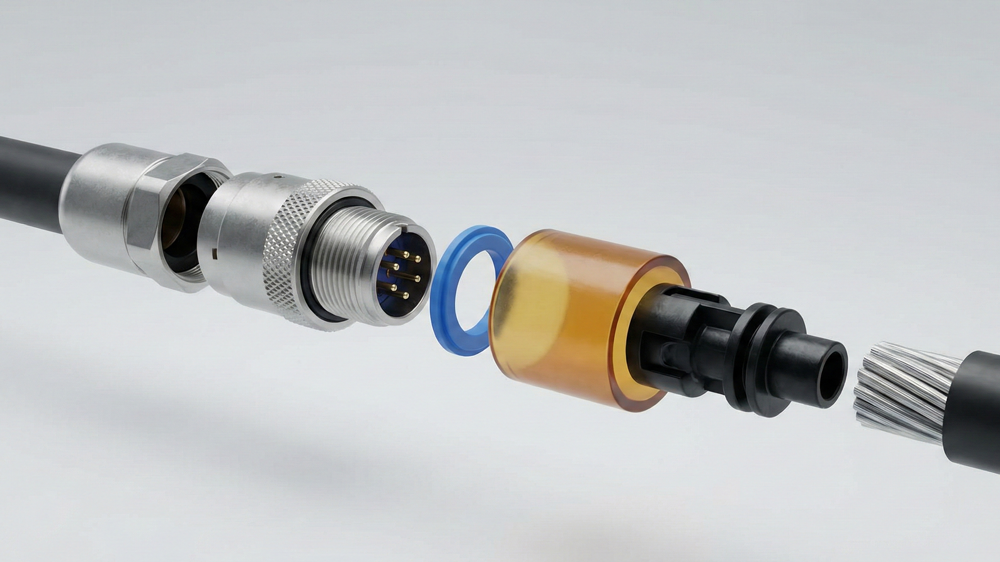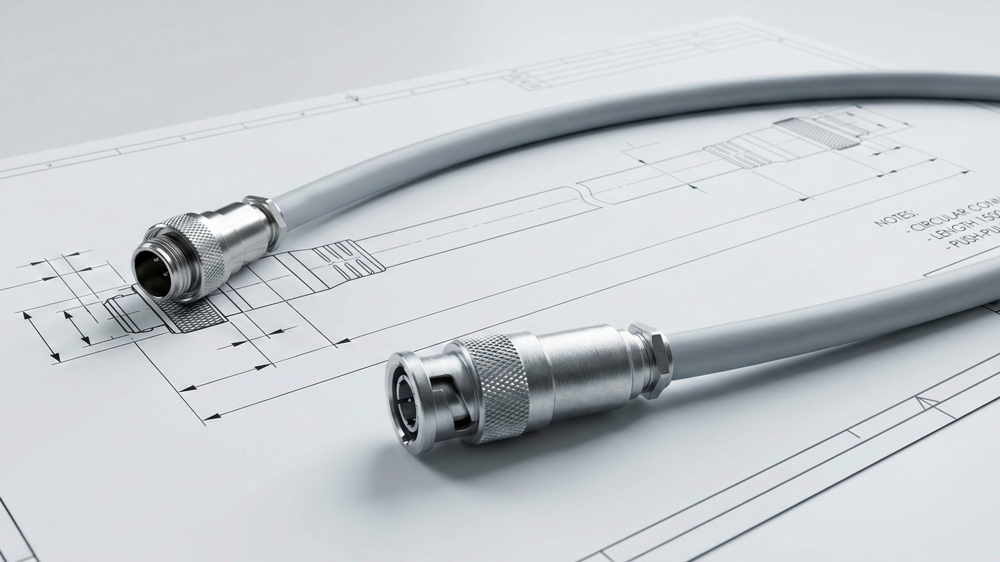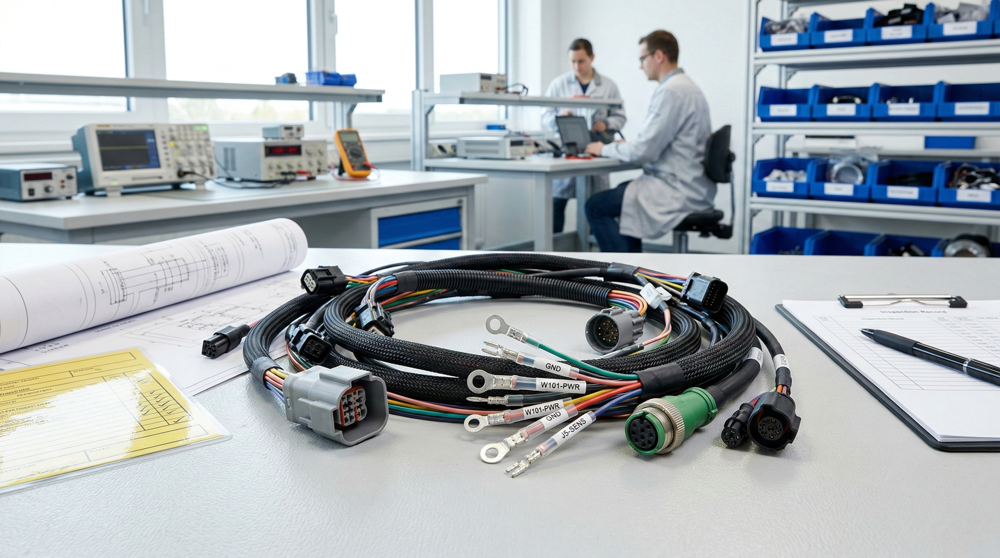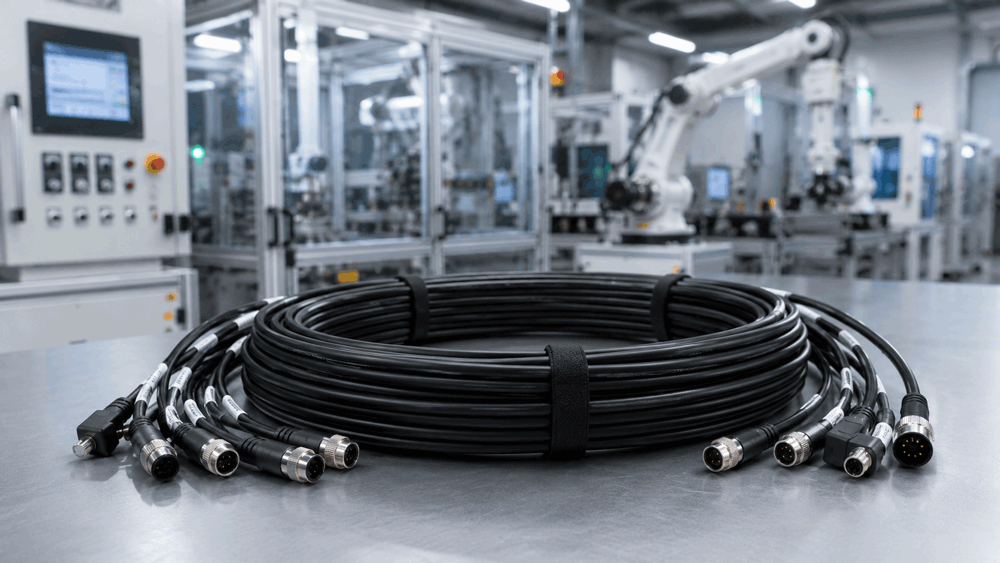
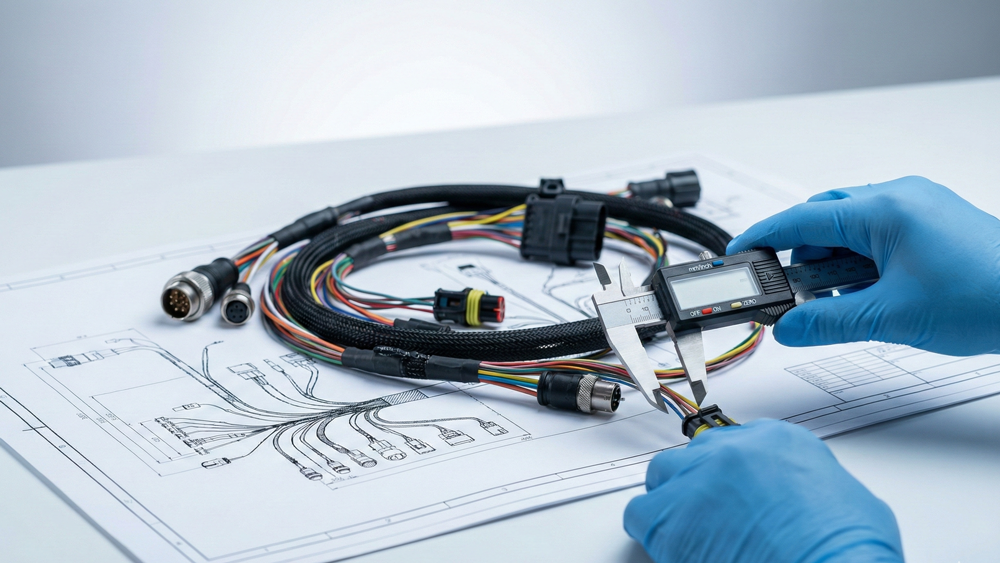
Cable assembly sealing failures rarely start in the middle of the cable jacket. In most OEM projects, leakage risk is concentrated at transition zones, especially around the connector rear entry, cable exit, and overmold boundary. These areas combine geometry changes, stiffness changes, and process variation, which is why they become the most common weak points in waterproof cable assemblies.
This article focuses on cable assembly sealing design at connector and overmold from an OEM buyer and engineering review perspective. The goal is not to treat the connector and overmold as separate parts, but to understand them as one sealing path. When teams design and validate these zones together, field reliability improves and supplier communication becomes much clearer.
For the broader context, this article works with Environmental Protection Design Guide for Cable Assemblies and IP Rating Guide for Cable Assemblies. If your project also includes repeated movement, it should also be reviewed alongside High Flex Cable Testing Guide for OEM Buyers.
Table of Contents
ToggleConnector Sealing Design for Cable Assemblies
A connector can have a strong catalog sealing rating and still underperform in the finished cable assembly if the rear-entry design is not matched to the actual cable and assembly process. In real projects, the connector interface seal is only one part of the system. The rear cable entry, cable diameter fit, strain path, and installation condition all affect whether the sealing path stays closed in service.
This is why connector sealing design for cable assemblies should be reviewed in the assembled condition, not only in connector datasheets. OEM teams should ask how the chosen cable diameter range, jacket tolerance, and assembly method interact with the connector’s rear sealing feature. Small mismatches in fit or compression can create leakage paths even when the connector family itself is correctly selected.
Connector Rear Sealing Design
Connector rear sealing design is often the first place where finished-assembly reality diverges from catalog assumptions. The rear seal may be designed for a cable diameter range, but if the actual cable jacket is near a tolerance edge, has surface variation, or behaves differently under compression, the seal may not perform as intended.
For OEM buyers, this means the cable specification and connector selection cannot be reviewed independently. A connector that is “IP-rated” on paper may still require tighter cable OD control or a different rear support strategy in the actual assembly.
Connector Installation and Sealing Performance
Connector sealing performance also depends on installation conditions after assembly. Mounting alignment, mating force, panel interface condition, torque control, and repeated mating cycles can all affect how the sealing surfaces behave over time. In dirty or wet environments, contamination can further reduce sealing stability if the design does not protect critical sealing surfaces.
A practical OEM review should therefore include not only connector model selection, but also how the connector is installed and used in the final product.
Overmold Sealing Design for Cable Assemblies
Overmolding can improve sealing robustness, but only when the overmold is designed as part of the sealing system rather than as a cosmetic or strain-relief-only feature. In many projects, the overmold is expected to support sealing, strain relief, and durability at the same time. That is possible, but it requires careful control of geometry, material compatibility, and process conditions.
Overmold sealing design becomes especially important at the cable exit and transition zone. If the overmold transition is too short, too stiff, or poorly bonded to the cable jacket or connector rear area, the assembly may pass initial testing and still develop leakage later. This is one of the most common reasons field failures appear after thermal cycling, vibration, or repeated handling.
Overmold Sealing Design at Cable Exit
Cable exit sealing is not only about “closing the gap.” It is also about managing stress in the same region. The cable exit is where movement, pull force, and bending tend to focus, especially if the assembly is routed tightly near the connector. If the overmold geometry creates a sharp stiffness transition, the seal path can be disturbed over time.
A stronger design usually uses a transition profile that supports both sealing and strain distribution. This reduces the chance that the seal interface becomes a mechanical failure point later in service.
Overmold Sealing Design and Process Control
A good overmold drawing alone does not guarantee sealing performance. Overmold sealing design is highly sensitive to process control, including molding parameters, material condition, cure behavior, and dimensional consistency. Two samples may look similar externally and still differ in sealing reliability if process control is unstable.
For OEM buyers, this is why design review and process-capability discussion should happen together. A design that depends on very narrow process windows may create production risk even if prototype samples pass.
Connector and Overmold Sealing Path
The most reliable waterproof cable assemblies are designed around a complete sealing path, not around isolated features. In practice, leakage often travels through interfaces between components rather than through a single obvious gap. A connector rear seal may be adequate, and an overmold may look solid, but the interface between them can still become a hidden leakage path if geometry, compression, or adhesion is not coordinated.
This is why cable assembly sealing design at connector and overmold should be reviewed as one system. The connector rear area, cable jacket surface, overmold interface, and strain-relief transition all influence one another. Treating them separately often leads to blind spots in validation.
Sealing Path at Connector and Overmold Transition
The connector and overmold transition is one of the highest-risk zones because it combines rigid and flexible elements in a short space. That creates both sealing and mechanical design challenges. If the transition is too abrupt, stress concentration can form. If the interface design is weak, micro-gaps can develop after temperature change or repeated load.
For OEM projects, this transition should be treated as a primary inspection and validation focus, not a secondary detail.
Hidden Leakage Paths at Connector and Overmold
Hidden leakage paths often appear along interfaces, strand capillary paths, or micro-gaps created by dimensional variation. These are difficult to see in visual inspection and easy to miss in early prototypes if testing is too limited. They become more likely when the design assumes one sealing feature will compensate for all variation downstream.
A more robust approach is to build layered sealing logic and validate the transition zone under realistic use conditions rather than relying on a single pass result.
Cable Exit Sealing and Strain Relief
Cable exit sealing and strain relief should always be reviewed together. In many field failures, the reported issue is “water ingress,” but the root cause is mechanical loading at the cable exit that gradually damages the sealing interface. If the strain path is not controlled, the sealing feature can be forced to carry bend or pull loads repeatedly.
This problem is common in applications with vibration, handling, routing constraints, or dynamic movement. A static sealing test may not reveal it, because the failure develops over time through mechanical fatigue at the seal transition.
Cable Exit Sealing in Dynamic Cable Assemblies
In dynamic cable assemblies, cable exit sealing design should reflect the actual movement path near the connector. If the first bend happens too close to the connector rear or overmold edge, the sealing interface may experience repeated stress that was never represented in static ingress testing.
This is why dynamic applications should connect sealing review with Bend Radius and Flex Life for Cable Assemblies and Strain Relief Design for High Flex Cable Assemblies. The seal and the strain relief are not separate in real use.
Strain Relief and Sealing Balance
A strain relief feature that looks strong is not always good for sealing. If it is too stiff or too short, it can push stress into the seal transition. If it is too soft or poorly supported, movement can still reach the sealing interface. The design goal is not maximum stiffness, but controlled load transfer away from the sealing path.
For OEM buyers, asking how the strain relief geometry supports sealing durability is often more useful than asking only whether the assembly is “waterproof.”
Material Fit in Connector and Overmold Sealing Design
Material fit is one of the most overlooked factors in connector and overmold sealing design. Even when each material looks acceptable individually, interface behavior can create reliability problems. Connector housings, cable jackets, overmold compounds, seals, and optional potting materials all interact at contact surfaces. If the interface fit is poor, sealing performance may degrade after heat, chemicals, or aging.
This is why material review should focus on compatibility and long-term interface behavior, not only on single-material datasheet claims. In many waterproof cable assemblies, leakage starts at the interface that was assumed to be “good enough” because each component passed a separate material check.
Cable Jacket and Overmold Material Fit
The cable jacket and overmold material fit strongly influences adhesion, interface stability, and long-term sealing behavior. A mismatch can lead to weak bonding, interface separation, or micro-path formation after thermal cycling or mechanical stress. These problems are often not visible in early visual checks.
OEM teams should therefore ask suppliers how cable jacket selection and overmold compound selection were evaluated together, especially in harsh environments.
Connector Housing and Overmold Interface Fit
The connector housing and overmold interface fit also deserves direct review. Differences in surface condition, geometry, and process behavior can affect how well the overmold supports sealing at the rear connector area. If this interface is treated as only a packaging detail, the sealing path may be compromised later in production or field use.
A strong supplier should be able to discuss this interface clearly during design review, not only after test failure.
Sealing Validation at Connector and Overmold
Sealing validation at connector and overmold should be planned around the highest-risk transition zones, not only around the final IP label. A product may pass a general ingress test while still carrying long-term leakage risk in the connector rear or overmold transition if the test condition did not reflect real mechanical or environmental stress.
The most useful validation plans separate concept screening from qualification. Early tests can confirm design direction, while qualification tests should support sample approval and production decisions. In both stages, recording failure location and sample condition is essential for learning and comparison.
Sealing Validation and Sample Condition
Sample condition matters. A fresh sample may seal differently from a sample after thermal cycling, repeated mating, or mechanical handling. If the application includes these exposures, the validation plan should state whether they are represented before ingress testing.
This does not require overcomplicating every project. It requires making assumptions explicit so results are interpreted correctly.
Sealing Validation and Production Repeatability
A design can pass sealing validation in prototypes and still create field risk if performance is highly sensitive to process variation. That is why OEM buyers should discuss repeatability before production release, especially for overmolded assemblies where process parameters strongly affect sealing consistency.
This aligns with the logic behind Tests & Inspections and Quality Guarantee. The target is not one passing sample. The target is repeatable sealing performance.
OEM RFQ for Connector and Overmold Sealing Design
An OEM RFQ for connector and overmold sealing design should go beyond “waterproof cable assembly” and “IP67 connector.” Those labels are too broad to define the real sealing challenge. A stronger RFQ describes the exposure type, connector use condition, movement condition, cable routing near the connector, and whether overmold sealing is required as part of the protection strategy.
Short drawings, cable routing photos, connector installation notes, and expected handling conditions often improve sealing design proposals more than generic text. When the RFQ makes the transition-zone risk visible, suppliers can propose better sealing architecture and more relevant validation.
Common Sealing Failures at Connector and Overmold
Common sealing failures at connector and overmold usually come from system-level gaps in design review. Teams may assume connector catalog sealing covers the whole assembly, or assume overmolding automatically fixes all rear-entry risks. Others focus on static ingress testing and miss the effect of movement, thermal cycling, or process variation at the transition zone.
The projects that perform best in the field usually do one thing differently: they review connector sealing, overmold geometry, cable exit stress, material fit, and validation planning as one connected problem.
Conclusion for Connector and Overmold Sealing Design
Cable assembly sealing design at connector and overmold is one of the most important reliability topics in environmental protection work because it concentrates both sealing risk and mechanical stress in the same area. The strongest designs do not rely on one seal feature or one test result. They use a coordinated sealing path, compatible interfaces, controlled strain transfer, and validation that reflects real use conditions.
When OEM engineering, sourcing, and quality teams evaluate connector and overmold sealing as one system, supplier communication improves, validation becomes more meaningful, and field leakage risk becomes much easier to control.
FAQ
Where do waterproof cable assembly leaks usually start
In many OEM applications, leaks start at transition zones such as connector rear entries, cable exits, overmold boundaries, and interfaces between sealing features rather than in the cable jacket mid-span.
Does overmolding automatically improve sealing reliability
Not always. Overmolding can improve sealing, but poor geometry, weak material fit, or unstable process control can still create leakage paths.
Why should cable exit sealing and strain relief be reviewed together
Because mechanical loads at the cable exit can gradually damage sealing interfaces. If strain transfer is not controlled, a sealing feature may carry repeated bend or pull loads.
Can a connector with an IP rating still fail in a finished cable assembly
Yes. Finished-assembly sealing also depends on cable OD fit, rear seal compression, overmold transition design, installation conditions, and process control.
What should OEM buyers include in an RFQ for connector and overmold sealing
Include exposure type, movement condition, cable routing near the connector, connector use condition, overmold requirement, and validation expectations in addition to the IP target.
CTA
Need Help Reviewing Connector and Overmold Sealing Design
If your OEM project involves waterproof cable assemblies, harsh environments, washdown exposure, or leakage risk near connector exits, we can help you review cable assembly sealing design at connector and overmold before sample approval and production release.
We can support connector rear sealing review, cable exit stress assessment, overmold sealing strategy discussion, material-fit review, and sealing validation planning for transition-zone reliability.
If you already have drawings, connector part numbers, cable specs, routing photos, or test reports, contact us through our Contact page. You can also review our Custom Cable Assemblies, Environmental Protection Design Guide for Cable Assemblies, and Assembly Capabilities pages before starting the discussion.
Related Articles in This Environmental Protection Series