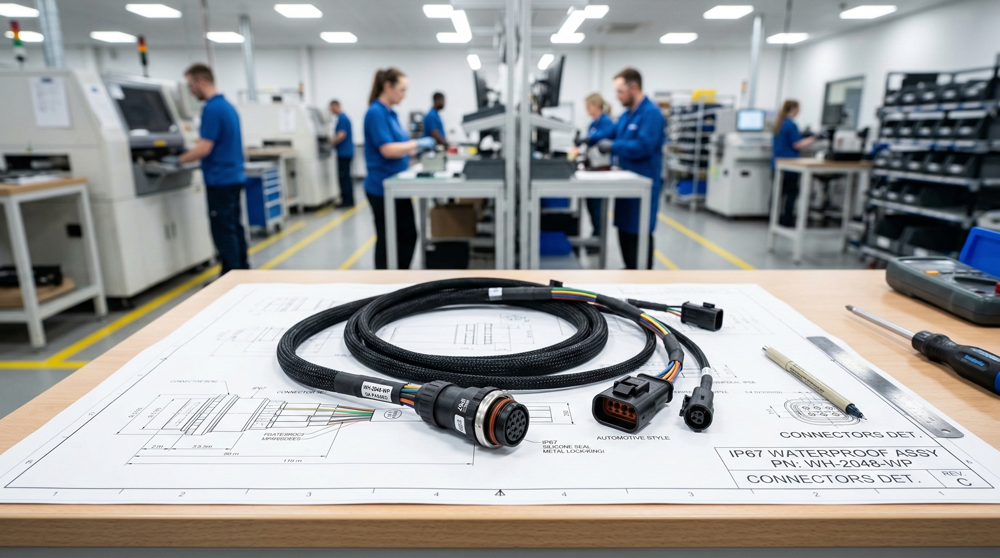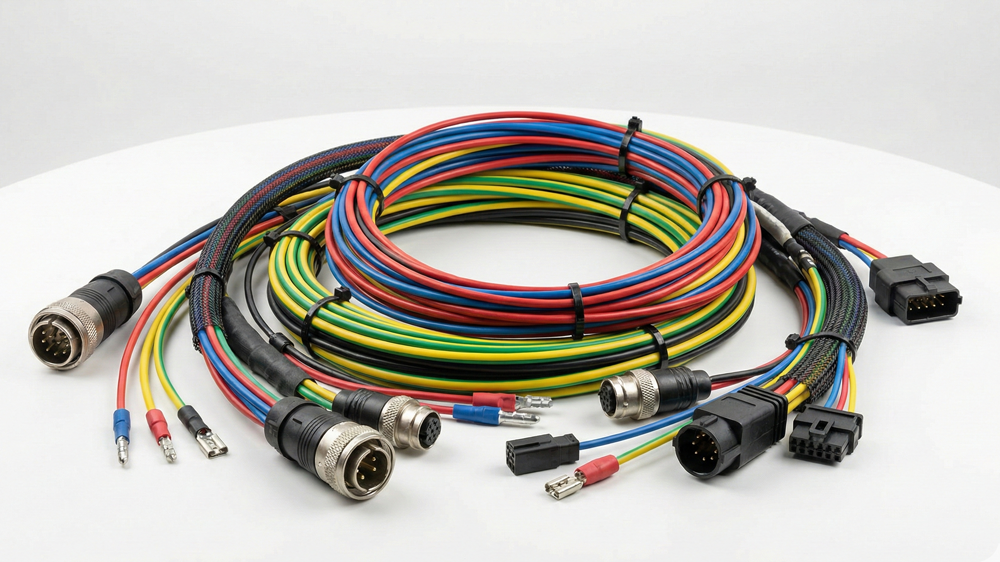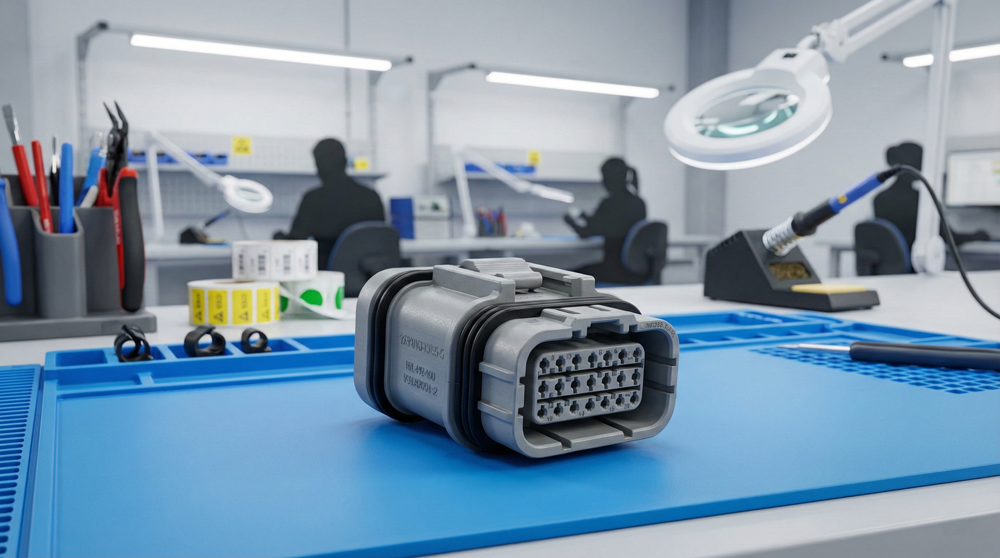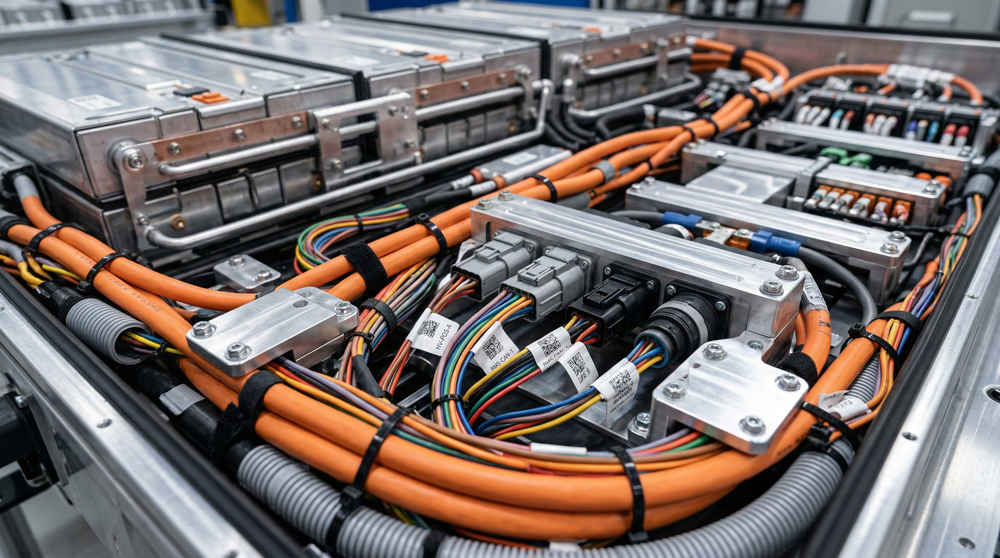
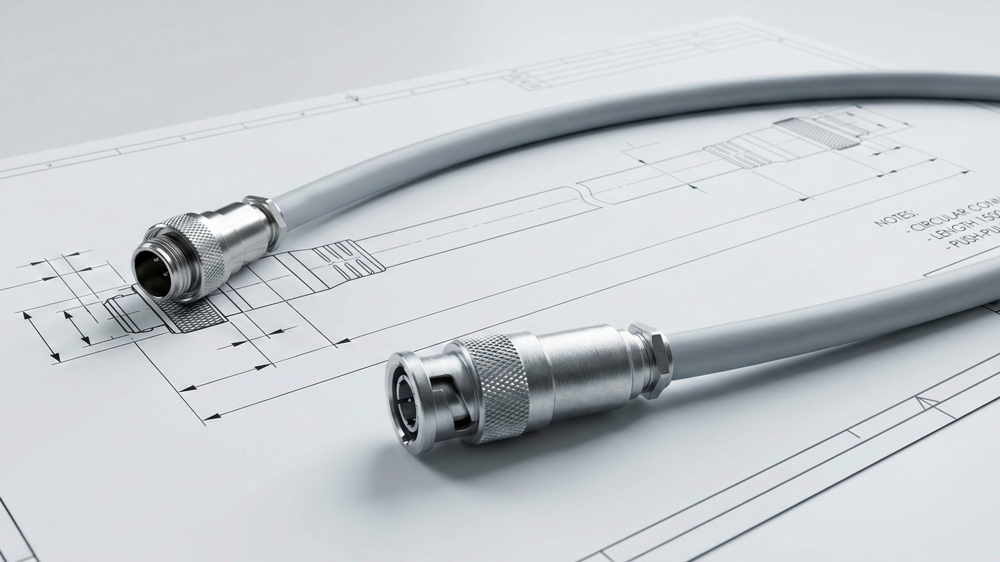
High flex cable assemblies are often requested late in a project, usually after a standard cable assembly has already shown early failure in motion. The pattern is common in automation, robotics, moving gantries, packaging systems, test equipment, and industrial machinery: the electrical design works, the connector interface looks correct, the prototype passes basic functional tests, and then field use introduces repeated bending, torsion, drag chain motion, or installation strain that causes intermittent faults, jacket damage, shielding instability, or conductor breakage.
For OEM buyers, this creates a difficult sourcing problem. Many suppliers can build a cable assembly that works in a static lab setup. Far fewer can help define a cable assembly that remains stable under dynamic motion and can be produced repeatedly at scale. That is why high flex cable assemblies should be treated as a system design and validation topic, not only a cable material selection task.
This guide explains how OEM teams can evaluate, specify, and source high flex cable assemblies with better reliability outcomes. It is written for engineering, sourcing, and quality teams that need practical alignment before sample approval and mass production release.
If your project also involves environmental sealing, you can pair this guide with your waterproof knowledge framework, while keeping the dynamic-use requirements separate. For custom project support and early technical alignment, your existing Custom Cable Assemblies and Strong Technical Support pages are strong internal entry points.
Table of Contents
ToggleWhy High Flex Cable Assemblies Fail in Real Projects
Most high flex failures are not caused by one obvious mistake. They usually come from a mismatch between real motion conditions and the assumptions used during cable assembly design. A cable assembly may be selected based on voltage, signal count, and connector interface, but fail because the design team did not define motion profile, bend radius, routing constraints, or strain concentration points.
In real OEM programs, common failure mechanisms include conductor strand fatigue, insulation damage, jacket cracking, shield degradation, drain wire instability, termination stress, and connector rear-interface damage. These problems often appear as intermittent failures first, which makes root-cause analysis slower and more expensive. A line may stop occasionally, a sensor signal may drift, or communication faults may appear only at certain machine positions.
For buyers, the important point is this: high flex reliability is rarely solved by requesting “high flex cable” in the RFQ. The assembly design, termination method, strain relief structure, installation geometry, and validation plan all matter. A premium cable can still fail if the assembly architecture is wrong.
This is why OEM teams should define high flex cable assemblies as an application-specific reliability problem rather than a catalog label.
Define the Motion Profile Before High Flex Design Starts
The most important input in high flex cable assembly design is the motion profile. Without it, suppliers are forced to guess, and quotes become difficult to compare.
A practical motion profile definition should describe how the cable assembly moves in actual use. This includes whether the motion is drag chain travel, repeated bending at one point, torsion, combined bend-and-twist motion, robotic arm articulation, or periodic manual handling. The number of cycles, travel length, speed, acceleration, and duty cycle can change the risk level significantly.
Even when exact numbers are not available early, OEM teams should define a working range and identify the dominant motion mode. A cable assembly designed for occasional flexing is not automatically suitable for continuous drag chain motion. A design that performs well in a large bend loop may fail quickly in a constrained enclosure with sharp routing transitions.
Defining the motion profile early improves engineering decisions and also improves sourcing quality. It helps suppliers match recommendations to your real use case rather than offering generic “industrial cable” options. This is one of the fastest ways to reduce redesign cycles in dynamic cable projects.
For OEM teams serving automation or machinery applications, your Industrial & Robotics page can help frame the operating environment when sharing internal requirements or discussing projects with suppliers.
High Flex Cable Assemblies as a System Design Decision
High flex cable assemblies should be treated as a system, not only a cable. The cable itself is important, but the final reliability depends on how the entire assembly behaves under motion.
A high flex assembly includes at least five interacting elements: the cable structure, the termination method, the connector interface, the strain relief design, and the installed routing geometry. Any one of these can become the dominant failure driver depending on the application.
For example, a well-chosen high flex cable can still fail if the connector rear exit is rigid and creates a sharp stress transition. A robust connector may still become unreliable if the cable is clamped too close to the bend zone. A drag chain-rated cable may still show premature wear if the routing path introduces twisting that was never designed for. In other words, “good parts” do not guarantee a good assembly.
This system view is especially important for OEM buyers because sourcing decisions are often split across teams. One team selects the cable, another confirms connectors, and a third team approves the supplier based on price and lead time. If no one owns the dynamic-use system behavior, the project can pass procurement reviews and still fail in field service.
The best sourcing outcomes usually come from cross-functional alignment before sampling: define the motion profile, clarify installation constraints, identify likely stress zones, and align validation expectations. This is where a supplier’s Assembly Capabilities become as important as the cable datasheet.
Cable Structure Basics for High Flex Applications
The internal cable structure has a major impact on flex life, but OEM buyers should avoid reducing this topic to one feature or one marketing claim. In practice, flex performance comes from the interaction of conductor stranding, insulation design, lay length, shielding structure, filler strategy, jacket material, and overall cable geometry.
High flex cable designs often prioritize fatigue resistance, controlled movement of conductors within the cable, and reduced stress concentration under repeated bending. Depending on the application, the cable may also need stable impedance, signal integrity, oil resistance, abrasion resistance, or low-friction behavior in drag chain environments.
For OEM buyers, the useful question is not “Is this a high flex cable?” but “How does this cable structure match our motion mode and service conditions?” A cable designed for robotic torsion may not be optimized for long travel drag chain cycles. A cable optimized for flex life may still create assembly issues if the outer diameter or stiffness is incompatible with the chosen connector and strain relief architecture.
This is why cable selection should happen together with assembly design review. If the project is treated as only a cable purchase, the team may discover too late that the selected cable is difficult to terminate reliably, hard to seal, or unstable near the connector under repeated motion.
Drag Chain Conditions and High Flex Cable Assemblies
Drag chain applications are among the most common reasons OEM teams need high flex cable assemblies, and they are also one of the most misunderstood. A cable that survives repeated manual bending is not automatically suitable for continuous drag chain motion.
Drag chain environments introduce specific stresses: repetitive motion cycles, defined travel path, acceleration and deceleration loads, sidewall contact risk, cable interaction with neighboring cables, and long-term wear behavior. The assembly may also experience additional stress near fixed and moving ends where routing transitions are poorly controlled.
For OEM buyers, drag chain design review should include more than cable type. It should also address cable fill ratio in the chain, separation strategy from pneumatic lines or other cables, clamp location, unsupported transition length, and whether torsion is unintentionally introduced. Many field failures attributed to “bad cable quality” are actually caused by installation geometry or chain loading conditions that exceed the design assumptions.
Because drag chain motion is system-specific, supplier recommendations should be tied to your actual movement and routing conditions. If you only request a “drag chain cable assembly,” quotes may be technically valid but not equally suitable for your machine profile.
This topic will be expanded in the related article Drag Chain Cable Selection for Cable Assemblies.
Bend Radius and Flex Life as Design Inputs
Bend radius and flex life are central to high flex cable assembly design, but they are often treated as simple checkbox values. In reality, both are application-dependent and must be interpreted in the context of motion type, installation geometry, and stress concentration points.
A cable assembly can meet a nominal bend radius specification in a controlled test and still fail in the field because the actual assembly introduces a tighter effective radius near the connector exit, clamp point, or routing corner. Likewise, published flex life expectations may not apply if the motion profile, cycle speed, or loading conditions differ from the tested scenario.
For OEM buyers, bend radius should be defined not only as a cable property but as an installed assembly requirement. The real question is whether the system maintains the required bend radius during operation, maintenance, and handling. If operators or technicians can easily route the cable below the intended radius, the design should include protective features or clearer installation controls.
Flex life should also be treated as a validation target, not a marketing statement. A useful sourcing decision compares expected service life, risk consequence, and validation evidence rather than relying on a generic “million cycles” claim with unknown test conditions.
This will be covered in more detail in Bend Radius and Flex Life for Cable Assemblies.
Strain Relief Design in High Flex Cable Assemblies
Strain relief is one of the highest-leverage design areas in a high flex cable assembly. Many failures occur not in the middle of the cable, but at the transition between the flexible cable body and the more rigid connector termination area.
In dynamic motion, the cable naturally seeks a bend path. If the connector rear exit, overmold shape, clamp point, or routing path forces a sharp transition, mechanical stress accumulates at a small region. Over time, this can damage conductor strands, shielding, insulation, or the termination interface itself. The result may look like a cable failure, but the root cause is often poor strain transition design.
Effective strain relief design is not only about adding a boot or overmold. It is about shaping the stress path and controlling where bending is allowed to occur. The design should consider cable stiffness, connector size, bend direction, clamp position, motion amplitude, and installation constraints. A strain relief feature that works in one orientation may be ineffective in another.
For OEM buyers, this means strain relief should be reviewed as part of the assembly architecture and validated under real motion. If the supplier cannot explain where the bend zone is intended to occur and how the transition is protected, the design risk is usually higher than it appears.
This topic will be expanded in Strain Relief Design for High Flex Cable Assemblies.
Connector and Termination Decisions for Dynamic Use
Connector selection in high flex cable assemblies is often driven by interface compatibility first, which is reasonable, but dynamic reliability requires more than mating compatibility. The connector and termination area must support repeated motion without transferring harmful stress into the contact termination zone.
OEM teams should evaluate connector suitability in terms of rear exit geometry, cable retention method, available backshell or boot options, termination type stability under motion, and space constraints in the machine. A connector that is electrically correct may still be mechanically risky if its rear design creates a rigid stress point or if the enclosure forces an immediate bend after mating.
Termination process quality also matters. In dynamic applications, small process variations at crimp, solder, shielding termination, or jacket support can reduce long-term reliability. This is where supplier process control, operator consistency, and inspection discipline become essential.
For projects with recurring motion, it is also worth reviewing serviceability. If field replacement is expected, the assembly should not rely on an installation method that is easy to route incorrectly or difficult to secure in the intended bend geometry.
When evaluating suppliers, tie connector and termination review to actual motion conditions rather than approving a design based only on connector part numbers.
Shielding and Signal Stability in High Flex Assemblies
In many high flex applications, electrical continuity is not the only concern. Signal stability, shielding performance, and noise behavior can change over time under repeated motion, especially in industrial environments with drives, motors, switching loads, or mixed power and signal routing.
A high flex cable assembly may remain electrically connected while still developing intermittent signal quality issues if shielding integrity degrades near the bend zone or termination interface. The problem is especially difficult when the system passes static testing but fails sporadically during motion or at specific machine positions.
For OEM buyers, shielding in dynamic assemblies should be considered part of the flex-life design. The shielding structure, termination approach, and strain relief geometry need to support repeated motion without concentrating stress at the shield termination point. This is not only a component selection issue; it is an assembly design and process issue.
When the application includes sensitive signals, communication lines, encoder feedback, or mixed-signal routing, plan validation around both mechanical durability and functional stability. A cable assembly that survives cycles but introduces noise-related faults does not meet the real requirement.
Routing and Installation Rules That Affect Flex Life
A strong high flex cable assembly design can still fail if the installed routing and handling rules are not controlled. OEM buyers often discover this during pilot builds or field service, when technicians route cables differently than the design team expected.
Routing factors that commonly affect flex life include bend radius violations, clamp placement too close to a bend zone, twisting during installation, excessive tension during assembly, contact with sharp edges, and unintended rubbing against machine structures. In drag chain systems, cable spacing and chain fill also have major effects.
This is why design review should include installation guidance and not stop at part approval. If a cable assembly is sensitive to routing or bend orientation, the machine design and service documentation should reflect that. In some cases, the most effective reliability improvement is not changing the cable but improving clamp placement, routing geometry, or installation instructions.
For OEM teams, this also affects supplier communication. The best sample can produce misleading results if the supplier tests in an ideal routing condition while the OEM installs the assembly in a constrained path that was never shared during design review.
Environmental Conditions in High Flex Applications
High flex does not happen in a vacuum. Many dynamic cable assemblies operate in environments that introduce additional stress: oil mist, coolants, dust, vibration, temperature cycling, UV exposure, cleaning chemicals, or constant mechanical abrasion.
A cable assembly that is mechanically suitable for flexing may still fail early if the jacket material hardens, cracks, swells, or abrades under the real environment. Likewise, strain relief materials, boots, and sealing components may behave differently over time when exposed to heat, chemicals, or repeated cleaning.
For OEM buyers, environment compatibility should be part of the high flex design requirement from the beginning. This includes not only the cable jacket but also overmold materials, seals, backshells, and fastening accessories. Material substitutions after sample approval can significantly change flex performance even when dimensions remain the same.
When your product combines dynamic motion with harsh industrial conditions, align material review with your Quality Guarantee expectations and change-control process before approving production release.
Prototype Validation vs Production Reliability
One of the most expensive mistakes in high flex cable assembly sourcing is assuming that a working prototype equals a production-ready design. Dynamic cable assemblies often pass early functional tests because the sample is new, carefully handled, and tested under limited cycles. Production reliability depends on much more: process repeatability, material consistency, assembly training, and validation under realistic use.
OEM buyers should separate three milestones clearly: prototype function confirmation, engineering validation for dynamic use, and production control readiness. A prototype can confirm interface compatibility and basic routing. Engineering validation should confirm motion durability and functional stability under defined conditions. Production readiness should confirm that the supplier can reproduce the validated assembly consistently.
This distinction helps avoid premature approval. It also improves supplier comparison because the discussion shifts from “Can you make this cable?” to “Can you produce and control this high flex assembly reliably at scale?”
For buyer-side due diligence, your Tests & Inspections and Assembly Capabilities pages can support a stronger qualification framework.
High Flex Testing Strategy for OEM Buyers
Testing for high flex cable assemblies should match the actual failure risks of the application. A useful testing strategy is not necessarily the most complex one. It is the one that validates the right failure modes under conditions that resemble real use.
A practical high flex validation strategy may include dynamic cycling, bend movement tests, drag chain simulation where applicable, functional monitoring during motion, post-test inspection, and repeatability across multiple samples. The exact plan depends on the machine profile, consequence of failure, and expected service life.
For OEM buyers, the key is to define the test scope before sampling approval. If a supplier reports a high cycle count but does not describe motion geometry, bend radius, load conditions, or pass criteria, the result is difficult to use in sourcing decisions. The same cycle number can represent very different reliability margins depending on the setup.
Functional monitoring is especially important. Some assemblies fail catastrophically, but many fail gradually with intermittent opens, signal instability, or shielding degradation. A validation plan that only checks the cable at the end of a motion test may miss the failure pattern that matters most in field use.
This topic will be expanded in High Flex Cable Testing Guide for OEM Buyers.
Sample Quantity and Repeatability in High Flex Projects
Dynamic reliability is sensitive to variation. That means one successful sample is rarely enough evidence for OEM approval, especially in high-cycle or high-consequence applications.
OEM buyers should define how many samples are required for validation, whether they come from one build or multiple builds, and what repeatability level is expected. If all samples are built by one experienced technician under ideal conditions, the result may not represent normal production performance. Repeatability becomes more important as the project moves from engineering samples to pilot builds.
It is also useful to define failure handling rules in advance. If one sample fails early, does the supplier retest with a corrected design, rebuild using the same design, or provide root-cause analysis first? A clear expectation saves time and reduces conflict during development.
Repeatability is where supplier process maturity becomes visible. A supplier that can explain control points, strain relief consistency, termination inspection, and change-control discipline usually offers lower long-term risk than one that only highlights sample success.
OEM RFQ Checklist for High Flex Cable Assemblies
A strong RFQ is one of the most effective tools for improving high flex cable assembly outcomes. Many sourcing problems start because the RFQ describes electrical requirements in detail but treats dynamic use as a short note.
A practical OEM RFQ for high flex cable assemblies should define:
- application type and machine function
- motion profile and dominant motion mode
- expected cycle level or service-life target
- travel length, speed, and duty cycle range if available
- bend radius constraints in installed use
- routing and space constraints
- connector interface and mating constraints
- strain relief expectations or known risk areas
- environmental exposure conditions
- signal sensitivity or shielding requirements
- validation test expectations and pass criteria
- sample quantity and repeatability expectations
- production inspection expectations
- change-control requirements for cable, jacket, or strain relief materials
If exact values are not available, provide ranges and describe the actual use case. Photos, video clips, routing sketches, or machine travel diagrams often improve supplier recommendations more than a long generic specification. This is especially helpful in drag chain and robotic applications where installation geometry drives failure risk.
For custom dynamic projects, route RFQ discussions through your Custom Cable Assemblies and Strong Technical Support workflows to improve technical alignment early.
Common High Flex Cable Assembly Mistakes
Several mistakes appear repeatedly in OEM high flex cable projects.
One common mistake is selecting the cable first and assuming the rest of the assembly can be treated as standard. In many failures, the cable was acceptable but the termination transition or routing design was not.
Another mistake is using static acceptance tests for a dynamic-use requirement. A cable assembly can pass continuity, insulation, and visual inspection while still being unsuitable for repeated motion. Without dynamic validation, the risk is simply moved to the field.
A third mistake is failing to define the motion profile clearly. Suppliers then quote based on assumptions, and OEM teams compare prices for solutions that are not equivalent.
Another costly error is changing cable materials, jacket compounds, or strain relief geometry after validation without revalidation. In dynamic applications, small changes can shift flex life significantly.
Finally, many teams underestimate installation effects. Even a good design can fail if clamp placement, routing, or handling rules are not controlled in production and service.
How OEM Buyers Compare Suppliers for High Flex Projects
For high flex cable assemblies, supplier comparison should go beyond price, lead time, and sample appearance. The real differentiator is whether the supplier can understand dynamic-use risk and control the assembly consistently.
Useful comparison points include:
- ability to interpret motion profile and routing conditions
- experience with drag chain or dynamic flex applications
- strain relief and termination design capability
- testing approach and ability to define meaningful validation setups
- process control for repeatability
- documentation quality and engineering communication
- response quality when failures occur and redesign is needed
- change-control discipline for critical materials and structures
A supplier that asks good questions about motion and installation is often a better partner than one that quickly promises a high cycle life without context. In dynamic cable projects, clarity and engineering discipline reduce total cost more than aggressive initial pricing.
For internal evaluation frameworks, your Assembly Capabilities, Tests & Inspections, and Quality Guarantee pages can help align sourcing and engineering teams around the same criteria.
Conclusion
High flex cable assemblies should be designed and sourced as dynamic-use systems, not as standard cable assemblies with a premium cable option. For OEM buyers, reliable outcomes depend on defining the motion profile, controlling bend radius and routing conditions, designing strain relief intentionally, validating under realistic motion, and selecting suppliers with repeatable assembly capability.
The strongest projects are the ones that align engineering, sourcing, and quality teams early. When the motion profile, installation constraints, and validation targets are clear before sampling, supplier recommendations improve, redesign cycles decrease, and field reliability becomes much more predictable.
FAQ
What makes a cable assembly high flex
A high flex cable assembly is designed for repeated motion, not only static connection. The cable structure, termination design, strain relief, routing geometry, and validation plan must all support dynamic use conditions such as repeated bending, drag chain travel, or robotic motion.
Can I use a standard industrial cable for drag chain applications
Sometimes for low-cycle or low-risk motion, but not reliably in many continuous-motion applications. Drag chain use introduces specific stresses, and a standard cable assembly may fail early even if it passes initial functional testing.
Why do high flex cable assemblies often fail at the connector end
Because the cable-to-connector transition is a common stress concentration point. Poor strain relief design, tight routing, or rigid rear exits can force repeated bending into a small area and cause early conductor or termination failure.
Is published flex life enough to approve a supplier
No. Published flex life claims are only meaningful when the test conditions match your motion profile, bend radius, and installation geometry. OEM approval should be based on application-specific validation and repeatability evidence.
What should OEM buyers include in a high flex cable assembly RFQ
Include motion profile, cycle target, bend radius constraints, routing limits, connector interface details, strain relief expectations, environment conditions, and validation requirements. Dynamic-use requirements should be written as clearly as electrical requirements.
CTA
Need Help Defining a High Flex Cable Assembly for an OEM Project
If your team is developing a cable assembly for drag chain, robotic motion, or repeated bending, we can help review the motion profile, strain relief strategy, and validation assumptions before sample release.
We can support:
- motion-profile-based cable assembly review
- drag chain and routing risk review
- bend radius and strain relief design assessment
- dynamic validation planning for OEM approval
- supplier comparison from a flex-life and repeatability perspective
If you already have drawings, cable specs, routing photos, or machine motion details, contact us through our Contact page. You can also review our Custom Cable Assemblies, Assembly Capabilities, and Tests & Inspections pages before starting the discussion.
Related Articles in This High Flex Series
- High Flex Cable Assemblies Design Guide for OEM Buyers
- Drag Chain Cable Selection for Cable Assemblies
- Bend Radius and Flex Life for Cable Assemblies
- Strain Relief Design for High Flex Cable Assemblies
- High Flex Cable Testing Guide for OEM Buyers