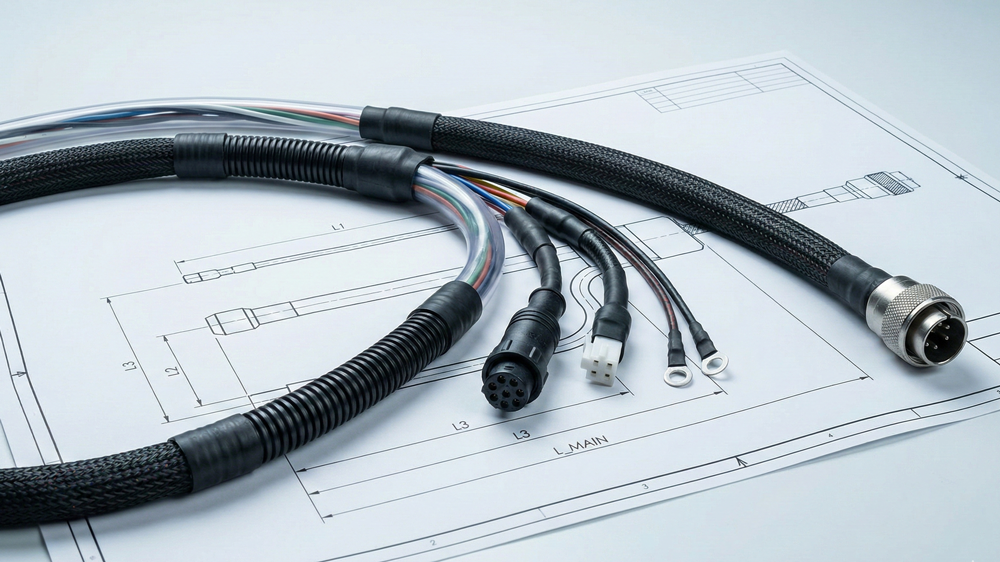
In waterproof cable assembly projects, many teams focus on connector IP ratings first and treat sealing of the cable exit area as a secondary detail. In real field use, the opposite is often true: the cable transition and rear sealing area become the weak point long before the connector interface fails.
This is why overmolding and sealing method selection is a core design decision, not a finishing step. The right method must match the cable structure, connector geometry, environment, assembly process, and service requirements.
This guide explains overmolding and sealing methods for waterproof cable assemblies from an OEM engineering and sourcing perspective. If you are building the full design package, start with our Waterproof Cable Assemblies Design Guide for OEM Buyers and align method selection with your Waterproof Connector Selection for Cable Assemblies decisions.
Table of Contents
ToggleWhy Sealing Method Selection Is a System Decision
A sealing method is only reliable when it works with the entire cable assembly system. The connector rear structure, cable jacket material, cable OD tolerance, bend radius, pull force, installation direction, and production variation all affect sealing performance.
That is why OEM teams should avoid choosing a sealing method by habit or supplier default. A method that works well in one product may be a poor choice in another because the geometry, stress profile, or service needs are different.
For custom projects, treating sealing as a system decision also improves RFQ quality and reduces under-scoped quotes. It helps align design intent with Custom Cable Assemblies requirements early.
Waterproof Cable Assemblies Sealing Boundaries
Before choosing any sealing method, define the sealing boundary. Many RFQs say “waterproof cable assembly” but do not specify what must actually be sealed.
OEM teams should clarify whether sealing applies to:
- the connector mating interface,
- the rear cable entry area,
- the overmolded transition zone,
- the panel interface (if panel-mount),
- or the full installed cable assembly in product use.
Without a clear sealing boundary, suppliers may quote very different solutions under the same “waterproof” requirement. One quote may cover only connector mating seals, while another includes cable exit protection and strain relief sealing.
This boundary definition should be aligned with your IP rating scope in IP67 vs IP68 for Waterproof Cable Assemblies.
Overmolding for Waterproof Cable Assemblies
Overmolding is one of the most common sealing methods for waterproof cable assemblies because it can combine sealing, strain relief, and mechanical protection in a single structure. When designed and controlled well, overmolding can improve durability and reduce stress concentration at the cable exit.
However, overmolding is not automatically the best solution in every project. Its effectiveness depends on material compatibility, mold design, interface geometry, cable positioning control, and process repeatability. A poorly designed overmold can trap stress, create voids, or fail to protect the real leak path.
OEM teams should evaluate overmolding not only as a sealing method, but also as a manufacturable structure. If your project uses molded cable transitions, align design review early with Overmolding Services and Assembly Capabilities.
Potting and Encapsulation Sealing Methods
Potting and encapsulation are often used when the assembly has irregular internal spaces, exposed solder joints, or a need for additional environmental protection around electrical interfaces. These methods can provide strong sealing coverage, but they also introduce tradeoffs in repairability, inspection visibility, and process control.
In waterproof cable assemblies, potting may be suitable for sealed modules or fixed installations where serviceability is low priority. It may be a poor fit for products that require rework, field maintenance, or tight control over internal dimensions after curing.
OEM buyers should ask how the potting process is controlled, how void risk is managed, and how cured material interacts with cable movement and temperature cycling.
Heat Shrink and Seal Boot Methods
Heat shrink sealing and seal boot methods can be effective in some waterproof cable assembly designs, especially when cost, assembly speed, or geometry simplicity is a priority. These methods are often used for light-to-moderate sealing reinforcement, cable transition protection, or secondary sealing layers.
Their limitations appear when the product sees heavy bending, strong pull force, repeated motion, or harsh environmental exposure. In those cases, heat shrink alone may not provide enough mechanical protection or long-term sealing stability.
Seal boot methods can improve strain transition, but performance still depends on material fit, adhesive behavior (if used), and assembly consistency. OEM teams should validate these methods under realistic cable movement and handling conditions.
Gaskets and O-Ring Sealing Methods
Gaskets and O-rings are common in panel interfaces and connector mating structures, and they can be very effective when compression is properly designed and controlled. But these methods depend strongly on tolerance stack-up, surface finish, installation torque, and assembly alignment.
For waterproof cable assemblies, gaskets and O-rings are often part of the sealing system rather than the whole solution. They may handle interface sealing while the cable rear area requires overmolding, boot sealing, or another transition method.
OEM teams should review:
- compression control,
- installation repeatability,
- material compatibility with environment,
- service cycle effects on sealing stability.
Multi-Stage Sealing for Waterproof Cable Assemblies
In higher-risk applications, a single sealing method may not be enough. Many reliable waterproof cable assemblies use multi-stage sealing, where different methods protect different leak paths.
For example, a design may combine:
- connector interface sealing,
- rear cable seal compression,
- overmolded strain relief,
- and a secondary sealing layer for transition protection.
The goal is not to add complexity without purpose. The goal is to match sealing architecture to real failure risks. Multi-stage sealing is especially useful when the assembly faces vibration, cable movement, outdoor weather, contamination, or inconsistent installation handling.
Material Compatibility in Overmolding and Sealing Methods
Sealing reliability depends heavily on material compatibility. A sealing method that works in early samples can degrade later if materials are not compatible with the environment or with each other.
OEM teams should evaluate compatibility among:
- cable jacket material,
- seal material,
- overmold compound,
- connector housing materials,
- oils, chemicals, UV, and temperature exposure.
Material mismatch can lead to swelling, hardening, cracking, seal creep, adhesion failure, or dimensional instability. This is one reason supplier substitutions after sample approval can create major waterproof risk.
For buyer-side alignment before release, use your Strong Technical Support and Quality Guarantee expectations as part of the RFQ and change-control process.
Strain Relief and Sealing Method Integration
A sealing method may pass ingress testing in a static setup and still fail in field use if strain relief is weak. In many waterproof cable assemblies, leakage starts after mechanical stress damages the seal interface over time.
That is why sealing and strain relief should be designed together. OEM teams should review how the sealing method behaves under:
- cable bending near the exit,
- installation pull force,
- vibration or motion cycles,
- repeated handling,
- routing constraints in the final product.
A method that seals well but transfers stress directly to the leak path can create long-term reliability problems. Overmolding, boots, and multi-stage designs are often chosen partly to manage this mechanical transition.
Production Repeatability for Sealing Methods
A sealing method is not production-ready just because it passes one prototype test. OEM projects need methods that can be repeated consistently across sampling, pilot builds, and mass production.
When evaluating sealing methods, OEM buyers should ask:
- what process steps are seal-critical,
- what dimensions are controlled,
- what tooling is required,
- what inspection points verify sealing quality,
- what variation risks are known.
This is where supplier process capability matters more than marketing claims. A supplier with strong Assembly Capabilities and documented Tests & Inspections practices is usually better prepared to deliver repeatable waterproof performance.
Waterproof Sealing Validation for OEM Buyers
Validation should test the sealing method in the actual cable assembly configuration, not just as a material concept. OEM buyers should confirm that the selected method works with the real cable, connector, and installation conditions.
A practical validation plan should define:
- sealing boundary and IP scope,
- tested assembly state,
- ingress test conditions,
- pre-test or post-test mechanical stress (if relevant),
- leakage and functional acceptance criteria,
- sample quantity and repeatability expectations.
If the product has known field risks such as vibration, cable movement, or chemical exposure, add validation steps that reflect those risks. This aligns directly with the upcoming Waterproof Cable Testing Guide for OEM Buyers.
Common Overmolding and Sealing Method Mistakes
A common mistake is choosing the sealing method too late, after connector and cable decisions are already fixed. Another is assuming any “waterproof” method will work as long as the connector rating is high.
Some teams select a low-cost sealing method that passes initial testing but cannot maintain performance under bending or repeated handling. Others approve samples without documenting process controls, then see production variation create leakage problems.
Another costly mistake is changing cable jacket material, overmold compound, or seal materials after sample approval without revalidation. Small material changes can shift sealing performance significantly.
OEM RFQ Checklist for Waterproof Sealing Methods
OEM buyers can improve quote quality by defining sealing requirements clearly instead of writing only a target IP rating.
A practical RFQ should define:
- target IP rating and rating scope,
- sealing boundary and leak-path priorities,
- connector configuration and cable assumptions,
- preferred sealing methods or prohibited methods (if any),
- serviceability requirements,
- mechanical stress conditions,
- environmental exposure conditions,
- validation and inspection requirements,
- change-control expectations for seal-related materials.
If you already have failure photos or sample leakage history, include them. This can help suppliers propose a more realistic sealing architecture.
How OEM Buyers Compare Sealing Solutions and Suppliers
When comparing sealing solutions, look beyond unit cost. The lowest-cost sealing method can become the highest-cost choice if it increases field failures, rework, or inspection burden.
Useful comparison points include:
- sealing performance margin in real conditions,
- strain relief effectiveness,
- material compatibility confidence,
- production repeatability,
- inspection visibility and control,
- supplier support during iteration.
For cross-team alignment, your Custom Cable Assemblies, Overmolding Services, and Tests & Inspections pages can support a more consistent evaluation framework.
Conclusion
Overmolding and sealing methods for waterproof cable assemblies should be selected as part of a complete system design, not as a late-stage add-on. The right method depends on sealing boundary, cable and connector geometry, material compatibility, strain relief needs, and production repeatability.
For OEM buyers, the best results come from defining sealing architecture and validation expectations early. That approach improves supplier alignment, reduces sample rework, and builds stronger field reliability.
FAQ
Is overmolding always the best sealing method for waterproof cable assemblies
Not always. Overmolding is powerful because it can combine sealing and strain relief, but it is not the best fit for every geometry, cost target, or serviceability requirement.
When should OEM teams consider multi-stage sealing
Multi-stage sealing is useful when a single method cannot control all leak paths or when the assembly faces higher risks such as vibration, cable movement, outdoor exposure, or contamination.
Can heat shrink sealing be enough for waterproof cable assemblies
It can be enough in some lower-risk designs or as a secondary sealing layer, but it may not provide sufficient long-term mechanical protection in harsher environments.
Why does material compatibility matter in sealing method selection
Because sealing performance depends on how cable jackets, seal materials, overmold compounds, and connector materials behave together over time under real environmental exposure.
What should be included in an RFQ for waterproof sealing methods
Include IP scope, sealing boundary, cable and connector assumptions, preferred methods, mechanical and environmental conditions, and validation/inspection criteria.
CTA
Need Help Choosing Overmolding or Sealing Methods for a Waterproof Cable Assembly
If your team is evaluating sealing architecture for an OEM waterproof cable assembly, we can help review leak-path risks, sealing methods, and validation assumptions before sample release.
We can support:
- overmolding vs potting vs boot sealing review,
- cable transition leak-path analysis,
- sealing and strain relief integration review,
- material compatibility risk review,
- OEM validation and inspection planning.
If you already have drawings, connector part numbers, sample photos, or leakage history, contact us through our Contact page. You can also review our Waterproof Cable Assemblies Design Guide for OEM Buyers, Waterproof Connector Selection for Cable Assemblies, and Overmolding Services pages before starting the discussion.
Related Articles