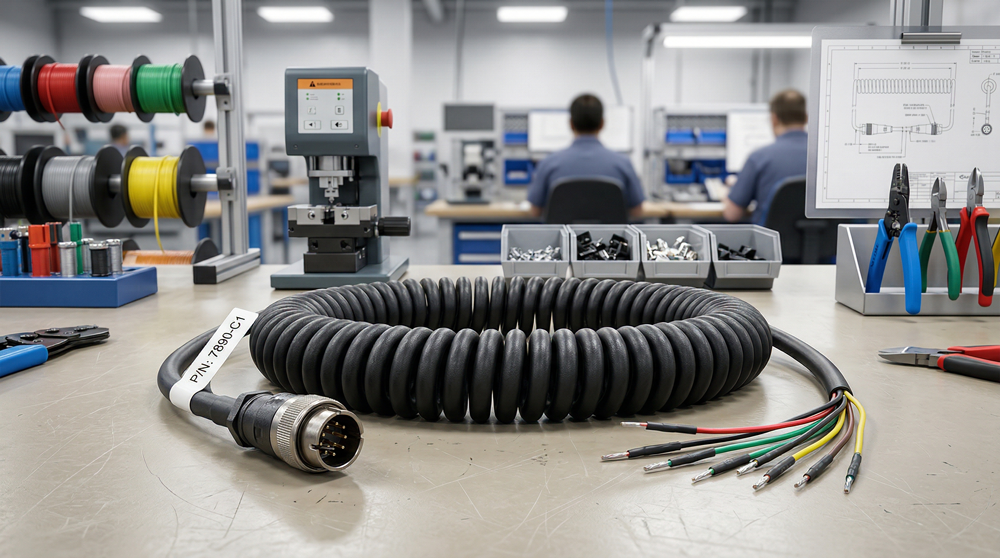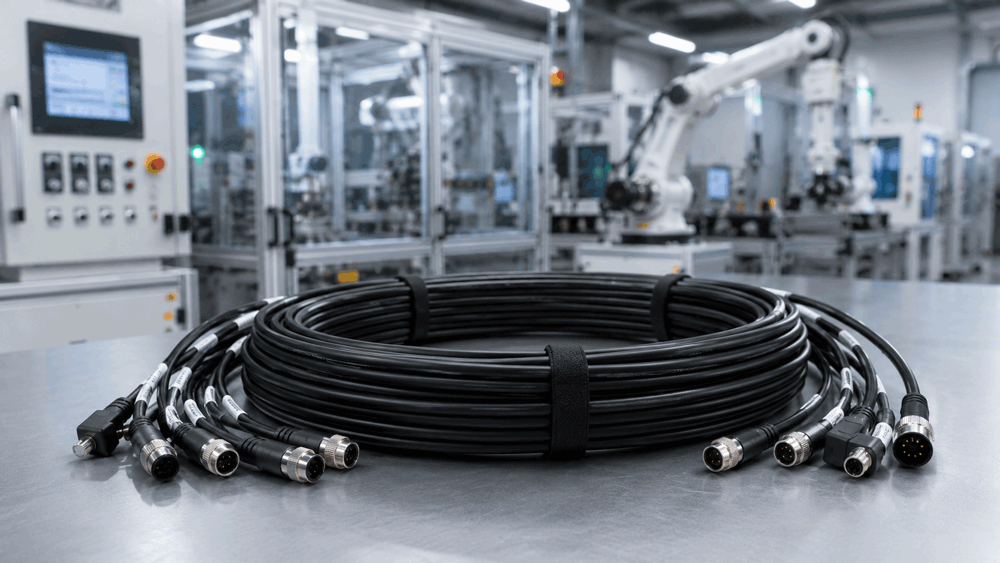
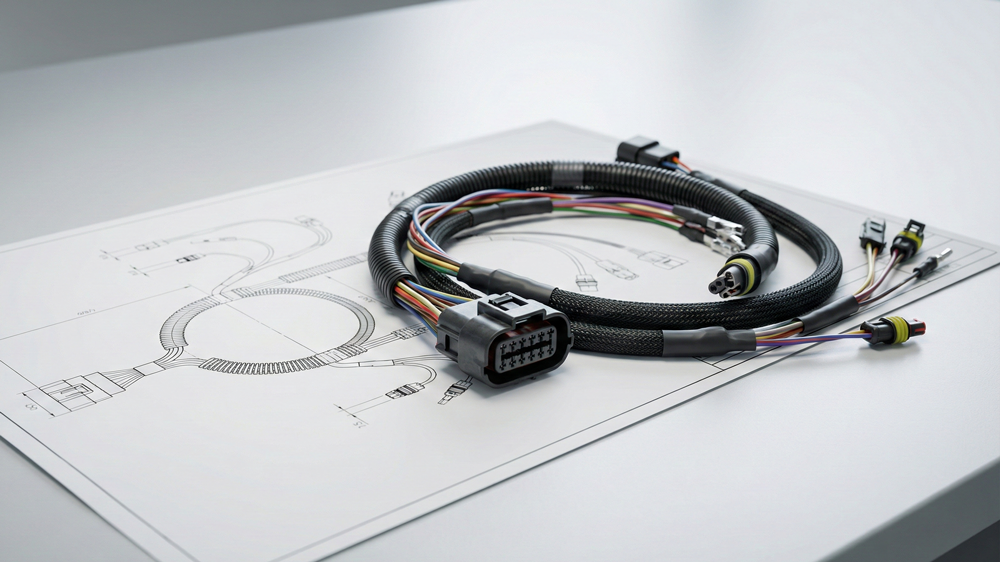
Waterproof connector selection is one of the most important decisions in a waterproof cable assembly project, but it is often treated as a catalog filter. Teams search by IP rating, choose a connector that appears to match, and assume the sealing problem is solved. In real applications, that approach often leads to rework because connector performance depends on cable fit, sealing geometry, assembly process, and field conditions.
This guide explains waterproof connector selection for cable assemblies from an OEM engineering and sourcing perspective. It focuses on how to choose connectors that are not only rated correctly on paper, but also stable in production and reliable in field use.
If you are building the full waterproof design package, review our Waterproof Cable Assemblies Design Guide for OEM Buyers and IP67 vs IP68 for Waterproof Cable Assemblies before finalizing connector requirements.
Table of Contents
ToggleWhy Waterproof Connector Selection Is a System Decision
A waterproof connector does not operate alone. In a cable assembly, the connector must work with the cable jacket, cable OD tolerance, sealing hardware, strain relief design, mating interface, and installation environment. If any of these elements are mismatched, the complete assembly can leak or lose reliability even when the connector itself is properly rated.
That is why waterproof connector selection for cable assemblies should be treated as a system decision. OEM teams should evaluate the connector in the context of the final product, not as an isolated component.
For custom projects, this system view also improves supplier communication. It helps reduce vague RFQs and makes it easier to align connector choice with Custom Cable Assemblies requirements early.
IP Rating Scope in Waterproof Connector Selection
IP rating is a starting point, not the full answer. A connector may be marketed as IP67 or IP68, but OEM teams still need to define how that rating applies in the actual product and cable assembly configuration.
When reviewing waterproof connectors, clarify:
- whether the rating applies to the connector interface only,
- whether the rating applies in a mated state only,
- whether panel mounting is required for the claimed rating,
- whether rear sealing (cable side) is included or depends on correct cable OD and assembly.
This matters because a connector can meet its rating in a specific test setup while the final cable assembly fails due to cable exit sealing, assembly variation, or installation stress.
For project planning, connect the connector rating decision with your broader Tests & Inspections criteria rather than treating the catalog rating as final validation.
Cable OD and Sealing Range in Waterproof Connector Selection
One of the most common causes of waterproof cable assembly issues is poor matching between the connector sealing range and the actual cable outer diameter. This problem often appears after sampling, when teams discover that the connector seal is too loose, too compressed, or sensitive to normal cable OD variation.
In waterproof connector selection for cable assemblies, OEM teams should confirm:
- cable OD nominal value,
- cable OD tolerance range,
- jacket surface characteristics,
- connector sealing range and compression behavior,
- sensitivity to production variation.
A connector that fits one sample cable can still be a risky choice if the production cable range is wider than the seal can handle consistently. This is especially important when supplier substitutions may change jacket hardness or OD control.
If your project includes custom cables, align connector selection with Strong Technical Support and Quality Guarantee expectations before sample approval.
Waterproof Connector Locking Methods and Sealing Reliability
Locking method affects more than usability. It can also affect sealing consistency under vibration, handling, and repeated mating cycles.
Different waterproof connector families may use threaded locking, bayonet locking, push-pull structures, snap locks, or other mechanisms. The right choice depends on the application environment, service access, mating frequency, and the risk of accidental loosening.
When evaluating locking methods, OEM buyers should consider:
- vibration resistance,
- installation speed,
- risk of incorrect mating,
- tactile confirmation for field service,
- sealing stability after repeated cycles,
- space constraints during installation.
A connector with a strong rating but poor locking suitability for the actual installation can become a reliability risk in the field.
For applications with vibration or motion, your Industrial & Robotics context is useful when comparing locking options.
Connector Materials and Environment Compatibility
Waterproof connector selection should also include material compatibility with the real environment. A connector may pass initial sealing tests but degrade over time if its housing, seal material, or metal parts are not suitable for the application.
OEM teams should review exposure risks such as:
- oil and grease,
- cleaning chemicals,
- UV exposure,
- outdoor weathering,
- temperature cycling,
- corrosion risk,
- dust contamination.
Material compatibility is especially important when the connector will be used in outdoor equipment, industrial washdown areas, or products with long service life expectations. Connector selection should be aligned with the product’s durability target, not only the initial ingress test.
Panel-Mount vs Inline Waterproof Connector Selection
Many waterproof connector projects fail because teams do not define whether they need a panel-mount sealing solution, an inline connector solution, or both. These configurations can have different sealing boundaries and different installation risks.
A panel-mount connector may rely on panel gasket compression and installation torque to achieve the intended rating. An inline connector may rely more on connector mating seal and rear cable sealing. The assembly requirements, process controls, and field failure modes can be very different.
OEM RFQs should clearly define:
- connector configuration (panel-mount or inline),
- panel thickness and mounting constraints (if applicable),
- sealing boundary location,
- installation method and service access.
This avoids supplier assumptions and improves quote quality.
Mating Cycles and Serviceability in Waterproof Connector Selection
Some waterproof connectors perform well in one-time installation but become less stable when frequent mating and unmating is required. If your product requires maintenance access, field replacement, or periodic connection cycles, serviceability should be part of the connector selection decision.
OEM teams should ask:
- how many mating cycles are expected,
- whether sealing performance changes after repeated use,
- how the connector behaves if field mating is imperfect,
- whether technicians can confirm proper locking easily.
Serviceability is often under-specified in RFQs, but it has a direct impact on field reliability and support cost.
Assembly Process and Production Repeatability
A connector can be a good engineering choice and still be a poor production choice if the assembly process is too sensitive. Waterproof connector selection for cable assemblies should include manufacturability and repeatability, not only performance targets.
OEM teams should review:
- assembly steps required for sealing,
- tolerance sensitivity during cable preparation,
- risk of assembly variation,
- tooling needs,
- inspection points for seal-critical features.
This is where supplier capability matters. A supplier with strong Assembly Capabilities can usually explain how connector sealing consistency is controlled from sampling to mass production.
Waterproof Connector Validation for OEM Buyers
Do not rely on connector datasheets alone. OEM validation should confirm the connector’s sealing performance in the actual cable assembly structure and application setup.
A practical validation plan for waterproof connector selection should define:
- tested cable type and OD range,
- tested assembly state (mated / installed / panel mounted),
- ingress test condition,
- mechanical stress before or after testing (if relevant),
- acceptance criteria,
- sample quantity and repeatability expectations.
For higher-risk products, the validation plan should also include the cable exit and strain relief area rather than focusing only on the connector interface. This connects directly to the broader Waterproof Cable Testing Guide for OEM Buyers.
Common Waterproof Connector Selection Mistakes
A common mistake is choosing a connector only by IP label and price. Another is matching the connector to a nominal cable OD without checking the full cable tolerance range and sealing sensitivity.
Some teams also ignore installation conditions. A connector that works well in a lab setup may be difficult to assemble or lock correctly in a tight product enclosure, leading to field errors.
Another costly mistake is changing cable jacket material or connector alternatives after sample approval without revalidating the sealing interface. Small changes can significantly affect waterproof performance.
The safer approach is to define connector selection assumptions and validation criteria clearly in the RFQ and drawing package.
OEM RFQ Checklist for Waterproof Connector Cable Assemblies
A strong RFQ helps suppliers quote the right connector and sealing solution faster. It also reduces under-scoped offers that look low-cost but create risk later.
A practical OEM RFQ should define:
- target IP rating and intended test condition,
- rating scope and tested assembly state,
- connector configuration (inline / panel-mount),
- cable OD range and jacket material assumptions,
- locking method preferences or constraints,
- environmental exposure conditions,
- mating cycle expectations,
- sealing / overmolding expectations,
- validation and inspection requirements,
- any known field failure risks.
If you already have existing samples, include photos of the connector interface and cable rear sealing area to improve supplier interpretation.
How OEM Buyers Compare Waterproof Connector Options and Suppliers
When comparing waterproof connector options, OEM teams should compare not only component cost but total project risk. The lowest-cost connector is not always the lowest-cost solution if it increases assembly difficulty, inspection burden, or field failure risk.
Useful comparison criteria include:
- sealing fit stability with actual cable range,
- locking reliability in real installation conditions,
- assembly repeatability,
- supplier support during sampling,
- validation evidence quality,
- long-term supply consistency.
For internal alignment between sourcing and engineering, your Custom Cable Assemblies, Assembly Capabilities, and Tests & Inspections pages can support a more consistent evaluation framework.
Conclusion
Waterproof connector selection for cable assemblies is not only about choosing an IP-rated part. The right connector must match the cable OD range, sealing method, locking needs, environment, serviceability, and production process.
For OEM buyers, the best results come from defining connector selection as part of a complete waterproof cable assembly design and validation plan. That approach improves supplier alignment, reduces sample rework, and creates a stronger foundation for field reliability.
FAQ
Is an IP68 connector always the best choice for a waterproof cable assembly
Not always. The best choice depends on the real environment, assembly configuration, cable fit, locking needs, and validation method. A well-matched IP67 solution can outperform a poorly matched IP68 solution in field use.
Why does cable OD matter in waterproof connector selection
Because the rear seal often depends on correct cable OD compression. If the cable OD range does not match the connector sealing range, leakage risk increases even if the connector is correctly rated.
Should OEM teams test the connector alone or the full cable assembly
The full cable assembly should be validated in the intended configuration whenever possible. Connector datasheets are useful, but field reliability depends on the complete assembly and installation conditions.
How do locking methods affect waterproof connector reliability
Locking methods affect vibration resistance, mating consistency, and seal stability after repeated use. A locking style that is hard to install correctly can increase field failure risk.
What should be included in an RFQ for waterproof connector cable assemblies
Include IP target, rating scope, tested state, connector configuration, cable OD and jacket assumptions, locking requirements, environment conditions, and validation criteria.
CTA
Need Help Choosing the Right Waterproof Connector for an OEM Cable Assembly
If your team is evaluating waterproof connectors for a cable assembly project, we can help review connector fit, sealing assumptions, and validation requirements before sample release.
We can support:
- connector and cable OD sealing fit review,
- locking method selection for field conditions,
- panel-mount vs inline connector review,
- sealing and overmolding interface review,
- OEM validation and inspection planning.
If you already have connector part numbers, drawings, or sample photos, contact us through our Contact page. You can also review our Waterproof Cable Assemblies Design Guide for OEM Buyers, Overmolding Services, and Assembly Capabilities pages before starting the discussion.