Choosing the right shield type is only part of EMI design. In many OEM cable assembly projects, the real performance difference comes from how the shield is terminated at the connector or chassis interface. A well-selected foil or braid shield can still deliver poor EMI results if the termination path is too long, inconsistent, or poorly bonded.
This guide explains shield termination methods for shielded cable assemblies from an OEM engineering and sourcing perspective. It focuses on practical decisions that affect EMI performance, manufacturability, and production consistency.
If you are comparing shield types first, read Braid vs Foil Shielding for Cable Assemblies before this article. For the full system view, see our Shielded Cable Assemblies EMI Control Design Guide.
Table of Contents
ToggleWhy Shield Termination Methods Matter for EMI Control
Many EMI problems come from the transition zone between the cable shield and the connector, backshell, or chassis. This is where shield current must flow through a controlled path. If that path is narrow, long, or partially floating, impedance increases and shielding effectiveness drops—especially at higher frequencies.
In practice, shield termination quality can matter as much as shield material selection. Two suppliers may use the same cable and the same connector part number, but the EMI results can differ because the shield prep, termination method, and bonding path are different.
For OEM buyers, this means shield termination should be specified and reviewed—not assumed. If your RFQ only says “shielded cable assembly,” you may get very different termination implementations from different suppliers.
Pigtail vs 360 Shield Termination for Cable Assemblies
One of the most common questions in shielded cable assembly design is pigtail vs 360 shield termination.
Pigtail termination connects the shield through a lead wire (often a drain wire or a stripped braid tail) to a terminal or ground point. This method can be simple and economical in some applications, and it may be acceptable when EMI requirements are moderate and the design constraints are forgiving.
However, pigtail termination usually creates a longer and narrower current path. In higher-frequency EMI conditions, this can increase impedance and reduce shielding performance. The result may be a cable assembly that passes basic electrical tests but still shows noise problems in system use.
A 360 shield termination method aims to maintain broader contact around the shield circumference, typically through a backshell, clamp, ferrule, or other hardware that preserves shield continuity through the connector transition. In many EMI-sensitive designs, this approach provides better shielding performance because the current path is shorter and more continuous.
The correct choice depends on the EMI target, connector design, mechanical constraints, and cost-performance tradeoffs. For OEM teams, the key is to evaluate pigtail vs 360 termination in the real application environment—not as a generic rule.
Shield Termination Methods for Foil and Braid Shields
Shield termination methods must also match the shield construction. Terminating a foil shield is not the same as terminating a braid shield, and a combined foil + braid design may require a different preparation sequence again.
For foil shields, drain wire handling and foil integrity are critical. A foil shield may provide strong coverage, but if the foil is damaged during prep or the drain wire connection is weak, the practical shielding result can degrade quickly. Termination consistency is especially important in production.
For braid shields, coverage and mechanical handling are usually stronger, but braid prep and clamp contact quality become the key factors. If braid strands are damaged, poorly captured, or inconsistently compressed, shield continuity and repeatability can suffer.
For combined foil + braid shields, OEM teams should not assume that “more shielding layers” automatically means better field performance. The termination stack-up must be designed so both shielding layers are integrated correctly, and the connector interface must support the intended bonding path.
This is where supplier process capability matters. A supplier with strong Assembly Capabilities and Tests & Inspections discipline can usually explain not only what termination method is used, but how it is controlled in sampling and production.
Shield Termination Backshell Design for Cable Assemblies
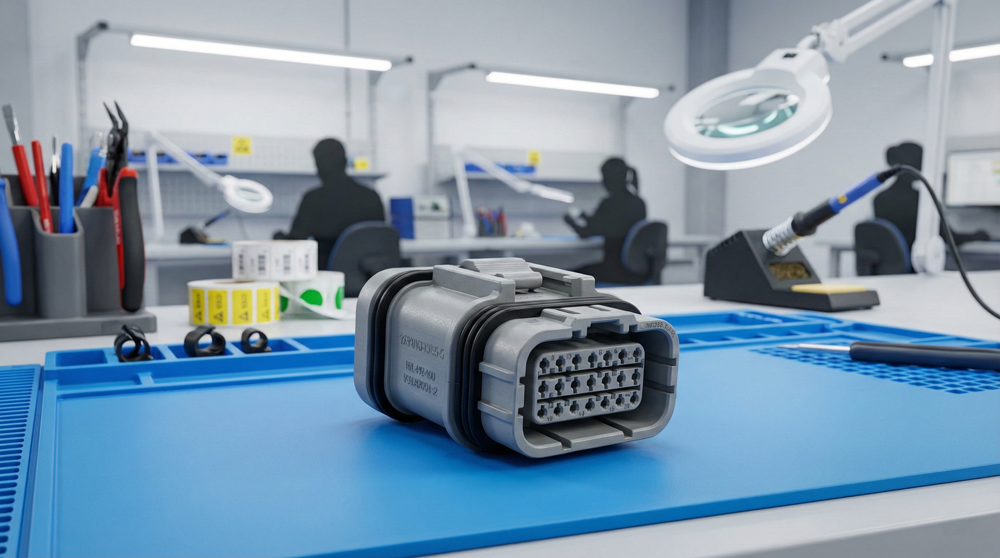
In many EMI-sensitive cable assemblies, the backshell is not just a mechanical accessory. It is a key part of the shield termination path.
A well-designed shield termination backshell can help provide 360 contact, strain relief, and better bonding continuity into the connector shell or chassis interface. In contrast, a poor backshell match can create discontinuities, weak contact pressure, or assembly variability that reduces EMI performance.
When evaluating backshell design, OEM teams should review:
- Connector shell compatibility
- Shield clamp or ferrule design
- Contact pressure consistency
- Mechanical strain relief path
- Space and bend constraints near the connector
- Assembly repeatability in production
In some projects, the connector and backshell combination determines whether a high-performance shield termination method is feasible at all. This is why connector selection and shield termination planning should be reviewed together, not in separate stages.
If your assembly includes molded transitions, coordinate backshell and termination details with Overmolding Services early so the EMI path is not weakened during mechanical protection design.
Shield Continuity at Connector Interface for EMI Control
A strong shield termination method is only effective if shield continuity is maintained through the connector interface. Many field EMI issues happen because the shield is terminated “inside the cable,” but the connector shell or chassis bond is incomplete.
This problem often appears in designs where the cable shield is prepared correctly, but the mating connector shell is non-conductive, poorly bonded, or not integrated with the enclosure shielding path. In these cases, the termination looks correct during assembly review but fails to provide the intended EMI control in the final product.
OEM teams should verify the full path:
- Cable shield termination
- Connector shell conductivity
- Backshell bonding
- Panel or chassis contact
- Enclosure grounding strategy
This is one reason shield termination design must be coordinated with system grounding. If you are building industrial equipment, also review Cable Grounding Strategy for Shielded Cables in Industrial Systems to avoid a good termination method being undermined by a weak grounding architecture.
Common Shield Termination Mistakes in Cable Assemblies
Several shield termination mistakes repeat across OEM projects, even when the cable materials are correct.
A common mistake is using pigtail termination in an EMI-sensitive design without validating the actual noise environment. Another is stripping back the shield too far, leaving a long unshielded transition near the connector. Some projects also fail because the shield termination method is chosen in prototyping but not controlled tightly in mass production.
Another frequent issue is treating shield termination as a cable-only decision. In reality, termination performance depends on the connector shell, backshell hardware, enclosure bond, and grounding strategy. A good cable prep process cannot fix a poor connector-chassis interface.
The most costly mistake is not documenting the termination method clearly in the RFQ or drawing. When the termination path is not specified, different suppliers may deliver very different builds under the same part number description.
How OEM Buyers Specify Shield Termination Methods
OEM buyers can reduce EMI risk by defining shield termination expectations early in the RFQ and drawing package. At minimum, do not stop at “shielded cable assembly.” Specify how the shield should be terminated and what performance the termination path is expected to support.
A practical RFQ should describe:
- Shield type (foil, braid, or combined)
- Termination method expectation (pigtail or 360-style termination)
- Connector shell and backshell assumptions
- Grounding intent at each end
- Allowed exposed shield length near connector
- Inspection and validation requirements
- Any known EMI risk conditions in the application
If you already have a supplier candidate, ask for build photos of the shield termination area and process-level inspection controls. Teams often review only the external cable appearance, but the EMI outcome depends on what happens under the strain relief and backshell.
For buyer-side process alignment, your Quality Guarantee and Strong Technical Support pages can help set expectations before sample approval.
Shield Termination Method Selection for OEM Projects
The best shield termination method is not always the most complex one. It is the method that matches the application’s EMI risk, connector design, manufacturing capability, and cost target—while remaining repeatable in production.
For lower-risk applications, a simpler termination may be acceptable if the system is validated under real conditions. For EMI-sensitive systems, a more continuous termination path and better connector-shell bonding are often worth the added process complexity.
The right decision sequence for OEM teams is usually:
- Define the EMI environment and system constraints
- Select shield type based on use case
- Choose a termination method that matches the connector interface
- Confirm grounding strategy and enclosure bonding
- Validate with application-relevant testing before release
This article works best as part of a connected design sequence. After termination planning, the next steps are grounding and validation.
Conclusion
Shield termination methods are a core part of EMI control in shielded cable assemblies. Even the right shield material can underperform if the termination path is long, inconsistent, or poorly integrated with the connector and chassis interface.
For OEM teams, the most reliable results come from defining shield termination together with shield type, connector selection, grounding strategy, and validation planning. That system-level approach improves EMI performance and reduces production risk.
FAQ
What is the difference between pigtail and 360 shield termination
Pigtail termination uses a wire lead or shield tail to connect the shield to ground, while 360 termination maintains broader contact around the shield circumference through hardware such as clamps or backshells. In many EMI-sensitive designs, 360 termination provides a shorter and more continuous current path.
Is pigtail shield termination always bad for EMI
No. Pigtail termination can be acceptable in some lower-risk applications, especially when EMI requirements are moderate and the system has been validated under real operating conditions. The problem is using it by default in high-frequency or EMI-sensitive designs without testing.
Do foil and braid shields need different termination methods
Yes, in many cases. Foil and braid shields have different structures, so the prep process, contact method, and termination hardware may differ. A combined foil + braid shield can require an even more carefully defined termination process.
Why do shield termination methods vary between suppliers
Because real performance depends on process control, tooling, connector-backshell fit, and inspection methods—not just cable material. Two suppliers may quote the same parts but implement different shield prep and termination details.
What should OEM buyers include in an RFQ for shield termination
At minimum, specify the shield type, termination method expectation, connector and backshell assumptions, grounding intent, exposed shield length limits, and validation/inspection requirements. This reduces ambiguity and improves quote quality.
CTA
Need Help Choosing a Shield Termination Method for an OEM Cable Assembly
If your team is deciding between pigtail termination and 360-style shield termination, we can help review the cable assembly design before the RFQ is finalized.
We can support:
- Shield termination method selection by EMI risk
- Foil, braid, and combined shield termination review
- Connector and backshell compatibility review
- Manufacturability and process consistency review
- OEM inspection and validation planning
If you already have drawings, connector part numbers, or sample references, contact us through our Contact page. You can also review our Shielded Cable Assemblies and Tests & Inspections pages before starting the discussion.