Electromagnetic interference (EMI) is one of the most common reasons a cable assembly performs well in lab testing but becomes unstable in real-world use. In industrial equipment, medical devices, automation systems, test instruments, and data-connected electronics, unwanted noise can couple into cable paths and cause communication errors, false triggers, signal distortion, or intermittent failures.
For OEM engineers and sourcing teams, EMI control is not achieved by simply adding a shield layer. Reliable performance depends on the full design chain: cable construction, shield type, grounding strategy, shield termination, connector and enclosure interface, routing conditions, and validation methods. If any one of these elements is weak, the overall shielding result can fall short.
This guide explains how to design shielded cable assemblies for EMI control from a practical OEM perspective. If your team is still defining the overall harness architecture, it also helps to review broader Cable Assemblies and Custom Cable Assemblies options before finalizing EMI-related requirements.
Table of Contents
ToggleShielded Cable Assemblies and EMI Basics
A shielded cable assembly uses a conductive layer (or layers) around signal or power conductors to reduce electromagnetic coupling. In practice, the shield serves two purposes at the same time: it helps prevent external noise from entering the cable and reduces internal noise from radiating out.
EMI-related symptoms often appear as unstable sensor readings near motors, communication dropouts in control cabinets, visible noise in imaging systems, or intermittent errors that occur only when multiple subsystems are running together. These issues frequently point to cable routing, connector transitions, or grounding paths—not just the signal electronics.
That is why shielding should be treated as a system-level design decision, not just a material selection. A cable can be “shielded” on paper and still underperform in the field if the termination or grounding strategy is poorly defined.
If you are comparing standard versus project-specific builds, your base product page for Shielded Cable Assemblies is a useful internal reference point for buyers before they move into engineering discussions.
Shielding Type Selection for OEM Projects
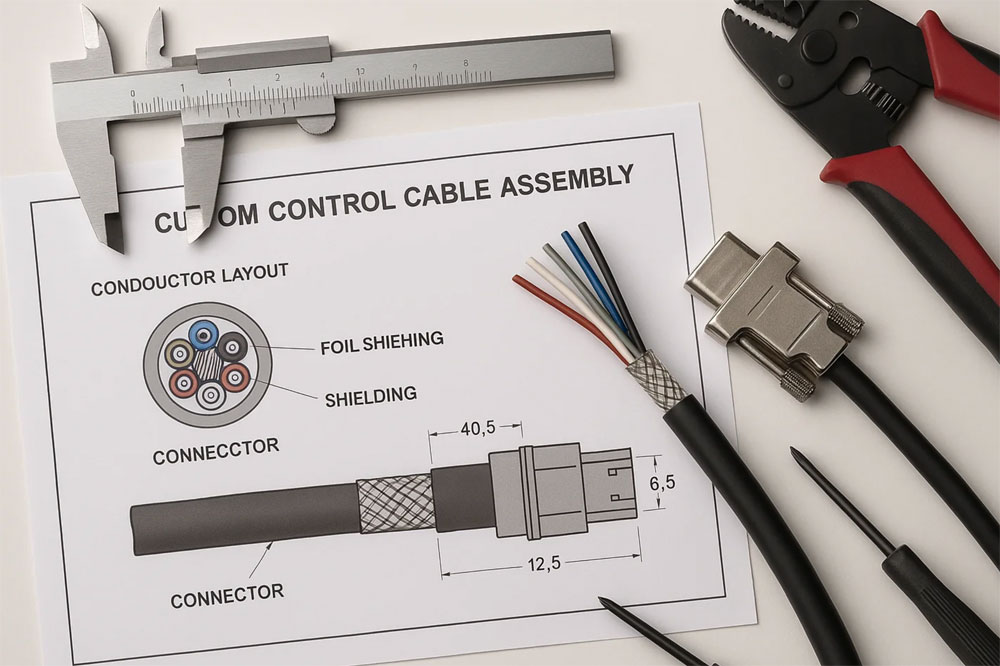
The first major design choice is the shielding structure. The most common options are foil shielding, braided shielding, or a combined foil + braid design.
Foil shielding typically provides high coverage and is often effective for high-frequency noise control. It is compact and cost-efficient in many signal cable designs, which makes it a common choice in controlled environments. However, repeated flexing can reduce durability over time in dynamic applications, and shield termination quality becomes especially important.
Braided shielding generally offers better mechanical durability and flexibility. It is often preferred in products exposed to movement, vibration, or abrasion, such as industrial devices, handheld equipment, or machinery cable sets. The tradeoff is that braid coverage is not fully closed, so performance can vary depending on braid density and construction.
Combined foil + braid shielding is commonly selected when OEM teams need broader EMI performance and stronger mechanical reliability. This is often a practical solution for applications installed near switching power supplies, motors, drives, or other strong noise sources.
When choosing the shielding type, evaluate these factors together:
- Noise source type and frequency range
- Cable movement and bend cycles
- Mechanical wear risk
- Cost target and compliance margin
- Connector and termination feasibility
Material selection should also align with your broader Cable Wiring Materials strategy, especially when your design includes mixed signal and power conductors in the same assembly.
Cable Construction Design for EMI Control
EMI performance starts before the connector is assembled. Cable construction details such as conductor arrangement, pair geometry, insulation structure, and drain wire implementation all affect how noise couples into or out of the cable.
For differential signals, twisted pairs are often essential because they reduce loop area and improve common-mode noise rejection. Even with shielding, poor conductor geometry can create avoidable EMI sensitivity. In mixed signal-power cable assemblies, conductor segregation also matters. High-current switching lines routed too close to low-level signal lines can introduce noise that shielding alone may not fully suppress.
Cable diameter and flexibility requirements can also limit design choices. A compact product may require a small outer diameter, but pushing too many functions into a tight cable structure can weaken shield continuity, reduce bend life, or create manufacturing instability. This is exactly where early engineering collaboration helps.
Teams developing new products often benefit from involving a supplier with Strong Technical Support and documented Assembly Capabilities before locking the drawing. Early feedback can prevent designs that look good in CAD but become difficult to build consistently in production.
If the cable assembly will be used in a moving system, robotic arm, or vibration-heavy environment, the mechanical life of the shield path becomes part of the EMI design. Fatigue-related issues such as cracked shield layers, broken drain wires, or loose terminations can gradually degrade shielding performance and create hard-to-diagnose field failures.
Shield Termination Design and EMI Performance
Shield termination is one of the most critical—and most underestimated—factors in EMI control. A good shield material can still perform poorly if the transition between the cable shield and the connector or chassis is weak, too long, or inconsistent.
Many EMI problems originate in the shield transition zone. If the shield is stripped back too far, connected through a long pigtail, or left partially floating, the impedance increases and shielding effectiveness drops, especially at higher frequencies.
In general, shorter and more continuous shield termination paths perform better than long exposed transitions. For applications with tighter EMC requirements, termination methods that maintain broader contact around the shield interface are usually preferred over narrow single-point connections. Connector shell design, backshell compatibility, and process consistency all matter.
This is also where manufacturing process control becomes important. A supplier may quote the same cable material and connector brand as another supplier but still deliver different EMI results because the shield termination process is handled differently. If you are evaluating suppliers, ask for process details and inspection standards—not only part numbers.
If your build also requires molded transitions, coordinate shield termination with Overmolding Services early in the design stage. Overmolding can improve strain relief and durability, but it must not compromise the shield termination area.
Grounding Strategy for Shielded Cable Assemblies
A shielded cable assembly only performs as intended when the grounding strategy matches the system architecture. This is where many OEM projects lose time: teams apply general rules without fully considering the actual equipment layout and installation environment.
In some systems, grounding the shield at one end helps reduce low-frequency ground loop problems. In others, grounding at both ends provides better high-frequency shielding continuity. The correct approach depends on signal type, frequency content, cable length, enclosure bonding quality, and the potential difference between connected devices.
Industrial environments require additional care. Variable frequency drives (VFDs), switching power supplies, relays, and long cable runs can create complex noise paths. A grounding method that works during bench testing may fail after installation in a real factory panel with different grounding conditions.
This is why system grounding intent should be defined by the OEM engineering team, then clearly communicated to the cable assembly supplier. The supplier can build the assembly, but the system owner must define the functional grounding philosophy and acceptance criteria.
For projects in automation and machine systems, it helps to align shielding decisions with your application environment. Your Industrial & Robotics page is a strong internal context link for buyers reviewing use-case fit.
Connector and Enclosure Interface Design
EMI control often fails at the connector and enclosure interface rather than inside the cable itself. A high-quality shielded cable assembly can lose much of its performance if it is connected to a non-conductive housing, poorly bonded panel cutout, or an unsuitable connector shell.
Connector selection should go beyond pin count and current rating. For EMI-sensitive applications, engineers should also evaluate:
- Connector shell material
- Backshell compatibility
- Strain relief design
- Chassis or panel bonding path
- Shield continuity through the interface
If the product relies on enclosure shielding, the cable shield should transition into the enclosure shielding path with minimal discontinuity. This transition is often the hidden cause of field EMI issues.
Products in Medical & Healthcare and Telecom & Data applications can be especially sensitive to connector interface quality because signal integrity and repeatability expectations are often higher. Designing the connector-chassis interface correctly at the beginning is far cheaper than troubleshooting EMI symptoms after pilot builds.
How OEM Buyers Should Specify Shielded Cable Assemblies
One of the best ways to reduce EMI-related redesign is to improve the RFQ and specification package. Many buyers request a “shielded cable assembly” without defining the required performance level, termination expectations, or validation criteria. That ambiguity increases engineering risk and can lead to delays during sampling.
A practical RFQ should define not only what parts are used, but how the shielded cable assembly is expected to perform in the final system. At minimum, your purchasing and engineering documents should align on the following:
- Application type and signal type
- Noise environment and nearby interference sources
- Cable length and routing conditions
- Preferred shield structure (foil, braid, or combined)
- Shield termination requirements at each end
- Grounding intent in the final system
- Inspection and test acceptance criteria
- Mechanical and cosmetic requirements
- Revision control and approved alternatives
If your sourcing process is still being formalized, it is helpful to direct internal stakeholders to A Letter to Buyers and your external capability pages such as Flexible Manufacturing and Quick Turn Available so expectations are aligned before sample release.
Shielded Cable Testing and Validation
Many teams only discover shielding weaknesses during system integration. A cable assembly can pass continuity checks and still underperform in EMI control. Basic continuity testing is necessary, but it is not enough to validate shield effectiveness.
A stronger validation plan combines electrical tests and application-oriented checks. Depending on the project, this may include:
- Continuity testing
- Insulation resistance
- Withstand voltage (Hi-Pot), if applicable
- Shield continuity verification
- Grounding path verification
- Functional testing under real operating noise conditions
For OEM projects with EMC compliance targets, pre-compliance evaluation should be discussed early. Waiting until formal certification to discover cable-related EMI issues is expensive and slow.
Your Tests & Inspections and Quality Guarantee pages are important internal links in this section because they support buyer confidence in repeatable process control and verification discipline.
Common EMI Mistakes in Cable Assembly Projects
Several mistakes repeat across OEM cable assembly programs:
The first is assuming shield presence equals shield performance. A cable may include a shield layer but still perform poorly if termination, grounding, or connector bonding is not handled correctly.
The second is selecting shielding type based only on cost without considering movement, frequency range, or termination feasibility. A lower material cost can become a higher total cost if it creates field instability or redesign work.
The third is leaving grounding strategy undefined until late integration. At that stage, cable modifications usually become slower and more expensive, and the root cause is harder to isolate.
Another common mistake is treating the supplier as a build-only vendor rather than an engineering partner. Suppliers with strong process and application experience can identify manufacturability and EMI risks early, but only if enough system context is shared.
How to Work with a Cable Assembly Supplier on EMI Projects
The fastest way to improve results is to collaborate earlier and share more application context. Instead of sending only a BOM and connector list, provide a short design brief that explains signal type, equipment layout, cable routing, environment, and known noise concerns.
A capable supplier can then help review:
- Shield structure selection
- Termination method feasibility
- Connector and backshell fit
- Build process consistency risks
- Prototype validation approach
Ask for more than finished product photos. Request process-level evidence where needed, especially around shield preparation and termination consistency. If the project has strict EMI performance expectations, schedule a design review before the drawing is frozen.
This is where your trust pages also help convert serious buyers. Internal links such as Why Choose Us, Factory at a Glance, Quality Policy, and Certificates can support the decision process for procurement and quality teams evaluating manufacturing partners.
Conclusion
Designing shielded cable assemblies for EMI control is a system engineering task—not a material checkbox. The best results come from aligning shield type, cable construction, termination method, grounding strategy, connector interface, and validation plan from the beginning of the project.
For OEM buyers, the benefit is clear: when EMI requirements are defined early and communicated clearly, sample builds converge faster, debugging cycles are reduced, and production outcomes become more predictable.
If your team is sourcing shielded cable assemblies for industrial, medical, automation, telecom, or electronics applications, start with the real noise environment and system grounding architecture, then build the cable specification around those realities. That approach reduces risk and improves long-term field reliability.
Related Internal Pages
If readers want to continue exploring your capabilities and application fit, these pages are strong next steps:
- Shielded Cable Assemblies
- Custom Cable Assemblies
- Industrial & Robotics
- Medical & Healthcare
- Telecom & Data
- Overmolding Services
- Tests & Inspections
- Contact
- Blog
FAQ
What is the best shielding type for a cable assembly, braid or foil
There is no universal best option. Foil shielding often provides high coverage and is effective for many high-frequency noise scenarios, while braid shielding is usually better for flexibility and mechanical durability. In many OEM applications, a combined foil + braid structure offers a better balance of EMI performance and robustness.
Does a shielded cable assembly always need grounding at both ends
Not always. The correct grounding method depends on signal type, cable length, system grounding architecture, and noise characteristics. In some systems, single-end grounding helps reduce ground loop issues. In others, both-end grounding improves high-frequency shielding continuity.
Why can a shielded cable still have EMI problems
A shielded cable can still underperform if the shield termination is poor, the grounding strategy is incorrect, the connector shell is not properly bonded, or the cable routing places sensitive lines too close to noisy power circuits. Shield presence alone does not guarantee shielding effectiveness.
Is pigtail shield termination acceptable for industrial cable assemblies
It depends on the EMI requirement. Pigtail termination may be acceptable in lower-risk applications, but it often increases impedance and reduces shielding performance at higher frequencies. For stricter EMC requirements, shorter and more continuous shield termination methods are usually preferred.
What tests should OEM buyers request for shielded cable assemblies
Continuity testing is necessary but not enough for EMI-sensitive projects. OEM buyers should also consider insulation resistance, withstand voltage (when applicable), shield continuity verification, grounding checks, and functional validation under real operating conditions.
How should I write an RFQ for a shielded cable assembly
A good RFQ should define the cable structure, shield type, connector models, shield termination expectations, grounding intent, cable length, routing conditions, environmental requirements, and inspection/test acceptance criteria. Clear RFQs reduce quotation errors and redesign risk.
Can overmolding affect EMI performance in shielded cable assemblies
Yes. Overmolding can improve strain relief and mechanical durability, but it must be designed so it does not damage or weaken the shield termination area. Mechanical design and EMI design should be reviewed together before finalizing the assembly structure.
When should I involve a cable assembly supplier in EMI design
As early as possible, ideally before the RFQ is frozen. Early supplier involvement helps identify manufacturability risks, termination constraints, connector compatibility issues, and cost-performance tradeoffs before they turn into expensive delays.
CTA
Need Help Defining a Shielded Cable Assembly for EMI Control
If you are evaluating a shielded cable assembly for an industrial, medical, automation, telecom, or electronics project, our team can help review the design before mass production.
We can support:
- Shielding structure selection based on your application environment
- Shield termination method review
- Connector and backshell matching
- Grounding strategy alignment with your system design
- Prototype feasibility review and production planning
- Inspection and validation planning for OEM projects
If you already have drawings, connector lists, or a sample reference, send them through our Contact page. You can also review our Strong Technical Support, Tests & Inspections, and Quality Guarantee pages before starting the discussion.
Related Reading
Related Services