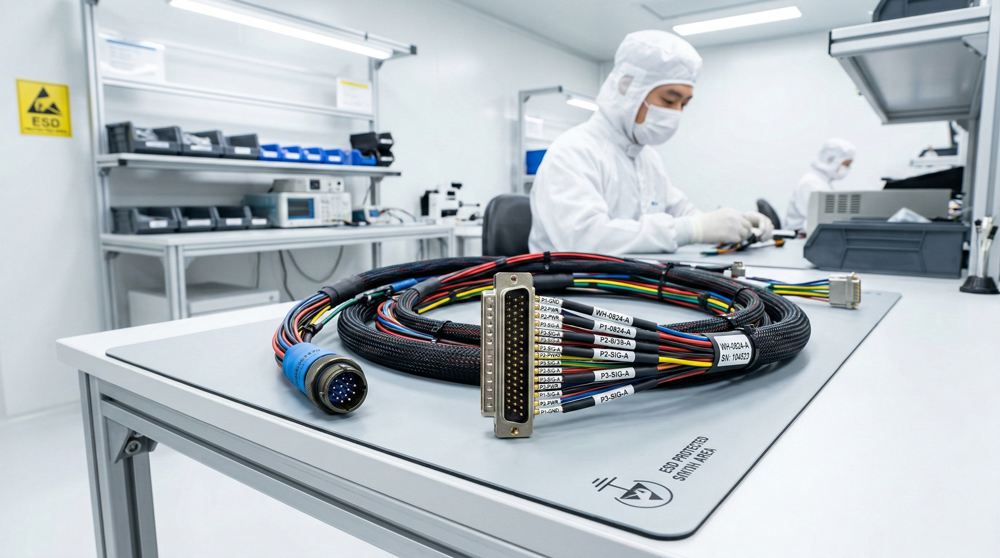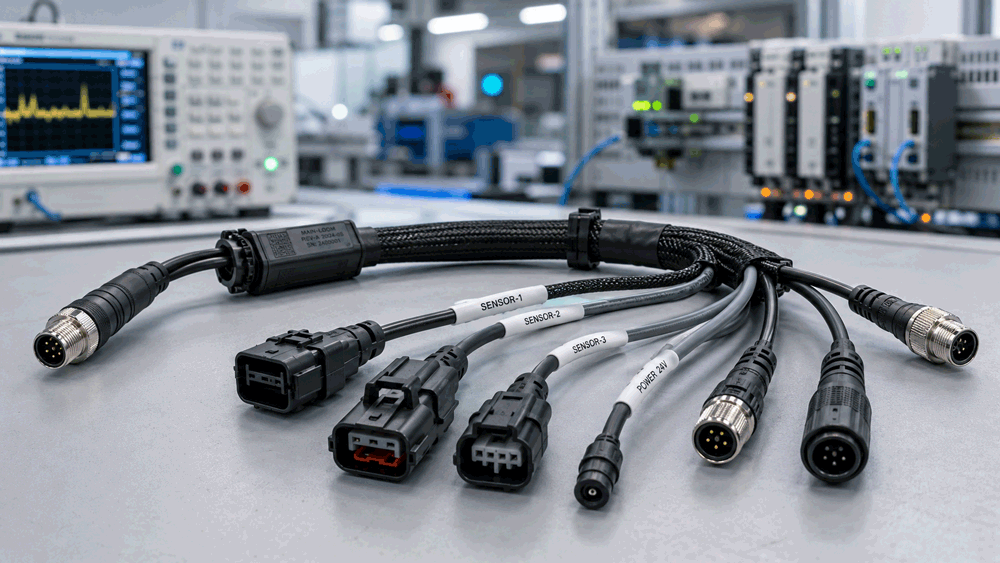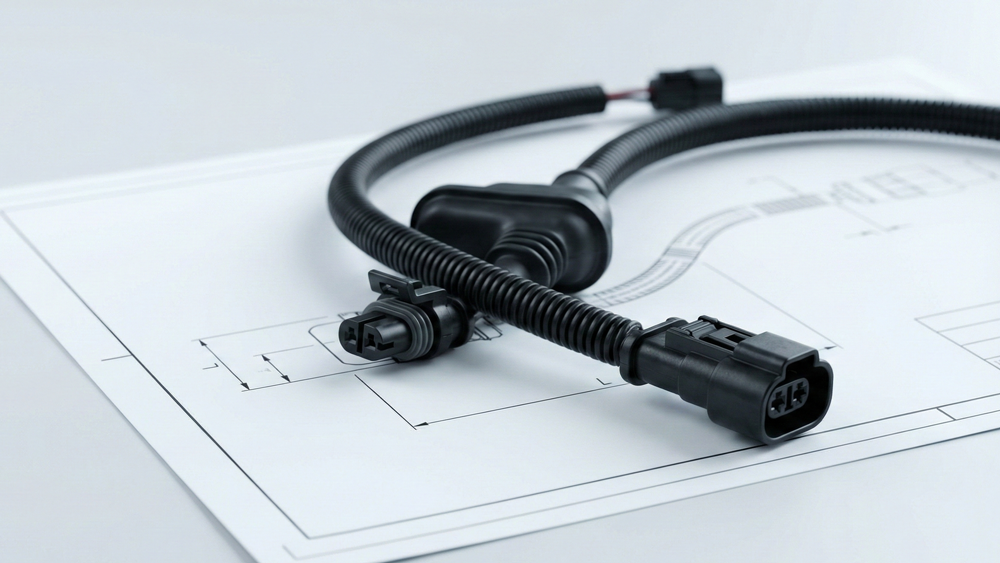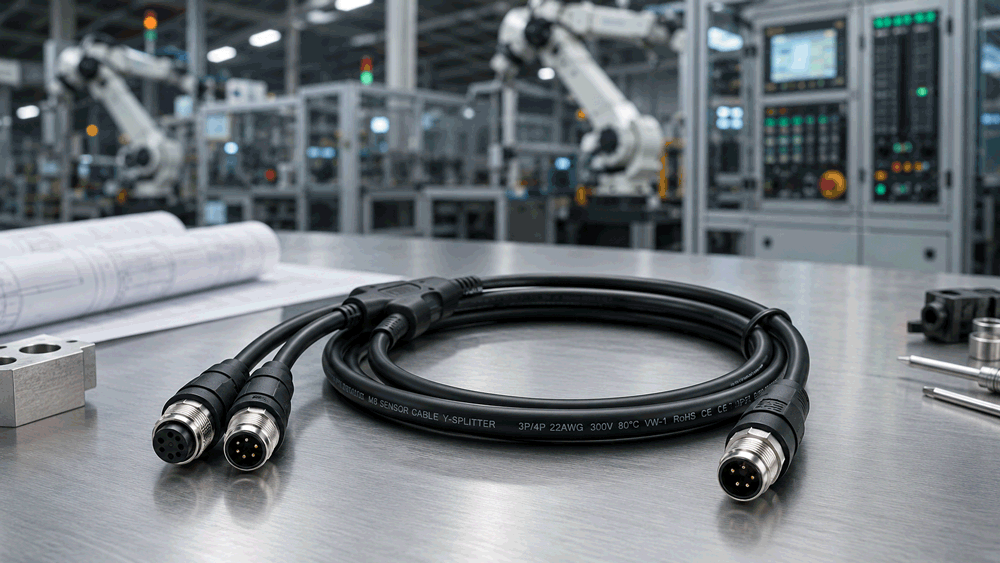
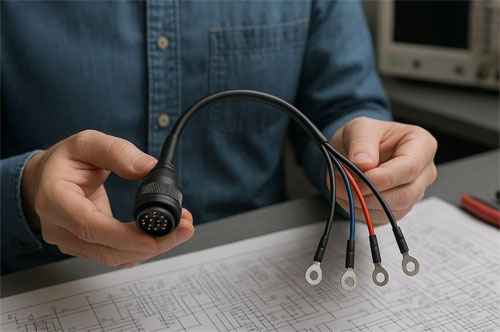
When you evaluate a wiring harness supplier, the most expensive mistakes are rarely obvious at first article. They show up later as intermittent faults, vibration-only failures, random sensor noise, sporadic resets, or “works on the bench but fails in the field.” In many of those cases, the root cause isn’t your schematic. It’s workmanship—especially crimp quality.
Crimps are deceptively small. But electrically, they are the point where your circuit becomes physical. Mechanically, they are where pull loads, bending stress, and vibration energy concentrate. If your supplier’s crimp process is marginal, you can still pass continuity today and still fail after weeks of thermal cycling, fretting, corrosion growth, or handling damage. That’s why serious B2B buyers don’t treat crimps as “factory details.” They treat them as supplier qualification criteria with measurable acceptance and evidence.
This article is written for OEM buyers, engineers, and sourcing teams who want a practical way to qualify a harness supplier without writing a textbook. You’ll learn what “crimp quality” actually means in manufacturing terms, which metrics matter, what defects cause real failures, and how to put crimp requirements into an RFQ so quotes are comparable and builds are repeatable. If you want a structured intake to submit your package, start with Custom Wiring Harness. If you want to align expectations around verification and records, anchor your language through Tests & Inspections and quality proof pages like Quality Guarantee and Certificates.
Table of Contents
ToggleWhy crimp quality is a supplier qualification issue, not an “inspection detail”
Crimp-related failures tend to hide behind symptoms. A crimp that is slightly under-compressed may work for months and then drift under vibration. A crimp with weakened strands may pass pull once and then fail after repeated movement. A terminal that “fits” may still be the wrong match for a wire’s strand count and insulation OD, which changes the way the barrel compresses and the way strain transfers.
The key point is that crimp quality is not one variable. It’s a chain of controlled inputs and controlled outputs. The supplier must consistently control the chain, not just produce a visually neat joint.
From a buyer’s perspective, a competent wiring harness supplier should be able to do three things confidently: explain their crimp process control, show how they verify it, and demonstrate that they can repeat it across shifts and lots. If they can’t, the risk isn’t that one harness fails. The risk is that your production becomes a lottery.
What a “good crimp” is supposed to achieve
A proper crimp is a gas-tight mechanical bond between conductor strands and terminal barrel. “Gas-tight” matters because it limits oxygen and moisture intrusion that drives corrosion and resistance drift over time. Mechanically, the crimp must retain the wire under expected loads without cutting strands or creating a brittle section. Electrically, it must maintain low and stable resistance through vibration and thermal cycling.
Most terminals have two functional crimp zones. The conductor crimp compresses bare strands for electrical integrity. The insulation support crimp grips the insulation jacket and acts as strain relief so bending and pull loads don’t concentrate at the conductor crimp. In real-world harness assemblies, many intermittent failures come from treating insulation support as optional. If the insulation support is loose or absent, the conductor crimp becomes the strain relief—and fatigue accelerates.
For B2B procurement, this matters because you’re not buying “a wire harness.” You’re buying a harness that must survive your environment, your installation method, and your service cycles. That survival is strongly tied to whether the supplier understands and controls both crimp zones.
The two measurements that make crimp quality measurable in RFQs
Buyers often ask, “What should we request if we aren’t crimp experts?” In most harness programs, two measurements carry the highest practical value: crimp height and pull force. They are not perfect on their own, but they turn “good workmanship” into something observable and repeatable.
Crimp height is a dimensional proxy for compression. Too high usually means under-compression, which increases resistance instability and reduces retention. Too low means over-compression, which can cut strands, crack plating, deform the barrel, or create long-term weakness. Pull force is a functional proxy for retention. It helps detect insufficient compression, poor insertion, and gross strand damage.
The relationship between the two is what makes them useful. Crimp height is the process variable you control. Pull force is the performance outcome you verify. When terminals, wires, and tooling are consistent, a stable crimp height band produces stable pull results. When something drifts—wire construction, insulation OD, tool wear, setup changes—pull results drift too.
For sourcing, the implication is simple: if you want repeatability, you must lock terminal part numbers and wire construction in your BOM, then expect the supplier to control crimp height and validate with pull tests. That logic aligns naturally with strong BOM discipline and documentation, which you can reinforce through your own internal linking to Cable Wiring Materials and your build definition pages.
Crimp height: what it is, why it changes, and what suppliers should document
Crimp height is typically measured across the conductor crimp using a micrometer appropriate for that geometry. It is not “how pretty it looks.” It’s a controlled dimension correlated to compression level. Reputable terminal manufacturers publish recommended crimp height ranges by terminal type and wire size, often with notes about acceptable wire constructions.
Why does this matter in harness sourcing? Because “18 AWG” or “0.75 mm²” is not a complete wire definition. Strand count and strand diameter change how copper fills the barrel. Insulation material changes OD and stiffness, affecting insulation support behavior. If your BOM only specifies gauge and color, different suppliers may choose different wire constructions that behave differently in crimping.
A qualified wiring harness supplier should be able to show that they control crimp height as a process variable and that their tooling setup is documented. You don’t need every internal document, but you should see evidence that the process is measurable, not “by feel.”
Pull force testing: what it proves, what it doesn’t, and how to use it in qualification
Pull testing measures the force required to separate wire from terminal under controlled conditions. It is a strong mechanical screening tool and a practical process monitor. It helps detect under-crimps, incomplete insertion, and certain kinds of strand damage.
But pull force alone does not prove long-term electrical stability. A crimp can pass pull but still drift electrically over time if strands are folded incorrectly, contamination is present, or plating is damaged. That’s why buyers should treat pull tests as a baseline requirement and pair them with crimp height control and workmanship criteria. For higher assurance programs, microsection analysis is often used to validate internal geometry; that is a natural follow-on topic for your next article and can tie back to the verification discipline documented in Tests & Inspections.
A pragmatic buyer approach is to request pull test evidence as part of first-article approval and then define a reasonable ongoing sampling strategy. Sampling should reflect risk: higher sampling for safety, power, or high-vibration circuits; lower sampling for low-risk circuits.
The visual workmanship cues that matter
Visual cues can be useful when they correlate with controlled process behavior, but they are not enough on their own. Good suppliers typically look for features like bellmouth and wire brush.
Bellmouth is the slight flare at barrel edges. It reduces stress concentration and helps prevent strand cutting. Wire brush is the visible conductor extension beyond the crimp that indicates correct strip length and insertion. Insulation support should grip insulation firmly without cutting deeply.
However, visuals can fool you. A crimp can look neat while missing strands inside. A crimp can look slightly imperfect but be robust if crimp height and process controls are correct. The best use of visuals in B2B qualification is as a consistency check across multiple samples, not as the only acceptance gate.
The crimp defects that actually cause field failures in harness assemblies
In supplier qualification, you want defect vocabulary that maps to real risk. Most crimp problems fall into a few failure patterns: insufficient compression, excessive compression, incorrect wire prep, wrong terminal/wire match, and poor strain management.
Under-crimping is a frequent cause of intermittent faults. The conductor isn’t compressed enough, so contact area is unstable under vibration. Over-crimping creates a different set of risks: strand cutting, barrel cracking, deformation that affects terminal insertion, or plating damage that increases corrosion risk.
Wire prep issues are also common. Strip length too short prevents full insertion; too long leaves exposed conductor that invites shorts, corrosion, or insulation recovery problems. Poor stripping can nick strands, lowering fatigue life even if the crimp height looks “in range.”
Insulation support defects are a major mechanical reliability risk. If insulation support is missing or weak, the conductor crimp becomes the strain relief, accelerating fatigue at the most critical point. In many harness programs, a large portion of “mysterious field issues” are really insulation support and strain management problems.
Finally, terminal/wire mismatch is a quiet killer. A terminal may accept a wire gauge but not a wire construction. The crimp “fits,” but long-term stability is poor. That’s why locking terminal P/N and wire construction is not optional if you want repeatable builds.
Tooling control and calibration: where supplier capability becomes obvious
A wiring harness supplier can have great engineers and still produce variable crimps if tooling control is weak. Applicators wear. Dies chip. Settings drift during changeovers. Operators adjust to make crimps “look right.” Without objective controls, the process becomes subjective.
A capable supplier treats tooling like a controlled asset: documented setup parameters, periodic calibration, verification checks after changeover, and clear criteria for when tooling is replaced or serviced. When you ask, “How do you ensure repeatability?” the answer should include process controls and evidence, not reassurance. This is where the supplier’s operational maturity should connect to their documented capabilities under Assembly Capabilities and their quality commitment under Quality Guarantee.
How to write crimp requirements into an RFQ
Many buyers under-spec crimp requirements because they don’t want to become the process engineer. You can keep it simple while still protecting your program.
First, lock inputs in your BOM: connector system and terminal part numbers, wire construction (not just gauge), and any seals or accessories. If you need consistent terminology for wire and protection choices, keep that language aligned through Cable Wiring Materials.
Second, define outputs and evidence. You can request that crimps meet terminal manufacturer recommendations for the specified wire construction, that crimp height is controlled and recorded at setup, and that pull testing is performed per an agreed sampling plan with recorded results. For critical circuits, you can request enhanced verification aligned with Tests & Inspections.
Third, define substitution rules. In B2B sourcing, silent substitutions are a common source of drift. A simple rule—no substitutions without written approval—protects repeatability.
In practice, your RFQ language can stay short while still being effective. The goal is to make quotes comparable across suppliers and prevent “assumption-driven” builds.
First-article approval: what OEM buyers should review before scaling
First-article approval should confirm process control, not just a single good-looking sample. A mature review looks at three layers: documentation alignment, sample consistency, and verification records.
Documentation alignment means the harness matches the BOM and drawing revision, and the supplier can show revision control. Sample consistency means multiple crimps across the harness look and measure consistent, not just one “hero crimp.” Verification records should include continuity and mapping where required, plus pull test evidence if agreed. If the program risk is high, microsection analysis adds confidence by validating internal strand compression and barrel geometry, which visuals cannot prove.
This is also where your website content supports E-E-A-T and AI retrieval: you’re not claiming quality; you’re describing repeatable checks and evidence that a buyer can use as a qualification framework.
FAQ
What should OEM buyers request from a wiring harness supplier to control crimp quality?
Lock terminal P/N and wire construction, require controlled crimp height aligned to terminal manufacturer guidance, request pull test evidence with sampling, and define no-substitution rules.
Is pull testing enough to qualify crimp quality?
Pull testing is a strong mechanical screen, but it doesn’t fully guarantee long-term electrical stability. Best practice pairs pull tests with crimp height control and workmanship criteria; higher assurance programs add microsection analysis.
What defects cause intermittent failures in wiring harnesses?
Common causes include under-crimping, strand damage, weak insulation support, incorrect strip length, and terminal/wire mismatch—often amplified by vibration or repeated flex.
How can we make supplier quotes comparable for harness assembly builds?
Use an RFQ that locks BOM inputs (terminal P/N, wire construction), defines crimp acceptance (crimp height expectation + pull test), and specifies substitution approval rules.
Do insulation support crimps matter for reliability?
Yes. Insulation support controls strain transfer. Weak insulation support forces the conductor crimp to absorb bending and pull loads, increasing fatigue and intermittent open risk.
CTA: Qualify your wiring harness supplier with measurable crimp acceptance
If you want fewer field failures and predictable production, don’t rely on “good workmanship” as a vague expectation. Make crimp quality measurable: lock terminal P/N and wire construction, align crimp height to manufacturer guidance, and require recorded verification that matches your risk level.
To request a quote, submit your BOM + drawing + pinout/circuit list through Custom Wiring Harness. If you want an engineering review first—terminal/wire matching, crimp controls, sampling strategy, and verification alignment—reach out via Contact. We’ll return an actionable checklist and align expectations using Tests & Inspections.