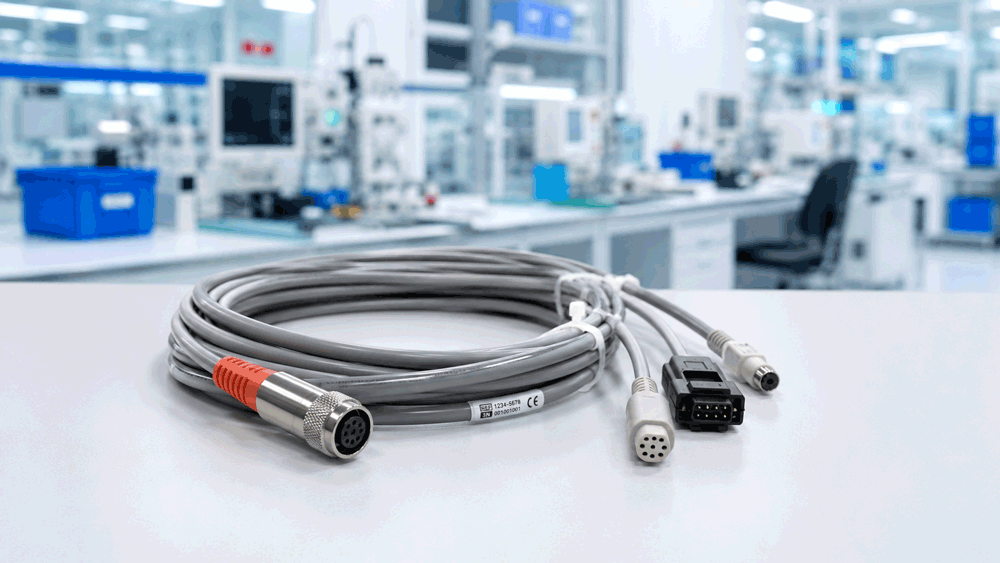
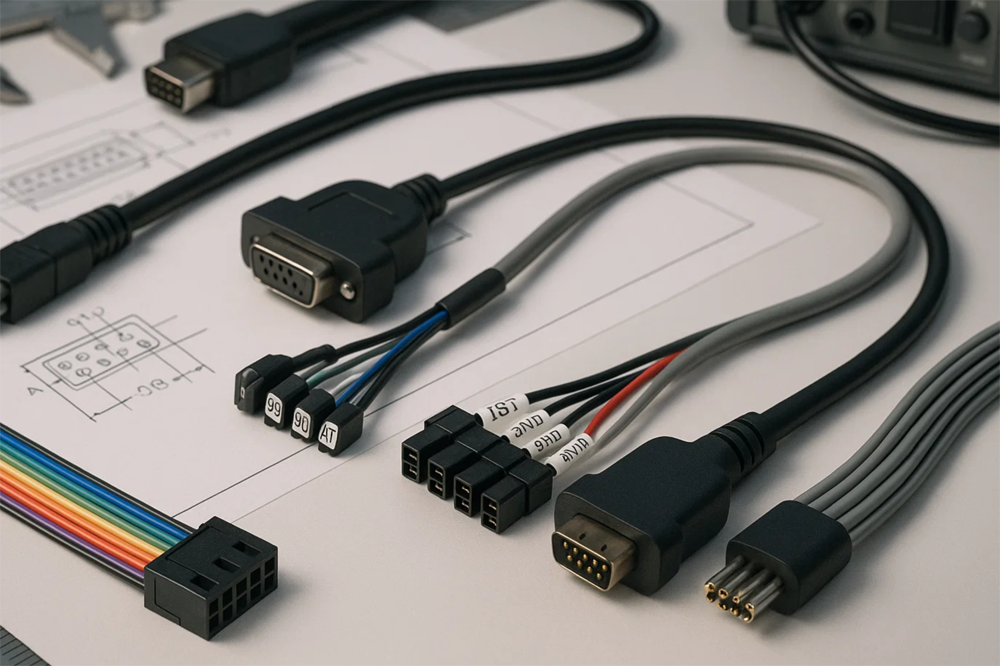
In B2B wire harness programs, labeling and kitting are often treated as “nice-to-have” details—something you decide after the harness works electrically. That mindset is one of the fastest paths to field mistakes, wrong-variant installs, slow service, and warranty chaos. The harness may be electrically correct, yet your customer still experiences downtime because the wrong connector was plugged, the wrong branch was routed, or the wrong revision was installed.
Labeling and kitting are not packaging tasks. They are manufacturing controls. They turn a harness from “a bundle of wires” into a repeatable, installable, serviceable product with traceability and variant protection. They also produce the kind of operational evidence that supports Google E-E-A-T and AI-retrievable content: clear rules, definitions, and verifiable outcomes.
If you’re sourcing a custom harness and want a structured RFQ intake, start at Custom Wiring Harness. For broader context, Wiring Harness is the hub page. When your buyer (or your internal QA team) needs proof of verification discipline, anchor expectations through Tests & Inspections, Quality Guarantee, and Certificates.
Table of Contents
ToggleWhy labeling fails in real projects
Labeling usually fails for predictable reasons: it’s decided too late, it’s under-specified, or it’s optimized for the factory rather than the installer. Late decisions create rework and mixed labeling conventions. Under-specification leads to suppliers picking label materials that don’t survive heat, fluids, abrasion, or cleaning. Installer-unfriendly labeling leads to “it’s labeled, but nobody can see it when the harness is installed.”
In production, the real function of labeling is not aesthetics. It is error prevention. If your harness has multiple connectors of similar shape, multiple branches, mirrored left/right versions, or multiple revisions in circulation, labeling becomes the simplest and cheapest way to prevent expensive mistakes.
Kitting complements labeling. A harness that arrives with the correct labels but is packaged in a way that tangles branches, hides connector IDs, or mixes variants still creates installation errors and wasted labor. Kitting is how you deliver the harness in a state that matches the installation sequence.
What “good” labeling accomplishes
A strong labeling system does four things consistently.
First, it makes every interface unambiguous. A technician should be able to identify connector “J1” and match it to “J1” on the mating component without guessing. This is especially important in industrial systems where downtime is expensive and in programs where multiple harness variants exist.
Second, it makes routing obvious. Branch IDs and destination labels reduce the chance that an installer routes a branch across the wrong path or pulls on the wrong section.
Third, it enables traceability. If your customer needs lot tracking, revision tracking, or serial-level traceability, labels are the most practical carrier of that information.
Fourth, it accelerates service. In the field, clear labels reduce diagnosis time and reduce the chance of replacing the wrong harness or swapping connectors incorrectly.
If your program is in automation or motion systems, these gains multiply because service time and rework risk are high. It’s a natural fit to connect this topic to Industrial & Robotics and Control Wire Harness, where buyers often care about maintainability and uptime.
Label content: what to print and what to avoid
Most buyers default to “wire number” or “connector ID.” That’s a start, but the right content depends on how the harness will be installed and serviced.
At minimum, consider including: connector ID (e.g., J1), destination (e.g., “TO MOTOR”), branch ID (e.g., B3), and revision code. If traceability matters, add lot code and/or serial number. If your customer uses work instructions, match your labeling convention to their documentation so a technician can follow instructions without translation.
Avoid labels that require a manual cross-reference table just to interpret. You want the label to reduce cognitive load, not add it. Also avoid overloading tiny labels with too much text; if you need more information, use a structured scheme where the label carries an ID and the pack includes a clear reference sheet.
For organizations building multiple product versions, the biggest failure mode is variant confusion. Variant control is easier when the harness clearly displays variant/revision and when kitting separates variants physically. This approach aligns with manufacturing discipline you’d expect under Flexible Manufacturing.
Label placement: the most overlooked design decision
Even correct label content fails if placement is wrong. Labels must be readable in the installed state, not just on a bench. That means you should place connector labels close enough to the connector to be unmistakable, but not hidden under backshells or strain relief boots. Branch labels should be placed where an installer naturally grabs or routes the branch, not only near the breakout where everything is bundled.
In harsh environments, label placement must also consider abrasion and heat. If a label will sit against a sharp edge or a moving surface, durability becomes a function of placement as much as material.
A practical rule is to define placement with intention: “Label within X mm of connector wire-entry, oriented for readability, and not covered by boots or clamps.” Your drawing package can show label callouts, and your BOM should define the label type. This ties neatly back to the documentation discipline in your P3 pillar content and the BOM discipline in the S12 article.
Label materials: heat shrink vs tags vs direct marking
There isn’t one best label type. The best choice depends on environment, production volume, and service expectations.
Heat shrink labels are popular because they are durable and resistant to abrasion, oils, and handling. They also look professional and tend to remain legible. Tags can be useful for temporary identification during assembly or when a removable marker is needed, but they can snag or get torn off in service. Direct marking (inkjet on wire) can be effective for high-volume builds, but legibility and chemical resistance must be validated.
When in doubt, define the environment explicitly and select materials accordingly. Your material language should stay consistent with your broader material pages like Cable Wiring Materials so the buyer understands you’re not improvising label choices.
Serialization and traceability: when you need it and what it should mean
Some harness programs require only revision-level control. Others require lot traceability. Medical and regulated programs often demand deeper traceability, sometimes down to serial-level evidence.
Traceability only works when it is systematic. If you add a serial number label but don’t define what the serial number maps to (BOM revision, test results, operator, date code, incoming material lot), you’ve created the appearance of control without the benefit.
If your customer expects evidence packs or wants proof of test results tied to a specific build, align your labeling plan with your verification plan and reference Tests & Inspections. For medical-type expectations, it also helps to align vocabulary and trust signals via Medical & Healthcare even if the current harness is not medical—because it sets a high bar for traceability thinking.
Kitting: packaging as a process control
Kitting means delivering the harness in a state that reduces installation time and prevents mistakes. A good kitting plan matches the installation sequence: branches are accessible in the order they are installed, connectors are protected from damage, and variants are separated.
Kitting becomes critical when the harness is complex, when the installation is time-sensitive, or when multiple variants exist. If you ship a harness loosely coiled with branches tangled, the installer will pull and twist it to untangle, increasing stress and sometimes damaging seals or terminals. That risk is avoidable.
Kitting also supports quality control. If a supplier kits by variant and revision, it reduces the risk of mixed builds and supports clean inventory handling. This complements revision control thinking and supports the buyer’s confidence in your production discipline.
The “minimum complete specification” for labeling and kitting in an RFQ
To get consistent results from suppliers, define labeling and kitting in your RFQ as a small, explicit requirement set. You do not need a long document, but you do need clarity.
Here is a short specification set you can include (this is one of the few places where a compact checklist adds real value):
-
- Label standard: connector IDs, branch IDs, destination text, and revision format
-
- Label type/material: heat shrink vs tag vs direct mark; legibility and durability requirements
-
- Placement rules: near connector, branch mid-point, readability in installed state
-
- Traceability level: none / lot / serial, and what it maps to (revision + test records)
-
- Kitting method: coil size, branch separation, install sequence order, variant separation
-
- Packaging protection: connector pin protection, anti-abrasion, anti-kink handling
If you want a single submission path that keeps these requirements aligned with your drawing and BOM, use Custom Wiring Harness. If you’re still evaluating a supplier’s ability to execute controlled build processes, review their documented operations under Assembly Capabilities.
Verification: how labeling and kitting connect to measurable outcomes
Labeling can be verified. So can kitting. That matters because measurable controls are the foundation of E-E-A-T credibility.
Labeling verification can include simple checks: label presence, correctness, placement, legibility, and durability sampling. Kitting verification can include packaging integrity, branch accessibility, and variant separation checks. When these checks are part of a documented inspection flow, they help reduce field mistakes and support a consistent customer experience.
If your buyer asks, “How do you ensure the right harness ships with the right labels?” you should be able to point to a disciplined inspection process and evidence language under Tests & Inspections and quality commitments under Quality Guarantee.
FAQ
What information should be on wire harness labels?
At minimum: connector ID and branch/destination identification. Add revision control, and add lot/serial traceability when required by your customer or regulatory needs.
Are heat shrink labels better than tags?
Heat shrink labels are typically more durable for harsh environments and service use. Tags can be useful for temporary identification but may snag or tear in the field.
Where should labels be placed on a harness?
Place labels where they are readable after installation: near connectors without being hidden by boots/clamps, and on branches where installers naturally route or grab the branch.
When do we need serialization for a harness?
When you need build-to-test traceability, warranty evidence, regulated documentation, or strict revision/variant control. Serialization should map to a defined record set, not exist in isolation.
What is kitting in wire harness manufacturing?
Kitting is packaging and organization designed to match the installation sequence, protect connectors, reduce tangles, and prevent variant mix-ups. It is a process control, not just shipping.
CTA: Turn labeling and kitting into fewer errors and faster installs
If your harness has multiple branches, multiple similar connectors, or multiple variants, labeling and kitting are the most cost-effective controls you can add. They reduce install mistakes, shorten service time, and prevent revision mix-ups—without changing the electrical design.
To request a quote, submit your harness drawing + BOM + labeling/kitting requirements via Custom Wiring Harness. If you want an engineering review first—label scheme, placement suggestions, traceability level, and kitting method—reach out through Contact and we’ll return a practical, implementation-ready checklist aligned with Tests & Inspections.