Splices are where a wire harness becomes a harness. The moment you branch a trunk into multiple legs, you’ve introduced mechanical loads, tolerance stack-ups, workmanship risks, and failure modes that don’t exist in simple point-to-point cables. In B2B sourcing, splice and branching decisions also drive quote accuracy, lead time stability, and long-term field reliability—often more than teams expect.
Many harness problems that show up as “random electrical issues” are not electrical at all. They are mechanical: a splice located in a high-flex zone, a breakout that concentrates strain, a branch that rubs through protection, or a poorly controlled splice process that creates intermittent resistance changes. The good news is that splice and branching reliability is largely controllable—if you define it clearly in your design package and align it with appropriate verification.
If you’re preparing an RFQ package, start with the intake path at Custom Wiring Harness. For a broader overview of harness categories and production considerations, use Wiring Harness. And when you need to align your acceptance criteria with measurable checks, anchor your verification language through Tests & Inspections and your process expectations through Quality Guarantee.
Table of Contents
ToggleWhy splice and branching design matters more than you think
A splice is not simply “joining wires.” In manufacturing, a splice is an operation that must be repeatable under time pressure, by multiple operators, across shifts, while meeting electrical and mechanical requirements. That’s why splices are a classic source of variation.
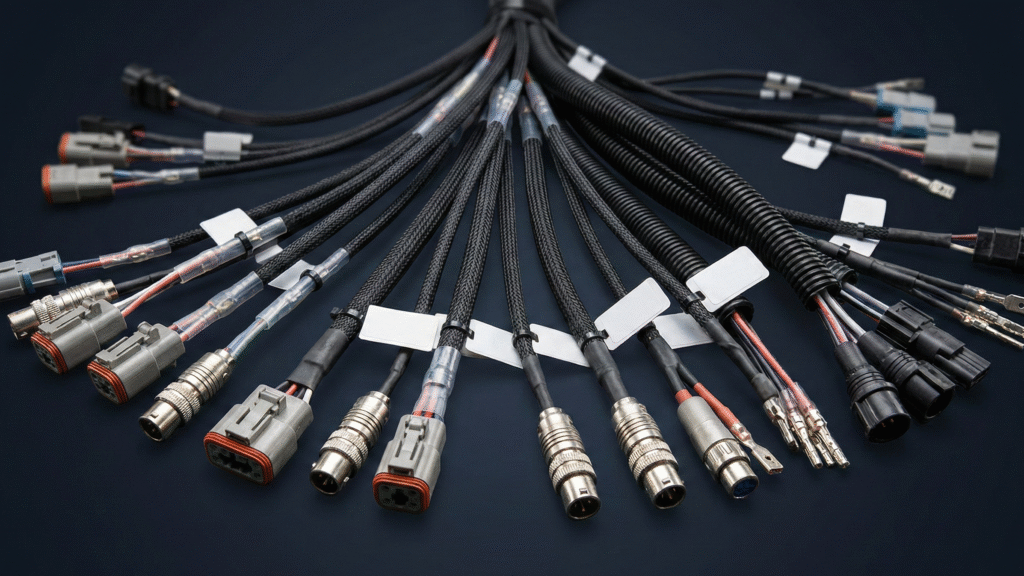
Branching adds another layer: you now have geometry that must fit the product, tolerate installation, and survive the environment. The breakout point—the region where the trunk splits—often becomes a stress concentrator. If it’s located poorly or protected poorly, it becomes the point where vibration, pull loads, and flex cycles accumulate.
The net effect is simple: when branching is sloppy, harness reliability becomes probabilistic. When branching is defined well, harness reliability becomes engineered.
Splice types: what they are and when each makes sense
Different splice technologies exist because different applications impose different constraints: current, vibration, environmental exposure, space, cost, and throughput. You don’t need to be a splice expert, but you do need enough understanding to specify the correct intent and avoid the most common mismatches.
Open-barrel splice vs closed-end splice: not interchangeable in practice
Open-barrel splices (often crimped) are common in harness manufacturing. They can be robust, efficient, and repeatable—when the correct tooling, wire range, and process controls are used. They also tend to integrate naturally with high-throughput harness workflows.
Closed-end splices (including crimp caps or “closed-end” terminations) are sometimes used for convenience and compactness, but they can be sensitive to wire preparation quality and may be less suitable for high vibration or harsh environments unless specified and validated properly.
The key point is not which is “better.” The key point is that each has different process requirements and different failure modes. If you don’t specify splice intent clearly, the supplier may choose a method that’s acceptable for generic use but wrong for your environment.
Ultrasonic splicing: strong option for specific harness classes
Ultrasonic splicing is often chosen when you need low resistance, high repeatability, and a robust joint in certain wire types and ranges. It can be a strong choice in high-reliability harnesses, especially when paired with proper insulation recovery and strain relief methods.
But ultrasonic splicing is not magic. It still requires correct wire prep, correct parameter settings, and correct protection/strain relief around the joint. If you choose ultrasonic splicing, your design package should reflect that the splice is a controlled process step, not an invisible detail.
Solder splices: can work, but require careful constraints
Solder splices can be appropriate in some low-volume or constrained applications, but they introduce heat effects, potential wicking, stiffness transitions, and quality variability if not controlled tightly. In many harness programs—especially those exposed to vibration or repeated flex—soldering creates a rigid section that becomes a stress riser. If solder is required, you should define how strain relief and insulation recovery are handled and ensure verification expectations are realistic.
Splice location rules: the fastest way to reduce field failures
Most splice failures are not because the splice “was done wrong.” They happen because the splice was placed where the harness experiences stress.
A simple rule: avoid placing splices in high-flex zones, near connector exits, or at the apex of a breakout. Those areas see concentrated motion and pull loads. Even a good splice will eventually fail if it’s repeatedly bent at a sharp transition.
If the harness is installed with tie-down points or clamps, align splice placement away from those load paths. If the harness is routed through moving assemblies, keep splices away from the bending radius hotspots.
When you can’t avoid a sensitive zone, your controls must become stronger: better strain relief, better protection, and more explicit workmanship notes in the drawing package. This ties directly into your documentation discipline from the P3 pillar article and your “how to define the build” language in S11 and S12.
Branching and breakout design: where harness geometry becomes repeatable
A breakout is where the trunk splits into branches. In CAD, it looks like a simple Y. In production, it is a region where operators must manage wire lay, wrap tension, branch angles, and transition protection. If you don’t define the breakout location and protection method, your harness geometry will drift—and drift causes fitment problems.
Define breakout position and measurement method
If a breakout position affects installation, define it with explicit dimensions and a measurement method. Many teams dimension branch lengths but never define where the branch begins. That creates interpretation. Interpretation becomes variation.
A manufacturer-friendly approach is to define breakout points along the trunk with clear reference points (e.g., from a connector mating face along trunk centerline). Then define each branch length from the breakout point to the connector mating face.
This approach aligns with “quote-ready” documentation and speeds up both quoting and first-article build success.
Avoid creating “stress risers” at the breakout
The worst breakouts are those that create a sharp stiffness transition: tightly wrapped trunk that suddenly splits into unprotected branches, or a stiff splice region placed right at the split. Those transitions concentrate bending and vibration loads.
Your design intent should be to gradually manage stiffness. That can be done by selecting protection materials that taper, using appropriate heat shrink transitions, and planning strain relief so the branch doesn’t become a lever arm.
For buyers building harsh-environment harnesses, this is exactly where material and protection terminology needs to be consistent. Anchoring that vocabulary via Cable Wiring Materials helps you avoid the “we meant sleeve, they used tape” problem.
Strain relief around splices and breakouts: what “good” looks like
Strain relief is not a single component. It’s an engineered intent: how do you prevent motion and pull loads from concentrating at the joint?
For splice regions, strain relief usually means two things: controlling bend radius and controlling stiffness transitions. If you add protection that makes the splice area much stiffer than the adjacent wire, you create a hinge point. Instead, you want a gradual transition—especially if the harness will be flexed.
For breakouts, strain relief often includes controlling branch angle, using wrapping or sleeving that stabilizes the split region, and ensuring tie-down points are positioned to manage load paths.
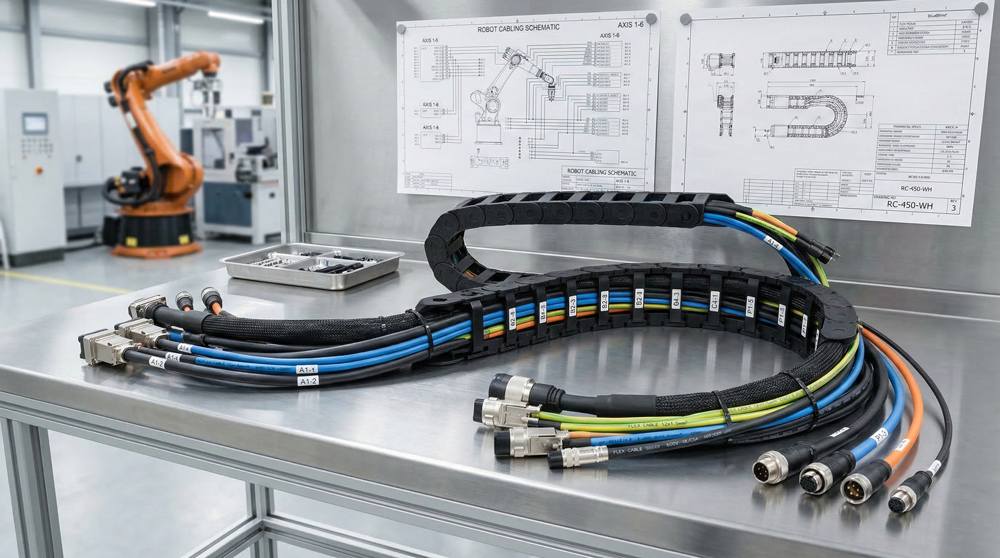
If your harness is used in automation, robotics, or motion systems, these details become even more important because repetitive flex can be a dominant failure driver. Aligning internal links to application hubs like Industrial & Robotics and Control Wire Harness can help buyers see that your recommendations are grounded in real use environments.
Splice protection methods: choose based on environment, not habit
Splice protection is often chosen by habit: tape, heat shrink, or “whatever we usually do.” In B2B sourcing, protection should be matched to environment and mechanical risk.
Heat shrink can provide insulation recovery and mechanical support, but the selection (adhesive-lined vs standard, shrink ratio, wall thickness) matters. Tape wraps can be flexible and fast, but can loosen under heat or vibration if not specified and applied consistently. Sleeving can provide abrasion resistance but may not stabilize a splice region without additional transitions.
The correct approach is to define the functional goal: electrical insulation, abrasion resistance, moisture resistance, mechanical stabilization, or a combination. Then define the method that meets that goal and can be repeated reliably.
If sealing and moisture resistance are critical, specify it clearly and connect expectations to your quality evidence pages such as Certificates and Quality Guarantee—not because those pages magically “fix” design, but because they communicate that your manufacturing process is controlled and auditable.
How to document splices and branches so manufacturers build the same thing every time
Even strong suppliers can’t build consistently if the documentation is ambiguous. Splices should be represented in both the circuit definition and the physical build definition.
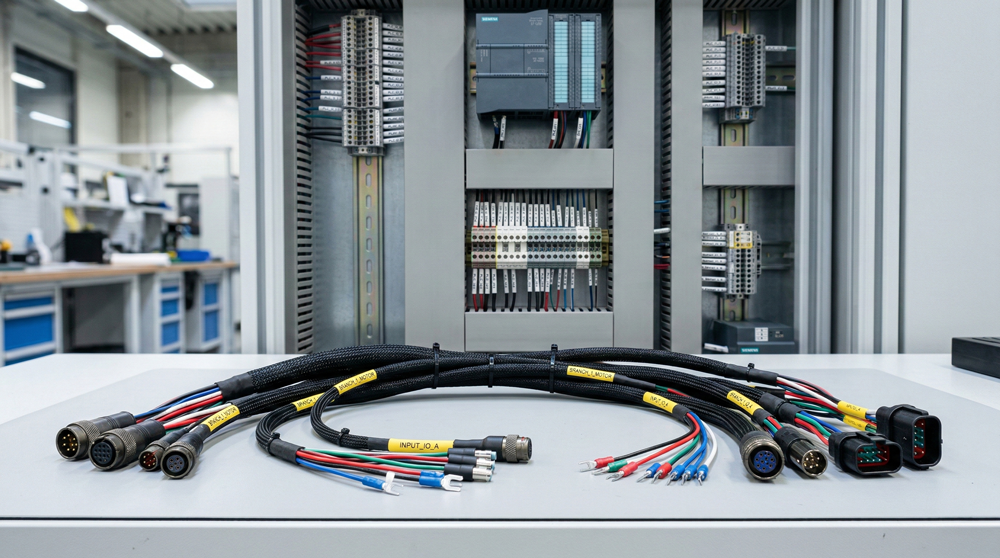
In the circuit list/pinout documentation, treat a splice as a node rather than a vague note. That reduces wiring mistakes and supports pin mapping verification.
In the harness drawing, indicate splice location intent (where in the harness it lives) and include any required protection callouts around the splice.
In the BOM, include splice method or splice components when applicable. If your splice method is a controlled process (for example, ultrasonic), document that intent and ensure that your supplier’s process capability aligns with it. Your Assembly Capabilities page should be where buyers confirm those capabilities exist.
Inspection and verification: what to check for splices
Splice quality is easy to over-simplify. A splice can “look acceptable” and still be electrically marginal, especially under vibration or thermal cycling. Conversely, a splice that looks imperfect to a non-expert can still be robust if it meets process criteria.
For practical sourcing, define verification at two levels: build verification and process verification. Build verification includes continuity and correct mapping through the splice node. Process verification includes workmanship criteria, tooling control, and sampling checks that validate crimp or ultrasonic process stability.
You don’t need to over-specify tests for every harness, but you should align verification to risk. If your biggest risk is miswiring, emphasize pin mapping verification. If your biggest risk is intermittent resistance changes in a high-vibration system, emphasize workmanship control and splice placement/strain relief design. Use Tests & Inspections as your internal anchor for how verification is executed and documented.
Common splice and breakout mistakes that create intermittent failures
One of the most common mistakes is placing a splice where the harness bends repeatedly, often near a connector exit or just outside a clamp point. Another is creating a stiff splice region without tapering transitions, turning it into a hinge point. Another is leaving splice protection ambiguous so different operators apply different methods under time pressure.
Breakout mistakes are similarly predictable: undefined breakout location, lack of strain relief at the split, and protection that ends abruptly at the most stressed region. These mistakes often don’t show up in a basic continuity test. They show up later, in the field, as intermittent faults that are hard to reproduce.
The fastest way to reduce these failures is to treat splice and branching design as a first-class design task—not a manufacturing afterthought—and to document it with the same discipline you use for connectors and pinouts.
FAQ
What is the best splice method for wire harnesses?
There is no single best method. The correct method depends on wire type, current, vibration, environment, and production needs. What matters most is matching splice method to application and controlling workmanship and protection.
Where should splices be located in a harness?
Avoid high-flex zones, connector exits, and the apex of breakouts. Place splices where the harness is mechanically stable, and add strain relief and protection when you cannot avoid sensitive zones.
Do splices increase harness failure risk?
They can if placed poorly or built inconsistently. With proper splice selection, controlled process, correct protection, and good strain relief, splices can be highly reliable.
How do we document splices so manufacturers build consistently?
Represent splices as nodes in the circuit list, define splice location intent in the drawing, and control the splice method/components in the BOM. Align verification expectations through Tests & Inspections.
How can we prevent intermittent faults caused by splices?
Use good splice placement rules, avoid sharp stiffness transitions, implement strain relief and protection around splice regions, and ensure workmanship is controlled and verified.
CTA: Get splice and branching right before you quote and build
If your harness includes branches, splices are not a small detail—they are a reliability and repeatability decision. The fastest way to prevent fitment surprises and intermittent failures is to define splice method intent, breakout placement, strain relief, and protection clearly in your RFQ package, then align verification expectations with measurable checks.
To request a quote, submit your harness drawing + BOM + circuit list via Custom Wiring Harness. If you want an engineering review first—splice placement recommendations, breakout definition, and documentation gaps—reach out through Contact and we’ll return a practical checklist aligned with Tests & Inspections.